Encourage Dense Mats
Pinch back overly long runners every 3–4 weeks during active growth to promote branching and create a thicker, more uniform carpet or cascade instead of sparse, straggly stems.

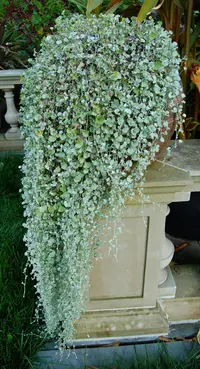
Silver ponysfoot, Dichondra argentea, is a low-growing trailing perennial often used as a groundcover or cascading accent in containers and hanging baskets. It forms dense mats or flowing strands of small, rounded leaves with a distinctive silvery, velvety surface.
This species is native to arid and semi-arid regions of North America, so it tolerates heat and short dry spells once established. Its drought tolerance and moderate growth rate make it relatively simple to maintain in suitable conditions.
Silver ponysfoot prefers bright light, well-drained soil, and even moisture that dries slightly between waterings. These traits help determine how to care for Silver ponysfoot in both outdoor plantings and container displays.

Care Difficulty
Easy Care

Light Preference
Full Sun

Water Requirements
Low Water

Temperature Preference
Tropical / Frost Sensitive

Hardiness Zone
9–11

Soil Texture
Sandy, Loamy

Soil pH
Acidic (5.5–6.5), Slightly acidic (6.5–7.0)

Soil Drainage
Well-drained

Fertilization
Light (every 4–6 weeks)
Scan your plant to receive care tips personalized for your specific plant
Available on iOS and Android
This trailing plant thrives in bright outdoor conditions with several hours of direct sun.
This plant prefers slightly dry, well-drained conditions rather than consistently moist soil.
This species grows best in warm, mild conditions and is sensitive to frost.
This species tolerates a wide humidity range but grows best with moderately dry air.
This plant prefers fast-draining, lean soil that does not stay wet for long.
This trailing species is well suited to container growing, especially hanging baskets and balcony planters.
This plant has modest nutrient needs, but light feeding supports fuller, denser foliage in Silver ponysfoot.
Pruning helps Dichondra argentea stay dense, trailing, and tidy in pots or as a groundcover.
Transplanting or repotting keeps this shallow-rooted trailer healthy and spreading evenly.
New plants are commonly produced from cuttings, runners, or seed, making expansion straightforward.
This species is tender in cold climates and benefits from simple winter precautions.

Plant Health Check
Not sure what's wrong with your plant? Check your plant's health inside the app.
The silvery look of the foliage comes from dense, fine hairs on the leaf surface that reflect light and reduce water loss, an adaptation to strong sun and dry air in its native habitats of northern Mexico and the southwestern United States.
In the wild it forms a very low, mat-like groundcover with stems that root at the nodes when they touch soil, helping it quickly stabilize loose, sandy or rocky ground.
Its small, dry fruits contain lightweight seeds that can be moved by wind and surface water, allowing the species to colonize open, disturbed sites such as washes, road edges, and rocky slopes.

Dichondra argentea has been used in plant breeding as a parent for ornamental hanging-basket selections, because its naturally trailing habit and reflective silver foliage create strong visual contrast in mixed container plantings.
This species spreads quickly by trailing stems that root where they touch soil, but it is usually manageable. In mild climates it can form a dense mat, so use edging or containers to keep it within bounds.
Keep your plants happy and healthy with plant identification, disease detection, and easy care guidance.