


Use loose mounts
Mount the plant on cork, tree fern, or hardwood with a thin layer of sphagnum around the roots, which improves airflow and mimics its natural epiphytic habit for more stable long-term growth.

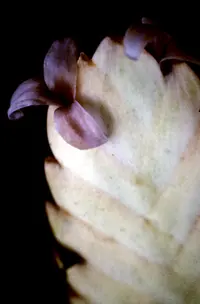
Wallisia anceps is a small epiphytic bromeliad, meaning it often grows attached to trees rather than in soil. It forms a rosette of narrow, arching green leaves. Slender flower spikes rise above the foliage, carrying delicate blooms that add a subtle ornamental touch rather than a bold display. The plant typically occurs in tropical forests of Central and South America, where it benefits from warm temperatures and high air humidity. It is moderately easy to manage if its needs for bright, filtered light, good air movement, and consistent but light moisture are met. Understanding how to care for Wallisia anceps helps prevent rot and stress, especially in indoor conditions.

Care Difficulty
Moderate Care

Light Preference
Bright Indirect Light

Water Requirements
Keep Soil Moist

Temperature Preference
Tropical / Frost Sensitive

Hardiness Zone
Unknown

Soil Texture
Loamy, Peaty, Organic-rich

Soil pH
Acidic (5.5–6.5), Slightly acidic (6.5–7.0)

Soil Drainage
Moist but well-drained

Fertilization
Light (every 4–6 weeks)
Scan your plant to receive care tips personalized for your specific plant
Available on iOS and Android
This species prefers bright, indirect light that mimics high tree-canopy conditions.
Watering should keep the root zone lightly moist but never saturated.
Stable, warm conditions support steady growth and flowering.
This species prefers moderately humid air and reacts quickly to very dry conditions.
This epiphytic bromeliad prefers a loose, airy mix that drains very quickly.
This species suits container growing when the pot supports its shallow root system and airy mix.
This bromeliad benefits from light, targeted feeding rather than heavy fertilization.
Pruning needs are minimal and focus on cleanliness and maintaining a tidy rosette.
This species is usually grown mounted or in small pots and only needs infrequent repotting or remounting.
Propagation is commonly done by separating offsets rather than using seeds.
This tropical bromeliad is frost sensitive and needs protection in regions with cold winters.

Plant Health Check
Not sure what's wrong with your plant? Check your plant's health inside the app.
Wallisia anceps is native to a restricted area of the Atlantic Forest in eastern Brazil, where it grows as an epiphyte on trees in humid, low- to mid-elevation forests.
The species produces tubular bluish to violet flowers that are thought to be adapted to pollination by specific hummingbird species, with flower shape and nectar placement matching the birds’ beaks.
It forms a rosette of relatively narrow, arching leaves with a pronounced central groove that helps channel water and nutrients toward the plant’s center in its epiphytic habitat.
Lack of blooms usually comes from insufficient light, low humidity, or a nutrient imbalance. Ensure bright, indirect light, good air circulation, and occasional bromeliad-specific fertilizer. A mild temperature drop between day and night can also encourage flower formation.
Keep your plants happy and healthy with plant identification, disease detection, and easy care guidance.

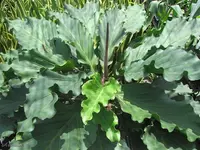
Anthurium Rancho Ruffles
Anthurium plowmanii
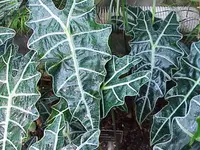
Sander's Alocasia
Alocasia sanderiana
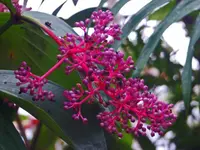
Medinilla speciosa
Medinilla speciosa
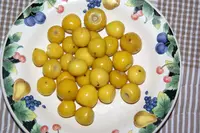
maricao cimun
Byrsonima crassifolia
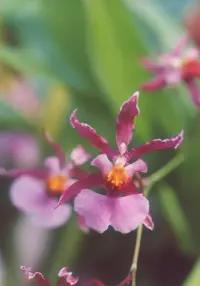
Oncidium ornithorhynchum
Oncidium ornithorhynchum
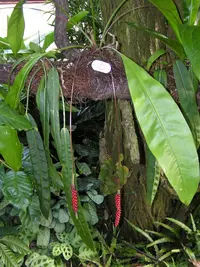
Red Pearls Anthurium
Anthurium gracile
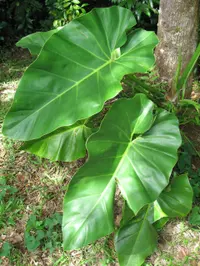
Giant Philodendron
Philodendron giganteum
 POPULAR
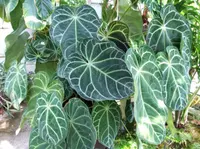
Anthurium magnificum
Anthurium magnificum