Cattleya tigrina Care

Cattleya tigrina

About Cattleya tigrina

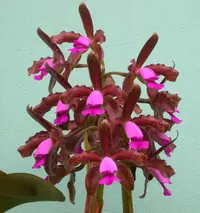
Cattleya tigrina is a warm-growing epiphytic orchid native to Brazil, where it grows attached to trees in bright, airy forest canopies. It produces tall pseudobulbs with leathery leaves and showy, often spotted flowers with a broad, colorful lip.

This species is prized by orchid collectors for its dramatic appearance and strong fragrance but can be moderately demanding. It prefers bright filtered light, good air movement, and quick-drying yet moisture-retentive orchid media. Understanding how to care for Cattleya tigrina helps prevent root problems and supports reliable flowering in home collections.

Main Plant Requirements

Care Difficulty

Hard Care

Light Preference

Partial Sun

Water Requirements

Moderate Water

Temperature Preference

Tropical / Frost Sensitive

Hardiness Zone

11–12

Soil Texture

Sandy, Rocky, Organic-rich

Soil pH

Acidic (5.5–6.5)

Soil Drainage

Well-drained

Fertilization

Moderate (every 2–4 weeks)

Get Personalized Care Plan

Scan your plant to receive care tips personalized for your specific plant

Available on iOS and Android

How to Care for the Cattleya tigrina

This orchid prefers strong, filtered light that mimics bright forest edges.

  • Provide 6–8 hours of bright, indirect light with some early morning sun; avoid harsh midday sun that can scorch leaves.
  • Allow light shade at midday under 30–50% shade cloth or dappled tree canopy, especially in summer.
  • Leaves of Cattleya tigrina should be medium green; dark, soft leaves indicate too little light, while yellow, leathery, or spot-burned leaves indicate excess sun.

Watering should balance consistent moisture with fast drainage around the roots.

  • Let the potting mix or mount surface dry almost completely; in warm growth, water when the top 2–3 cm feel dry and roots look silvery.
  • Reduce frequency in cooler months, allowing a slightly longer dry period, but do not let pseudobulbs shrivel severely.
  • Signs of excess water include blackened roots and sour smell, while wrinkled pseudobulbs and limp leaves signal the need for more frequent watering for Cattleya tigrina.

This species is a warmth-loving orchid that dislikes temperature extremes.

  • Aim for 70–80°F (21–27°C) by day and 60–65°F (16–18°C) at night during active growth for best performance.
  • Short exposures down to 50°F (10°C) are usually tolerated if kept dry, but growth slows and prolonged chilling weakens the plant.
  • In hot spells above 90°F (32°C), increase air movement and humidity, and reduce direct sun to prevent leaf stress and bud blast; protect from any frost.

This orchid needs fairly humid air for reliable growth and flowering.

  • Target 60–80% humidity, as drier air slows growth and reduces flower quality.
  • Plants tolerate short periods near 40–50% but show wrinkled pseudobulbs and limp leaves if kept too dry.
  • Increase humidity with a pebble tray under the pot, grouping plants, or a room humidifier without wetting the medium constantly.

This epiphytic orchid needs a very airy, fast-draining medium rather than regular potting soil.

  • Use a coarse mix such as medium–large orchid bark with some chunky perlite and a small amount of sphagnum moss for moisture balance.
  • Ensure rapid drainage; water should run through in seconds and the mix should dry slightly between waterings to prevent root rot.
  • A near-neutral to slightly acidic reaction (pH 5.5–6.5) suits Cattleya tigrina and supports nutrient availability.
  • Avoid dense garden soil, fine peat-heavy mixes, or compacted media, which restrict oxygen around the roots and promote disease.

This species is well suited to container culture when the pot supports its epiphytic roots.

  • Choose a relatively snug pot that lets roots fill the space, which stabilizes tall pseudobulbs without leaving a large, wet medium volume.
  • Use slotted or net orchid pots so air can reach the roots while excess water exits quickly after each watering.
  • Select heavier clay or ceramic containers for tall plants to prevent tipping as the flowering stems become top-heavy.

Nutrient support improves flowering for Cattleya tigrina grown in pots under bright, warm conditions.

  • Use a balanced orchid fertilizer (around 20-20-20) at 1/4–1/2 strength in water-soluble form.
  • Feed every 1–2 weeks during active growth in spring–summer, skipping every 3rd or 4th watering to flush salts.
  • Reduce feeding to 1× month or stop entirely in late fall–winter when growth slows.
  • Avoid compost and heavy slow-release pellets; use specialized orchid formulations suited to bark substrates.

Pruning needs are minimal and mainly hygienic for Cattleya tigrina.

  • Best time is after flowering, when new growths are visible and buds are spent.
  • Remove dead, blackened, or shriveled pseudobulbs and leaves using sterilized, sharp scissors or pruners.
  • Cut spent flower spikes at the base, leaving healthy pseudobulbs intact to support future growth.
  • Thin only obviously crowded, weak growths to improve air movement and reduce fungal problems.

Container-grown Cattleya tigrina benefits from periodic repotting to maintain airy, fresh media.

  • Repot every 2–3 years, or when roots circle the pot, media decomposes, or growth slows despite good care.
  • Choose late winter to early spring, just as new roots emerge, to allow quick reestablishment.
  • Gently remove old bark, trim dead roots, and place the rhizome slightly above fresh, coarse orchid mix.
  • Water lightly for 7–10 days after repotting, keep humidity moderate, and provide bright, indirect light to reduce stress.

Division is the standard method for Cattleya tigrina propagation in home collections.

  • Divide mature clumps in late winter–early spring when new root tips appear.
  • Ensure each division carries at least 3–4 healthy pseudobulbs for stable recovery and flowering.
  • Use sterile cutting tools, dust cuts with fungicidal powder or cinnamon, and pot divisions in fresh orchid bark.
  • Maintain warm temperatures, bright filtered light, and slightly higher humidity to encourage strong new roots.

This orchid is frost-sensitive and requires controlled indoor conditions in winter.

  • Keep plants indoors or in a heated greenhouse once temperatures drop below 55°F.
  • Maintain 60–70°F days and above 55°F nights, with good air movement and bright, indirect light.
  • Reduce watering so the medium approaches dryness between waterings, avoiding cold, wet roots.
  • Do not use outdoor mulching; rely on stable indoor temperatures and dry, clean foliage instead.

Care Tips

Monitor pseudobulb firmness

Check pseudobulbs monthly and adjust care if they wrinkle or shrivel, since this often indicates past water stress or root issues rather than a current need to water more often.

Use airy mounting

Mount plants on cork or hardwood with a thin pad of sphagnum only around the roots, which improves air movement, speeds drying, and reduces the risk of root rot in warm, bright conditions.

Upgrade pot strategically

Repot only when new roots are just emerging and choose a pot that is only 1–2 cm wider than the last one so the rhizome can advance without leaving old roots smothered in the mix.

Secure rhizome firmly

When repotting, tie or clip the rhizome to a rhizome clip or stake so the plant cannot wobble, since stable plants root faster and recover more reliably after division or transport.

Provide seasonal airflow

Increase fan use and spacing between plants in late spring and summer, when higher temperatures and irrigation frequency raise the risk of fungal spotting on leaves and flowers while growing Cattleya tigrina.

Common Pests and Diseases

Scale insects

This pest feeds on plant sap, often clustering on pseudobulbs, leaf bases, and under sheaths, leading to yellowing and weakened growth. Symptoms include sticky honeydew and sooty mold on leaves and flower stalks.

Solution

Isolate the plant, then manually remove visible scale with a cotton swab dipped in 70% isopropyl alcohol and peel away old, dry sheaths where they hide. Improve air movement, avoid over-fertilizing, and repeat alcohol treatments weekly; for heavy infestations, use a systemic insecticide labeled for orchids according to the product directions.

Spider mites

These insects thrive on Cattleya leaves under warm, dry, still air, causing silvery stippling, dull leaves, and fine webbing on the undersides. This pest can stunt new pseudobulbs and reduce flowering quality.

Solution

Increase humidity, improve air circulation, and rinse foliage thoroughly with lukewarm water, paying special attention to the undersides of leaves. For persistent infestations, use a miticide or insecticidal soap labeled for orchids, applied in several rounds 5–7 days apart to target newly hatched mites.

Bacterial brown spot

This disease starts as small water-soaked spots on leaves or pseudobulbs that rapidly turn brown or black, sometimes with a yellow halo and a wet, sunken appearance. Symptoms include a foul smell and quick tissue collapse, especially in warm, humid, stagnant air.

Solution

Immediately remove and discard affected leaves or pseudobulbs using a sterile blade and keep cuts dry; disinfect tools between cuts. Reduce overhead watering, increase air movement, keep water off leaves late in the day, and if needed apply a bactericide labeled for orchids as a protective spray to nearby plants.

Black rot (oomycete)

This disease attacks roots, pseudobulbs, and leaf bases, producing rapidly spreading black, mushy tissue that often starts at the rhizome or new growth. Symptoms include a foul odor and entire new leads collapsing, especially after prolonged wetness and poor drainage.

Solution

Remove the plant from its pot, cut away all black or mushy tissue back to firm, green or white tissue, and dust cuts with a fungicide such as one containing copper or a systemic oomycete treatment that is safe for orchids. Repot into fresh, fast-draining medium, keep the base of new growths dry, and improve drainage and airflow to prevent recurrence.

Orchid viruses

Symptoms include distorted flowers, reduced vigor, and irregular mosaic or streak patterns on leaves, though some plants remain asymptomatic for long periods. This disease is commonly associated with contaminated cutting tools or reused stakes and clips in orchid collections.

Solution

There is no cure, so the best approach is strict prevention by sterilizing cutting tools between plants and avoiding sap transfer. If virus infection is strongly suspected or confirmed by testing, discard the plant to protect the rest of the collection and avoid sharing divisions or cut flowers from it, which is central to responsible Cattleya tigrina plant care.

Interesting Facts

Fragrance that changes

This species is known for a strong, complex fragrance that becomes more intense and shifts subtly in character through the day, especially in the warmer midday hours.

Narrow, crowded petals

The flowers show characteristically narrow, somewhat crowded petals and sepals, which give each bloom a star-like outline very different from the broad, round form of many modern Cattleya hybrids.

Variable lip patterning

Its lip typically has rich purple to magenta coloration with intricate veining and blotching, and plants from different Brazilian localities can show noticeably different lip patterns and color intensity.

Botan icon

Did you know?

Cattleya tigrina is one of the Brazilian Cattleya species historically used in breeding highly fragrant large-flowered hybrids, passing on its strong scent and distinctive lip coloration to many modern complex orchid crosses.

FAQs about Cattleya tigrina

Lack of flowering usually comes from insufficient light, too little temperature drop between day and night, or underfeeding. Mature pseudobulbs must develop fully. Balanced orchid fertilizer and respecting a slight drier rest after growth can help.

Grow Healthy Plants with Botan Care

Keep your plants happy and healthy with plant identification, disease detection, and easy care guidance.

Botan plant care app — identify plants on mobile

Explore More Plants