Edge containment
Install a shallow edging strip or sunk pot barriers around beds to keep spreading stolons in bounds and make it easier to lift and divide older patches every 3–4 years.

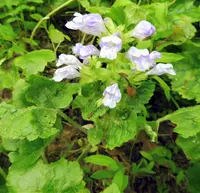
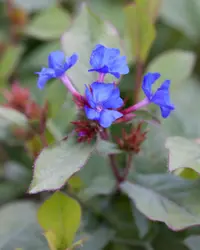
Meehan's mint (Meehania cordata) is a low-growing perennial groundcover in the mint family, valued for its creeping habit and soft, heart-shaped leaves. In spring, it produces tubular, lavender to purple flowers that form showy patches along its trailing stems.
This species is native to woodland and rocky stream habitats in East Asia and parts of North America, where it often carpets shaded ground. It is generally considered easy to grow when given moist, well-drained soil and partial shade. Gardeners who learn how to care for Meehan's mint usually find it reliable and fairly low maintenance in temperate climates.

Care Difficulty
Moderate Care

Light Preference
Partial Shade

Water Requirements
Regular Water

Temperature Preference
Cold Hardy

Hardiness Zone
4–8

Soil Texture
Loamy, Silty, Organic-rich

Soil pH
Acidic (5.5–6.5), Slightly acidic (6.5–7.0)

Soil Drainage
Moist but well-drained

Fertilization
Minimal (feed rarely)
Scan your plant to receive care tips personalized for your specific plant
Available on iOS and Android
This low-growing woodland perennial prefers cool, dappled light rather than intense direct sun.
This species prefers consistently moist but not waterlogged soil, especially during active growth.
This hardy groundcover performs best in cool to mild conditions rather than intense heat.
Meehania cordata prefers moderately moist air but usually adapts well to typical home humidity.
Meehania cordata thrives in loose, humus-rich soil that stays evenly moist yet drains freely.
This species works well in containers for shady patios and balconies.
Meehania cordata grows well in humus-rich soil and usually needs only light feeding to maintain healthy foliage and flowering.
Pruning Meehania cordata is mainly about tidying the mat of foliage and supporting compact, flowering growth.
This creeping perennial is more often transplanted in the garden than grown long-term in pots, but root health still matters.
Meehania cordata is commonly propagated to expand groundcover patches or share plants.
Meehania cordata is cold hardy in much of its range and usually needs minimal winter attention once established.

Plant Health Check
Not sure what's wrong with your plant? Check your plant's health inside the app.
This species is naturally restricted to cool, shaded ravines and stream banks in the central and southern Appalachian region of the eastern United States, often growing in thin soils over limestone bedrock.
It spreads by slender stolons (aboveground runners) that root at the nodes, forming low, dense mats that help stabilize moist banks and thin rocky soils.
Its tubular purple flowers appear in late spring and early summer, providing nectar for early-emerging bumblebees and other long-tongued pollinators in shaded woodland habitats.
This species spreads by shallow stolons, forming low carpets over time. In suitable moist, partial-shade sites it can fill gaps steadily but is usually not difficult to contain with edging, division, or removing unwanted runners.
Keep your plants happy and healthy with plant identification, disease detection, and easy care guidance.