jute Care (Corchorus aestuans)

Also known as: East Indian Mallow
jute

About jute

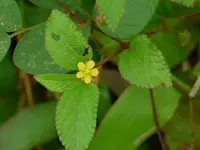
Jute, Corchorus aestuans, is a fast-growing annual herb grown mainly for its strong fiber and sometimes for leafy vegetables in certain cuisines. It typically has upright stems, simple green leaves with serrated edges, and small yellow flowers followed by narrow seed pods.

The plant is native to tropical regions and is commonly found in warm, humid lowland areas, often in disturbed or cultivated ground. It prefers full sun, steady moisture, and well-drained, fertile soil, which makes it fairly straightforward to care for jute in suitable climates.

Main Plant Requirements

Care Difficulty

Moderate Care

Light Preference

Full Sun

Water Requirements

Regular Water

Temperature Preference

Tropical / Frost Sensitive

Hardiness Zone

10–12

Soil Texture

Sandy, Loamy, Organic-rich

Soil pH

Acidic (5.5–6.5), Slightly acidic (6.5–7.0)

Soil Drainage

Moist but well-drained

Fertilization

Light (every 4–6 weeks)

Get Personalized Care Plan

Scan your plant to receive care tips personalized for your specific plant

Available on iOS and Android

How to Care for the jute

Corchorus aestuans grows best in bright, warm outdoor conditions with strong light.

  • Provide 6–8 hours of direct sun daily; morning sun with light afternoon shade helps reduce leaf scorch in hot climates.
  • In hotter regions, give jute plants filtered light or partial shade (2–4 hours direct sun) during peak afternoon to prevent wilting and sunburn.
  • In cooler seasons or mild climates, choose an open, unshaded site so plants receive maximum daylight and avoid weak, leggy growth.

Corchorus aestuans prefers evenly moist, not soggy, soil throughout the growing season.

  • Water when the top 3–5 cm of soil feels dry, soaking the root zone deeply and letting excess drain away completely.
  • During hot, windy periods increase watering frequency, while in cooler or rainy weather allow a slightly longer dry interval to prevent root rot.
  • Yellowing, soft stems suggest overwatering, while drooping, dry leaves and brittle stems indicate the plant needs water and possibly improved soil moisture retention.

This warm-season species thrives in consistently high temperatures and fails quickly in cold conditions.

  • Aim for 75–90°F (24–32°C) during active growth, which supports fast stem and leaf production.
  • Avoid exposure below 55°F (13°C); growth slows sharply, and plants can die if temperatures approach 40°F (4°C).
  • Corchorus aestuans tolerates brief heat up to about 100°F (38°C) if soil moisture is maintained, but needs shelter from hot, drying winds to limit stress.

This species handles a wide humidity range but grows best with moderate atmospheric moisture.

  • Aim for 40–60% humidity for steady growth, similar to many temperate indoor environments.
  • Plants tolerate short dry-air spells but prolonged humidity below 35% can slow growth and cause leaf edge browning in jute.
  • Increase humidity by grouping plants, placing trays with water and pebbles nearby, or using a room humidifier rather than misting leaves heavily.

Corchorus aestuans prefers loose, well-aerated, moisture-retentive but free-draining soil.

  • Use a loamy mix with 40–50% compost, 30–40% garden soil, and 10–20% coarse sand or perlite for structure and drainage.
  • Aim for slightly acidic to neutral pH around 6.0–7.0 to support nutrient availability and root health.
  • Improve aeration by incorporating coarse sand, perlite, or fine gravel, especially in heavier native soils.
  • Avoid compacted clay, waterlogged areas, or pure sand, which either suffocate roots or dry out too rapidly.

This species can be grown successfully in containers when given enough root depth and drainage control.

  • Choose a container at least 25–30 cm deep so the taproot can extend without curling tightly at the base.
  • Select a slightly heavier pot material such as ceramic or thick plastic to stabilize tall, flexible stems in wind.
  • Elevate the pot on feet or bricks so drainage holes stay clear and excess water escapes quickly after irrigation.

Corchorus aestuans responds well to moderate feeding during its warm growing season, especially in poor soils.

  • Use a balanced liquid fertilizer (for example 10-10-10) at half strength every 3–4 weeks while plants are actively growing.
  • In rich garden soil, rely mainly on compost or well-rotted manure worked into the bed before sowing or transplanting.
  • For containers, apply a slow-release granular fertilizer once in spring to support steady growth when caring for jute.
  • Stop feeding in late summer and avoid fertilization in winter or during any cool dormant period.

Corchorus aestuans benefits from light, timely pruning to maintain healthy, bushy growth.

  • Carry out main pruning in late spring or early summer once plants are established and growing strongly.
  • Use clean, sharp scissors or hand pruners to remove dead, diseased, or storm-damaged stems as soon as they appear.
  • Thin crowded, weak, or crossing shoots to improve airflow and reduce disease risk in dense stands.
  • Tip back excessively tall stems by a few inches to encourage branching and a more compact, manageable shape.

This species is most often grown as a seasonal field or garden plant, so transplanting is more common than repotting.

  • Start seeds in small pots or trays, then transplant seedlings outdoors once soil is warm and frost danger has passed.
  • Move plants when roots lightly fill the starter cell; dense circling roots or stalled growth indicate it is late for transplanting.
  • Transplant on a cloudy day or in late afternoon, keeping the root ball intact to limit transplant shock.
  • Water thoroughly after planting, then shade briefly and maintain even moisture for 3–5 days to help roots re-establish.

Corchorus aestuans is most commonly propagated from seed, which allows fast establishment of new plants.

  • Sow fresh seed in late spring to early summer when soil temperatures reach about 70–85°F.
  • Use a well-drained seed-starting mix, barely cover the seeds, and keep moisture even but not waterlogged.
  • Provide bright light and warm conditions; germination often occurs within 7–14 days under stable temperatures.
  • For direct sowing outdoors, prepare a fine seedbed, sow in shallow rows, and thin seedlings to allow strong, upright growth.

This warm-season annual has very low frost tolerance and typically dies back with the first hard frost.

  • In regions with cool winters, treat plants as annuals and re-sow each spring rather than attempting overwintering outdoors.
  • If grown in containers, discard spent plants after freeze and store pots dry until replanting season.
  • In frost-free tropical areas, reduce watering during cooler months and remove declining stems to limit disease carryover.

Care Tips

Timely fiber harvest

Cut stems for fiber just as the lower leaves begin yellowing and flower buds form, since later harvest reduces fiber quality and increases lignification, making stems tougher to process.

Selective thinning

When seedlings reach 5–8 cm, thin crowded patches so plants stand 10–15 cm apart, using scissors rather than pulling to avoid root disturbance of the remaining plants.

Wind-stable spacing

In breezy sites, plant in paired rows with 20–25 cm between rows and a narrow path between pairs, which allows installing simple horizontal twine or mesh supports to limit lodging in storms.

Targeted pest scouting

Inspect stems and leaf undersides twice weekly for jute hairy caterpillars and aphids, and spot-treat early infestations with insecticidal soap or Bacillus thuringiensis to prevent rapid defoliation.

Post-harvest stem handling

Bundle freshly cut stems loosely and stand them upright in the shade with butt ends aligned before retting, which keeps fibers straighter and more uniform for anyone growing jute for material use.

Everything About jute

Common Pests and Diseases

Jassid leafhopper

This pest sucks sap from young leaves, causing yellowing, curling, and a characteristic hopper burn along leaf margins. Symptoms include reduced growth and leaves that dry from the edges inward.

Solution

Remove heavily affected leaves and avoid water stress, as drought favors jassid buildup. For ongoing problems, use a firm water spray to dislodge nymphs, then apply a neem oil or insecticidal soap spray to leaf undersides every 5–7 days until new growth appears clean.

Stem borer

This pest tunnels inside young stems, leading to wilting shoots, hollow stems, and sudden death of individual branches. Symptoms include entry holes on stems, frass (sawdust-like excreta), and weak, easily broken shoots.

Solution

Cut out and destroy infested shoots as soon as wilting or bore holes are seen to remove larvae before they spread. Keep plants vigorous with steady watering and balanced nutrition, and where infestations recur, use light traps or pheromone traps nearby to monitor and reduce adult moth populations.

Yellow mosaic virus

This disease causes irregular yellow patches and mottling on leaves, with distorted growth and reduced fiber or foliage quality. Symptoms include stunted plants and poor overall vigor, often appearing in patches within a planting.

Solution

Promptly remove and destroy infected plants to limit the virus source, and control sap-sucking insects such as whiteflies and aphids that spread it by using yellow sticky traps and repeated applications of insecticidal soap or neem oil. Avoid planting new jute near previously infected beds and maintain good weed control, as many weeds can host the virus and its insect vectors.

Anthracnose

This disease produces dark, sunken spots on leaves and stems that may merge into larger lesions, leading to blight of young tissue. Symptoms include premature leaf drop and dieback of tender shoots in warm, humid conditions.

Solution

Prune and discard affected leaves and stems, and avoid overhead watering to keep foliage as dry as possible. Improve spacing and airflow, disinfect tools, and in persistent cases apply a copper-based or other labeled fungicidal spray at intervals during humid periods as part of broader Corchorus aestuans plant care.

Interesting Facts

Tropical annual lifecycle

This species is typically an annual herb in tropical and subtropical regions, germinating, flowering, and setting seed within a single warm season, especially in disturbed or cultivated soils.

Limited fiber importance

Although related to the main jute crops Corchorus capsularis and Corchorus olitorius, this species is considered a minor fiber plant and is rarely used in commercial fiber production due to its smaller size and lower yield.

Weedy field companion

It often appears as a weed in crop fields, gardens, and along roadsides, where it can compete with young crops but also contributes to ground cover and soil protection in warm, humid climates.

FAQs about jute

Yellowing leaves usually come from soil staying too wet, poor drainage, or nutrient depletion after rapid growth. Check that the pot or bed drains freely, reduce watering, and consider a balanced, slow-release fertilizer if new growth looks pale.

Grow Healthy Plants with Botan Care

Keep your plants happy and healthy with plant identification, disease detection, and easy care guidance.

Botan plant care app — identify plants on mobile

Explore More Plants