South American evening primrose Care (Oenothera pubescens)

South American evening primrose

About South American evening primrose

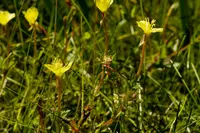
South American evening primrose (Oenothera pubescens) is a perennial flowering plant known for its delicate yellow blooms that often open in the evening. It usually forms loose clumps or low mounds with slender, slightly hairy stems and narrow leaves.

This species is native to parts of South America and can be found in open, sunny habitats and light scrub. It is generally considered adaptable and not difficult to grow if given sun, good drainage, and moderate moisture.

Gardeners who want to learn how to care for South American evening primrose should note its preference for well-drained, slightly lean soils and its tolerance of dry periods once established.

Main Plant Requirements

Care Difficulty

Easy Care

Light Preference

Full Sun

Water Requirements

Low Water

Temperature Preference

Warm Climate

Hardiness Zone

8–11

Soil Texture

Sandy, Loamy, Rocky

Soil pH

Slightly acidic (6.5–7.0), Neutral (7.0)

Soil Drainage

Well-drained

Fertilization

Minimal (feed rarely)

Get Personalized Care Plan

Scan your plant to receive care tips personalized for your specific plant

Available on iOS and Android

How to Care for the South American evening primrose

This species prefers bright, open conditions typical of dry grasslands and roadsides.

  • Provide 6–8 hours of direct sun daily; morning and early afternoon sun give the best flowering for South American evening primrose.
  • Tolerates light partial shade (3–4 hours sun), but stems may stretch and bloom count drops when shade exceeds half the day.
  • In very hot regions, protect from harsh late-afternoon sun with light shade; too much sun scorch shows as crispy leaf edges, while low light causes weak, floppy growth.

This drought-tolerant perennial prefers infrequent, deep watering in fast-draining soil.

  • Water when the top 3–5 cm of soil are dry; in most garden soils this means after several dry days, not on a fixed schedule.
  • Use gritty or sandy soil with good drainage; standing water or heavy clay leads to root rot, yellowing foliage, and a limp base in Oenothera pubescens.
  • In cool seasons and during rainy periods, reduce or stop additional watering; in summer heat, watch for dull, wilting leaves and dry, shrinking stems as cues to water.

This species thrives in warm, dry climates with mild winters.

  • Ideal growth occurs around 65–85°F (18–29°C), with strongest flowering in consistently warm conditions and full sun exposure.
  • Mature plants usually tolerate down to about 20°F (-7°C); repeated hard freezes or frozen, waterlogged soil can kill crowns, so mulching in colder zones helps.
  • Handles heat up to 95–100°F (35–38°C) if soil drains well; prolonged extremes above this, especially with high humidity, can cause leaf scorch and reduced flowering.

This species tolerates a wide humidity range and usually does not need special humidity management indoors or outdoors.

  • Aim for 30–50% humidity; typical indoor air or dry outdoor climates are acceptable for South American evening primrose.
  • Watch for leaf tip browning and marginal crisping as possible signs of combined humidity and water stress, especially near heating vents.
  • If air is extremely dry and hot, group plants together and keep them away from strong drafts to reduce additional leaf moisture loss.

This species prefers light, sharply drained soil that mimics sandy or gravelly native habitats.

  • Use a mix of roughly 50% coarse sand or small grit, 30–40% loam or standard potting mix, and 10–20% compost for modest fertility.
  • Ensure very fast drainage; the soil should feel loose and crumbly, not compacted or sticky after watering.
  • Aim for slightly acidic to neutral pH around 6.0–7.2, which supports nutrient availability for Oenothera pubescens without causing toxicity issues.
  • Avoid heavy clay, waterlogged spots, or peat-heavy mixes unless amended with plenty of grit or perlite to improve aeration and drainage.

This species is suitable for container growing when provided with fast drainage and enough root depth.

  • Choose a pot at least 20–25 cm deep to accommodate its taproot-like system and reduce wilting during hot weather.
  • Select a terracotta or other porous container if rainfall is frequent, as it allows faster evaporation and prevents prolonged saturation.
  • Place containers where runoff can escape freely, and slightly elevate the pot on feet or bricks so drainage holes never sit in standing water.

This drought-tolerant perennial needs only light feeding to support flowering and foliage health.

  • Apply a thin layer of compost or well-rotted manure around the root zone in early spring for South American evening primrose.
  • Use a balanced slow-release fertilizer (around 10-10-10) once at the start of the growing season if soil is poor.
  • Dilute liquid balanced fertilizer to 1/4–1/2 strength and use no more than once per month in active growth.
  • Stop all feeding in late fall and winter, when growth slows or plants are dormant.

Pruning Oenothera pubescens is mainly used to tidy plants and support compact, floriferous growth.

  • Cut back spent flower stems during summer to encourage additional blooming and prevent excessive self-seeding.
  • Remove dead, damaged, or weak stems at the base using clean, sharp hand pruners to reduce disease risk.
  • In late winter or very early spring, lightly shear or trim leggy growth to maintain a low, mounded shape.
  • Avoid cutting into woody crowns; leave some healthy green tissue to ensure strong regrowth.

This species is more often grown in the ground, so transplanting is usually more relevant than repotting.

  • Transplant in early spring or early fall, when temperatures are mild and soil is workable.
  • Move plants when growth slows, clumps become crowded, or roots circle a container and emerge from drainage holes.
  • Lift with a wide soil ball, disturbing roots as little as possible, and replant at the same depth in well-drained soil.
  • Water thoroughly after transplanting, then keep soil slightly moist for 1–2 weeks to limit transplant shock.

Oenothera pubescens is commonly propagated by seed and by lifting and dividing mature clumps.

  • Sow fresh seeds in late fall or early spring on the soil surface or barely covered in a well-drained mix.
  • Provide bright light, good air flow, and moderate moisture; seeds germinate best in 60–70°F conditions.
  • Divide established clumps in early spring, cutting sections with both shoots and roots using a clean knife or spade.
  • Replant divisions promptly, water in well, and maintain lightly moist soil until new growth is clearly established.

This perennial is generally cold hardy in mild to moderate climates and often needs minimal winter attention.

  • Tolerates light frosts once established but may suffer damage in prolonged freezes, especially in containers.
  • Apply a 5–8 cm layer of dry mulch around the root zone in late fall to buffer soil temperature swings.
  • In colder regions, grow in pots and move containers to a sheltered, frost-free spot with bright light over winter.

Care Tips

Encourage Repeat Bloom

Shear back spent flowering stems by 1/3 right after the main flush to stimulate a second, lighter bloom later in the season while keeping the plant compact.

Use Gravel Mulch

Apply a 2–3 cm layer of coarse gravel or small rock around the base instead of organic mulch to suppress weeds, keep the crown dry, and mimic the plant’s native, well-drained habitat.

Control Self-Seeding

If you want to limit spread, remove most seed capsules before they dry, leaving only a few to ripen for saved seed, since this species readily self-sows in open soil.

Support In Windy Sites

In exposed gardens, place low, unobtrusive ring supports or short peony hoops early in the season so stems grow through them and are less likely to lodge or break in strong wind or heavy rain.

Plan For Renewal

In regions with hot summers, schedule clump division or replacement every 3–4 years to maintain vigor and flower density, which is a key part of long-term Oenothera pubescens care instructions.

Common Pests and Diseases

Flea beetles

These insects chew many tiny round holes in leaves, giving a shot‑hole or lace-like appearance, and can stunt young plants when populations are high.

Solution

Use floating row covers to protect new growth, keep nearby weeds down to remove alternative hosts, and apply a residual soil-level barrier such as diatomaceous earth around plants; for active infestations, target beetles with spot sprays of spinosad or pyrethrin in the evening, following label directions carefully.

Leaf miners

This pest creates winding, pale tunnels inside the leaves, which may dry out and reduce photosynthesis on stressed plants.

Solution

Remove and dispose of mined leaves as soon as they appear, encourage beneficial insects such as parasitic wasps by avoiding broad-spectrum insecticides, and, if damage is heavy, use a horticultural oil or spinosad spray directed at young larvae on the undersides of leaves.

Aphids

These insects cluster on tender stems and flower buds, sucking sap and causing curling leaves, sticky honeydew, and sometimes sooty mold growth on surfaces below.

Solution

Dislodge colonies with a firm stream of water, encourage lady beetles and lacewings, and, when needed, use insecticidal soap or neem oil thoroughly on stems and leaf undersides, repeating at 5–7 day intervals until populations drop.

Rust

This disease presents as small orange to brown pustules on leaf undersides, often with yellowing spots on the upper surface and gradual leaf drop in humid conditions.

Solution

Remove and discard affected leaves promptly, water at soil level to keep foliage dry, improve air circulation, and, if conditions remain favorable for spread, apply a sulfur or copper-based fungicide labeled for ornamental perennials according to directions.

Powdery mildew

This disease appears as a white, powdery film on leaves and stems, leading to distorted growth and reduced flowering under warm, dry days with cool, humid nights.

Solution

Thin crowded stems to improve airflow, avoid overhead irrigation late in the day, and treat early infections with potassium bicarbonate, sulfur, or neem-based fungicides, ensuring full coverage of both upper and lower leaf surfaces as part of Oenothera pubescens care instructions.

Interesting Facts

Sticky night-opening flowers

The yellow flowers open mainly in the evening and produce sticky pollen and nectar that are especially attractive to nocturnal moths, an adaptation typical of night-blooming evening primroses but documented specifically for this species in its native range.

Hairy drought adaptation

The plant has fine hairs on leaves and stems that reduce water loss and reflect intense sunlight, which helps it tolerate the dry, open habitats of the southwestern United States and Mexico.

Disturbed-soil specialist

This species commonly establishes in disturbed sites such as roadsides, eroded slopes, and overgrazed grasslands, where its deep root system helps it persist in poor, compacted soils with low organic matter.

FAQs about South American evening primrose

Poor flowering usually comes from insufficient light, excessive nitrogen fertilizer, or lack of deadheading. Older clumps can also become congested. Improve sun exposure, avoid high-nitrogen feeds, and trim spent flower stalks to encourage new buds.

Grow Healthy Plants with Botan Care

Keep your plants happy and healthy with plant identification, disease detection, and easy care guidance.

Botan plant care app — identify plants on mobile

Explore More Plants