Siebold's Plantain Lily Care (Hosta sieboldiana)

Siebold's Plantain Lily

About Siebold's Plantain Lily

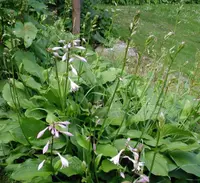
Siebold's plantain lily, Hosta sieboldiana, is a hardy, clump-forming perennial grown mainly for its bold, textured foliage. It forms broad mounds of large, often blue-green leaves with deep veins and a slightly puckered surface. Tall flower stalks rise above the foliage in summer, carrying pale, bell-shaped blooms that attract pollinators. This species originates from shaded woodlands in Japan, which explains its preference for cool, moist, sheltered garden spots. It suits gardeners looking to care for Siebold's Plantain Lily in shaded borders or under trees, as long as soil stays evenly moist and rich in organic matter.

Main Plant Requirements

Care Difficulty

Easy Care

Light Preference

Partial Shade

Water Requirements

Regular Water

Temperature Preference

Cold Hardy

Hardiness Zone

3–8

Soil Texture

Loamy, Silty, Organic-rich

Soil pH

Acidic (5.5–6.5), Slightly acidic (6.5–7.0)

Soil Drainage

Moist but well-drained

Fertilization

Light (every 4–6 weeks)

Get Personalized Care Plan

Scan your plant to receive care tips personalized for your specific plant

Available on iOS and Android

How to Care for the Siebold's Plantain Lily

This shade-loving perennial performs best with cool, gentle light rather than strong midday sun.

  • Provide 2–4 hours of morning sun with bright dappled or filtered shade the rest of the day for Siebold's Plantain Lily.
  • In hot-summer areas, protect from direct sun after 10–11 a.m. to prevent leaf scorch, bleaching, and crispy edges.
  • If foliage becomes thin, pale, and stretched, increase light by opening the canopy slightly or allowing more early-morning sun.

This plant prefers consistently moist, cool soil rather than cycles of drying out completely.

  • Water when the top 3–5 cm of soil feels dry, aiming for evenly moist but not saturated soil around Hosta sieboldiana.
  • Use soil rich in organic matter with good drainage; standing water or heavy clay increases risk of crown and root rot.
  • In spring and early summer, monitor moisture closely; in cooler fall weather, reduce watering and watch for yellowing, mushy leaves as a sign of excess moisture.

This hardy perennial tolerates cold winters but grows best in mild, stable temperatures during the growing season.

  • Active growth is strongest around 60–75°F (16–24°C), with cool nights helping maintain thick, blue-green foliage.
  • Dormant crowns can survive winter lows near -20°F (-29°C) under mulch or snow cover, but exposed pots are more vulnerable.
  • During hot spells above 85°F (29°C), provide deep shade and consistent moisture to limit heat stress, leaf scorch, and wilting.

This species tolerates typical outdoor humidity but grows best with moderate, stable moisture in the air.

  • Aim for ambient humidity around 40–60% in sheltered or partially shaded planting areas.
  • Dry, hot air can lead to marginal leaf browning and thinner foliage, especially in containers or near reflective surfaces.
  • Increase localized humidity by using organic mulch around the base, which slows evaporation and stabilizes conditions for Siebold's Plantain Lily.

Hosta sieboldiana prefers deep, moisture-retentive but free-draining soil that supports broad, long-lived foliage.

  • Use a loamy, organic-rich structure made from garden loam, 30–40% compost, and some shredded bark to hold moisture without becoming heavy.
  • Ensure drainage is reliable; in heavy clay, improve structure by incorporating coarse sand or fine gravel plus organic matter through the top 20–25 cm.
  • Target a slightly acidic to neutral pH around 6.0–7.0, avoiding strongly alkaline soil that can limit nutrient availability and weaken foliage color.
  • Avoid compacted or waterlogged sites and improve aeration by regularly mulching and gently loosening the top layer without disturbing roots.

This species is suitable for container growing when the pot is prepared to manage its broad root system and moisture needs.

  • Choose a wide, deep container that allows the crown to sit slightly above the rim so water does not collect around emerging shoots.
  • Use a heavier material such as ceramic or thick-walled plastic to stabilize the container against wind and the plant’s spreading foliage mass.
  • Elevate the pot on feet or bricks so drainage holes remain clear, preventing standing water that can cause crown and root rot.

Hosta sieboldiana benefits from light, consistent feeding during the growing season to support lush foliage.

  • Use a balanced slow-release fertilizer (for example 10-10-10) or well-rotted compost applied in early spring as new shoots emerge.
  • Feed once in early spring and again in mid-summer; avoid late-season applications that may encourage soft growth.
  • Apply granular fertilizer around, not against, the crowns and water in well to reduce root burn risk.
  • Use about half the label rate for container plants and stop feeding once leaves start yellowing in fall dormancy.

Pruning Hosta sieboldiana focuses on cleanliness and appearance rather than shaping the plant.

  • In spring, remove any remaining dead or mushy foliage with clean, sharp shears before new shoots unfurl.
  • During the growing season, cut off yellowing, torn, or slug-damaged leaves at the base to improve air flow and reduce disease.
  • Deadhead spent flower stalks after blooming by cutting them near the crown to maintain a tidy mound form.
  • In late fall after frost, remove collapsed foliage to limit overwintering pests and fungal spores.

Hosta sieboldiana is usually grown in the ground and responds well to occasional lifting and division rather than frequent repotting.

  • Transplant or divide every 4–6 years when clumps become crowded, growth slows, or eyes emerge tightly packed.
  • Choose early spring as shoots just emerge, or early fall with at least 4–6 weeks before hard frost for best establishment.
  • Lift the clump carefully with a fork, keep roots shaded and moist, and divide so each section has several buds and healthy roots.
  • Replant divisions at the same depth in enriched, well-drained soil, water thoroughly, and mulch lightly to reduce transplant stress.

Propagation of Hosta sieboldiana is most reliable by division, which maintains the characteristics of named cultivars.

  • Divide mature clumps in early spring as eyes emerge or in early fall while soil is still warm.
  • Lift the plant, then use a clean knife or spade to split the crown into sections with 3–5 buds and a solid root mass each.
  • Replant divisions promptly at original depth in moist, well-drained soil with partial shade to support rapid re-establishment.
  • Seed propagation is possible but slow and variable; sow fresh seed in cool, evenly moist conditions and expect mixed offspring.

This hosta is cold hardy in much of North America and usually needs only minimal winter care.

  • After hard frost, allow foliage to die back, then remove it to lower disease and pest carryover.
  • Apply a 5–8 cm layer of mulch over the root zone in late fall, keeping mulch slightly away from the crowns.
  • Container plants in colder regions should be moved into an unheated garage, shed, or cold frame to shield roots from severe freeze-thaw cycles.

Care Tips

Slug exclusion zone

Create a 10–15 cm wide ring of coarse grit or crushed, washed gravel around the clump to make a dry, rough barrier that discourages slugs from crossing to the leaves.

Crown spacing check

When dividing or replanting, set individual crowns 45–60 cm apart and ensure the eyes sit just at soil level to reduce rot risk and allow full leaf expansion.

Spring mulch timing

Apply 2–3 cm of compost or fine bark mulch in late spring after the soil has warmed and shoots are visible, keeping mulch 2–3 cm away from the crowns to prevent crown rot.

Hail and wind protection

In areas with frequent storms, place sturdy, low plant supports or mesh hoops around the clump in early spring so expanding leaves are protected from tearing without needing later staking.

Leaf health monitoring

Inspect leaves every 2–3 weeks for irregular yellow streaks, concentric ring patterns, or unusual mottling, and remove and dispose of suspect plants promptly to limit spread of hosta virus X while growing Siebold's Plantain Lily.

Common Pests and Diseases

Hosta foliar nematodes

This pest lives inside the leaf tissue and causes tan or brown streaks that stay between the veins, often progressing from the lower leaves upward. Symptoms include distorted, patchy foliage that looks water-soaked before turning necrotic.

Solution

Remove and destroy all affected leaves as soon as streaking is noticed and keep foliage dry by avoiding overhead watering. In established beds, improve air movement, space plants farther apart, and avoid sharing divisions or tools from infested clumps, as there is no reliable home treatment to eliminate nematodes once they are inside leaves.

Slugs and snails

These pests feed on the thick, textured leaves, leaving irregular holes and shredded edges, often worse after wet nights. Symptoms include slime trails on soil or foliage and significant cosmetic damage, especially on young leaves in spring.

Solution

Hand-pick slugs and snails in the evening, use iron phosphate bait around clumps, and create barriers with copper tape or diatomaceous earth where practical. Reduce hiding places by clearing mulch directly around crowns and watering in the morning so the soil surface is drier at night.

Black vine weevil

These insects chew distinctive notches along leaf margins, while their larvae feed on roots and crowns and can cause wilting or plant decline. Symptoms include night-time feeding damage on leaves and plants that collapse or fail to thrive despite adequate moisture.

Solution

Inspect at night with a flashlight and remove adult weevils by hand from leaves and stems. For significant or repeated damage, apply beneficial nematodes to the soil in spring or late summer to target larvae and maintain a clean mulch layer so crowns stay slightly exposed and easier to monitor.

Anthracnose

This disease creates large, irregular tan or brown spots with darker borders on leaves, often along the veins or margins. Symptoms include lesions that may join together, causing torn or blighted areas that reduce the plant’s ornamental value.

Solution

Cut off and discard affected leaves to reduce spore spread, and water at soil level rather than over the top to keep foliage dry. Improve spacing and airflow, and in persistent, wet conditions consider a labeled fungicide applied according to directions as part of broader Hosta sieboldiana care instructions.

Crown rot (southern blight)

This disease attacks the crown at soil level, causing sudden yellowing, collapse of leaves, and sometimes white fungal growth with small round sclerotia on the soil surface. Symptoms include a soft, rotting crown and rapid decline in warm, wet conditions.

Solution

Remove and discard the entire affected plant, including surrounding infected soil and mulch, and avoid planting another hosta in the same spot for several years. Promote good drainage, keep mulch a few cm away from the crown, and avoid frequent shallow watering that keeps the crown area constantly wet.

Interesting Facts

Distinctive blue foliage

The thick, glaucous leaves have a waxy coating that scatters light, giving the plant its characteristic blue to blue‑green color, especially in shaded conditions where the coating degrades more slowly.

Japanese mountain origins

This species is native to cool, shaded mountain forests in Japan, where it grows in humus‑rich soils and stable moisture, which explains its preference for sheltered, woodland‑style garden sites.

Slug resistance trait

Compared with many other hostas, its extra‑thick, corrugated leaves are less easily damaged by slugs, making it a parent species for several modern slug‑tolerant blue hosta cultivars.

Botan icon

Did you know?

The long‑cultivated garden form once widely known as Hosta sieboldiana ‘Elegans’ has been central to breeding large blue hostas, and taxonomic research has led to many plants previously labeled as Hosta sieboldiana being reassigned to closely related species and hybrids such as Hosta elegans and Hosta ‘Frances Williams’, reflecting a complex horticultural history.

FAQs about Siebold's Plantain Lily

This species forms large clumps that broaden slowly over time but does not usually spread aggressively. It enlarges by short rhizomes, staying where planted. Division may be needed eventually to manage size or rejuvenate older clumps.

Grow Healthy Plants with Botan Care

Keep your plants happy and healthy with plant identification, disease detection, and easy care guidance.

Botan plant care app — identify plants on mobile

Explore More Plants