Edge containment
Install a shallow plastic or metal edging 5–7 cm deep around beds or lawn areas to stop the stolons from creeping into paths, garden beds, or neighboring turf where it can become invasive.

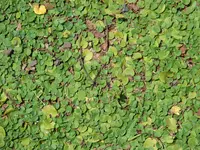
Asian ponysfoot (Dichondra micrantha) is a low, creeping perennial often used as a dense groundcover or lawn alternative. It forms small, rounded leaves on fine trailing stems that create a soft, carpet-like mat.
This species is native to parts of Asia and the Pacific but is now planted in many warm regions as an ornamental or turf substitute. It spreads quickly where conditions suit it, which makes it easy to establish but sometimes invasive outdoors.
It generally prefers mild climates, consistent moisture, and well-drained soil. Understanding these basic needs helps gardeners care for Asian ponysfoot successfully in both garden beds and containers.

Care Difficulty
Moderate Care

Light Preference
Full Sun

Water Requirements
Moderate Water

Temperature Preference
Warm Climate

Hardiness Zone
7–11

Soil Texture
Sandy, Loamy, Organic-rich

Soil pH
Acidic (5.5–6.5), Slightly acidic (6.5–7.0)

Soil Drainage
Well-drained

Fertilization
Light (every 4–6 weeks)
Scan your plant to receive care tips personalized for your specific plant
Available on iOS and Android
Dichondra micrantha prefers bright outdoor exposure with some protection from intense midday sun.
Dichondra micrantha prefers evenly moist but not saturated soil, especially during establishment.
This plant grows best in mild, frost-free conditions with moderate warmth.
This species grows well in typical household humidity and rarely needs special humidity management.
This groundcover prefers loose, well-drained, moderately fertile soil for dense, healthy growth.
This species is suitable for container growing as a trailing or groundcover accent.
Dichondra micrantha is a light feeder, so modest, consistent nutrition supports dense, healthy foliage without forcing weak growth.
Pruning Dichondra micrantha is mainly about light trimming to maintain an even, dense mat and remove weak growth.
This ground-hugging species is usually grown as a lawn or groundcover, so care focuses on transplanting plugs or sod rather than frequent repotting.
Dichondra micrantha is commonly propagated to expand groundcover areas or repair thin lawn patches.
In mild climates this species stays semi-evergreen with little winter attention, but it is sensitive to hard freezes.

Plant Health Check
Not sure what's wrong with your plant? Check your plant's health inside the app.
This species naturally forms a very low, dense mat only a few centimeters high, creating a continuous green carpet that can suppress some small weeds without being a true grass lawn.
Its flowers are less than 3 mm across and shaped like small funnels, and in many lawns they go unnoticed because they sit close to the foliage and blend with the canopy.
The plant spreads mainly by creeping stems that root at the nodes, allowing a single plant to cover large areas vegetatively without relying heavily on seed production.

In some warm regions, this species has escaped cultivation and naturalized so successfully in irrigated landscapes that it is now considered a lawn weed in one area and a premium ornamental groundcover in another, depending entirely on local use and perception.
This species spreads quickly through creeping stems and rooting nodes, forming a dense mat. In mild climates it can edge into nearby beds or lawn areas, so edging, regular trimming, and monitoring are important to prevent unwanted spread.
Keep your plants happy and healthy with plant identification, disease detection, and easy care guidance.