Rhizome Containment
Plant in a wide pond basket or buried container to confine spreading rhizomes and make it easier to lift, divide, and control the stand size over time.


Tuberous bulrush, Bolboschoenus glaucus, is a perennial sedge that forms dense clumps of upright, grass-like stems from underground tubers. It typically grows in or near shallow water, such as wetlands, pond margins, and slow-moving streams.
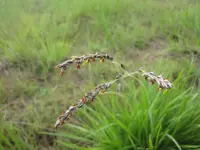
The plant carries tight clusters of brownish spikelets near the stem tips, giving it a distinctive, architectural look in naturalistic plantings. Its rhizomes and tubers help it tolerate temporary flooding and short dry periods, which makes it relatively resilient once established.
Because it prefers consistently moist, nutrient-rich, and often slightly muddy soils, it suits water gardens and restoration plantings more than typical indoor use. Understanding how to care for Tuberous Bulrush mainly involves managing moisture and preventing it from spreading where it is not wanted.

Care Difficulty
Moderate Care

Light Preference
Full Sun

Water Requirements
Aquatic

Temperature Preference
Cold Hardy

Hardiness Zone
4–9

Soil Texture
Loamy, Silty, Organic-rich

Soil pH
Acidic (5.5–6.5), Slightly acidic (6.5–7.0)

Soil Drainage
Waterlogged tolerant

Fertilization
Minimal (feed rarely)
Scan your plant to receive care tips personalized for your specific plant
Available on iOS and Android
This wetland sedge prefers consistent, strong light similar to open marsh or pond-edge conditions.
This species is adapted to saturated soils and shallow standing water rather than typical garden moisture levels.
This hardy wetland plant tolerates a wide temperature range but has distinct preferences for active growth.
This wetland sedge prefers constant high humidity close to saturation and is not suited to dry indoor air.
This species thrives in saturated, heavy, organic-rich substrates rather than typical potting media.
This marginal aquatic is suitable for large, water-holding containers placed outdoors.
This wetland sedge generally needs minimal feeding, especially when planted in nutrient-rich soil or natural ponds.
Pruning Bolboschoenus glaucus is straightforward and mainly done to keep stands tidy and healthy.
This species is usually grown in the ground or in ponds, so care focuses on dividing and transplanting clumps rather than frequent repotting.
Expansion of Bolboschoenus glaucus stands is most reliable by division, with seed used mainly for restoration projects.
This hardy wetland plant tolerates typical temperate winters and usually needs little special care in the ground.

Plant Health Check
Not sure what's wrong with your plant? Check your plant's health inside the app.
This species commonly colonizes saline and brackish marshes, ditches, and pond margins, showing a much higher tolerance to soil salinity than many other sedges and rushes.
It spreads through a network of rhizomes that form small tubers, which act as storage organs and allow the plant to resprout after drought, grazing, or cutting.
Its nutlet-like fruits and starchy underground parts are eaten by ducks and other waterbirds, making it an important food resource in coastal and inland wetlands.
This sedge spreads by thick rhizomes and tubers and can form dense stands in wet soil. In gardens or ponds it often behaves aggressively, so use root barriers or containers where spread must be controlled.
Keep your plants happy and healthy with plant identification, disease detection, and easy care guidance.