Berry safety management
Regularly remove ripe and fallen berries in outdoor plantings so birds do not spread seeds into nearby beds or natural areas, as this species can self-sow aggressively in warm climates.

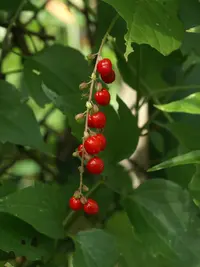
Rougeplant, Rivina humilis, is a small, shrubby perennial often grown for its bright red berries and delicate clusters of white to pinkish flowers. It usually stays compact and bushy, making it suitable for small gardens or container use in warm climates.
This species is native to the tropical and subtropical Americas, where it grows in light shade along forest edges and disturbed sites. It tends to be easy to grow in frost-free areas, as it adapts to a range of soils and tolerates some drought once established.
For those who want to care for rougeplant, it generally prefers bright, filtered light, modest but regular moisture, and well-drained soil to keep growth steady and healthy.

Care Difficulty
Easy Care

Light Preference
Partial Shade

Water Requirements
Moderate Water

Temperature Preference
Tropical / Frost Sensitive

Hardiness Zone
9–11

Soil Texture
Sandy, Loamy, Organic-rich

Soil pH
Acidic (5.5–6.5), Slightly acidic (6.5–7.0)

Soil Drainage
Moist but well-drained

Fertilization
Minimal (feed rarely)
Scan your plant to receive care tips personalized for your specific plant
Available on iOS and Android
Rivina humilis grows best in bright, gentle light that mimics dappled woodland conditions.
This species prefers evenly moist but not saturated soil, with brief drying at the surface between waterings.
This plant favors warm, frost-free conditions similar to a mild subtropical understory.
Rivina humilis handles a wide humidity range but benefits from moderately moist air.
Rivina humilis prefers light, well-drained, slightly fertile soil that does not stay waterlogged.
This species suits container growing when the pot supports its fibrous root system and shrubby habit.
Rivina humilis responds well to light feeding but often grows acceptably in average garden soil without added fertilizer.
Rivina humilis benefits from light, periodic pruning to keep plants compact and flowering well.
This species is usually grown in the ground, but container plants or young nursery stock may need occasional transplanting.
Rivina humilis is commonly propagated from seed, with cuttings used less often but also feasible.
In mild climates Rivina humilis needs minimal winter care, but it is sensitive to hard frost.

Plant Health Check
Not sure what's wrong with your plant? Check your plant's health inside the app.
The bright red berries of this species can remain on the plant for many weeks, creating a long-lasting visual display that often persists after many nearby plants have dropped fruit. These berries are a key food source for some birds, which helps spread the seeds over short to moderate distances.
Rivina humilis naturally grows as an understory herb or subshrub in partially shaded habitats, such as thickets and the edges of woodlands. This shade tolerance explains why it can adapt well to protected garden corners and sheltered urban plantings in warm climates.
The berries and other parts of the plant are considered mildly to moderately toxic if eaten, mainly due to alkaloid and saponin compounds that can irritate the digestive system. This chemical defense likely reduces heavy feeding by mammals, even though birds eat the fruit without apparent harm.

In parts of its native range, the intensely colored berry juice of this plant has been traditionally used as a natural dye for small craft items and textiles, although it is not very lightfast and tends to fade with time.
The berries and leaves contain mildly toxic compounds. Ingesting them may cause nausea, vomiting, or diarrhea, especially in children and pets. It is best to prevent chewing and contact your vet or doctor if ingestion occurs.
Keep your plants happy and healthy with plant identification, disease detection, and easy care guidance.