Deep root accommodation
Use a tall, straight-sided pot at least 25–30 cm deep to allow the taproot to develop without kinks, and avoid repotting once established to prevent root damage.

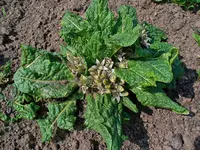
Mandrake, Mandragora officinarum, is a small, herbaceous perennial known for its thick, forked root and low rosette of dark green leaves. It belongs to the nightshade family and produces pale greenish-white to purple, bell-shaped flowers followed by yellow, tomato-like berries.
This plant is native to the Mediterranean region, where it grows in rocky, well-drained soils with cool, mild winters and hot, dry summers. It can be challenging to grow because it dislikes root disturbance, needs excellent drainage, and is sensitive to excess moisture in warm conditions.
For those who want to learn how to care for mandrake, it generally prefers bright light, deep, loose soil, and moderate moisture that never stays waterlogged.

Care Difficulty
Hard Care

Light Preference
Partial Sun

Water Requirements
Moderate Water

Temperature Preference
Cool Climate

Hardiness Zone
6–8

Soil Texture
Sandy, Loamy, Organic-rich

Soil pH
Slightly acidic (6.5–7.0), Neutral (7.0)

Soil Drainage
Well-drained

Fertilization
Minimal (feed rarely)
Scan your plant to receive care tips personalized for your specific plant
Available on iOS and Android
This species prefers bright, cool conditions with protection from intense midday sun.
Watering should support the deep taproot while avoiding prolonged soil saturation.
This plant prefers cool to mild conditions and does not thrive in extreme heat or deep freezes.
This species handles typical 30–50% household humidity and does not need special moisture in the air.
Mandragora officinarum prefers deep, loose, sharply drained soil that allows its taproot to expand without obstruction.
This species can be grown in containers if the pot is chosen and managed to suit its long taproot and dislike of waterlogging.
Nutrient needs of Mandragora officinarum are modest, especially in rich, well-prepared soil.
Mandragora officinarum needs only minimal pruning focused on plant hygiene rather than shaping.
This deep-rooted species dislikes disturbance, so repotting or transplanting should be rare and carefully planned.
Reproduction of Mandragora officinarum is usually done from seed and requires patience and cool conditions.
This species is cold tolerant in many temperate climates but benefits from some root-zone attention in harsher winters.

Plant Health Check
Not sure what's wrong with your plant? Check your plant's health inside the app.
This species often forms thick, forked taproots that can resemble a rough human figure, which historically contributed to its strong presence in European folklore and superstition.
Its tissues contain well-studied tropane alkaloids such as hyoscyamine and scopolamine, compounds that act on the nervous system and are also found in related plants like deadly nightshade and henbane.
In its native Mediterranean climate, it grows mainly during the cool, moist autumn–winter period, then dies back and becomes dormant in the hot, dry summer to survive drought and heat.

Archaeobotanical and textual evidence indicates that this species was known and symbolically important in several ancient cultures around the Mediterranean basin, including Greek, Roman, and Near Eastern traditions, where it was often associated with magic, oracles, and ritual practices.
Lack of flowers usually comes from immature age, insufficient winter chilling, or too much shade. Strong root disturbance, heavy feeding, or very dry spring soil also reduce flowering. Stable, cool winter rest and gentle handling support reliable blooming.
Keep your plants happy and healthy with plant identification, disease detection, and easy care guidance.