Protect taproot
Use deep containers or plant in-site from seed so the long taproot is not bent or broken, since disturbed roots greatly reduce survival of established plants.

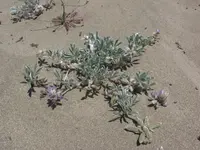
Lupinus tidestromii, known as Tidestrom's lupine, is a low-growing perennial wildflower native to coastal dunes of central California. It forms compact mounds with silvery, hairy leaves that help reduce water loss and tolerate harsh sun and wind.
Dense clusters of pea-like flowers in shades of cream to pale yellow appear above the foliage, attracting native pollinators. This species naturally grows in sandy, fast-draining soils and is adapted to dry, exposed conditions.
Because it is specialized to coastal habitats, it can be challenging outside similar climates. Gardeners who want to care for Tidestrom's lupine must match its need for strong light, lean soil, and good drainage as closely as possible.

Care Difficulty
Hard Care

Light Preference
Full Sun

Water Requirements
Low Water

Temperature Preference
Cool Climate

Hardiness Zone
9–10

Soil Texture
Sandy, Rocky

Soil pH
Slightly acidic (6.5–7.0), Neutral (7.0)

Soil Drainage
Well-drained

Fertilization
Minimal (feed rarely)
Scan your plant to receive care tips personalized for your specific plant
Available on iOS and Android
This coastal lupine needs strong light but is adapted to cool, breezy conditions rather than harsh inland heat.
This dune species is adapted to dry, fast-draining soils and is sensitive to excess moisture around the roots.
This species is naturally adapted to mild, coastal conditions with limited temperature extremes.
Humidity is not a major factor for Lupinus tidestromii, which is adapted to dry coastal conditions.
Lupinus tidestromii needs very fast-draining, sandy soil that mimics coastal dunes.
This species can be grown in containers only with careful attention to drainage and root conditions.
This coastal lupine is adapted to lean, sandy soils and usually performs best with no or very minimal fertilization.
Lupinus tidestromii needs only light, targeted pruning to maintain a tidy, flowering clump.
This species is usually grown in the ground, and its deep taproot makes frequent moving or repotting stressful.
Lupinus tidestromii is usually propagated from seed, but germination can be slow without some preparation.
In its native coastal range, this lupine is moderately hardy and usually requires little structured winter care.

Plant Health Check
Not sure what's wrong with your plant? Check your plant's health inside the app.
This species naturally occurs only on a few ocean-front dune and bluff sites along the central California coast, primarily around Point Reyes and the Monterey Bay region.
Its deep taproot and spreading root system help stabilize shifting coastal sands, reducing erosion and creating microhabitats that allow other dune plants to establish.
Populations depend on natural dune movement and occasional disturbance; dense invasive grasses that lock dunes in place can reduce suitable habitat and limit its natural regeneration.

Lupinus tidestromii is listed as a federally endangered species in the United States, and some of its remaining populations are closely monitored and managed with protective fencing and boardwalks to prevent trampling by beach visitors.
The flowers are highly attractive to native bees, including specialist lupine bees, and also draw butterflies. Planting it supports local pollinator populations, especially in coastal habitats where floral diversity may be limited.
Keep your plants happy and healthy with plant identification, disease detection, and easy care guidance.