


Encourage Column Strength
Rotate the pot 1/4 turn every 2–3 weeks so light hits all sides evenly, which keeps the stem straight and prevents it from leaning or curving as it elongates.

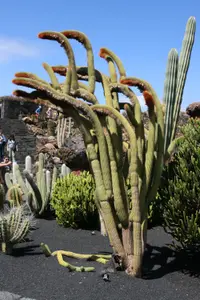
Vatricania guentheri is a columnar cactus native to rocky slopes in eastern Bolivia. It forms a single tall stem covered with dense golden to brown spines. As it matures, it develops a striking lateral flowering zone with woolly areoles and tubular reddish flowers that emerge from the side of the stem. This distinctive habit makes it a collector plant rather than a beginner’s first choice. It prefers very bright light, low humidity, and sharply draining mineral soil. Spination, slow growth, and sensitivity to excess moisture are the main factors that influence how to care for Vatricania guentheri.

Care Difficulty
Moderate Care

Light Preference
Full Sun

Water Requirements
Low Water

Temperature Preference
Tropical / Frost Sensitive

Hardiness Zone
10–12

Soil Texture
Sandy, Rocky, Loamy

Soil pH
Slightly acidic (6.5–7.0), Neutral (7.0)

Soil Drainage
Well-drained

Fertilization
Minimal (feed rarely)
Scan your plant to receive care tips personalized for your specific plant
Available on iOS and Android
This cactus thrives in strong light but needs protection from the most intense midday sun.
Watering should mimic an arid climate with brief soakings and long dry periods.
This species prefers warm, dry conditions and is sensitive to frost and prolonged cold.
This cactus handles typical indoor humidity and prefers a relatively dry atmosphere around 30–50%.
This species needs a very fast-draining, mineral-heavy substrate to prevent root and stem rot.
This cactus is well suited to container growing due to its slow growth and compact root system.
This cactus has low nutrient demand, so any feeding should stay light and infrequent.
Pruning needs for this cactus are minimal and mainly corrective.
This species prefers a stable root environment and does not need frequent repotting.
Propagation of this cactus is usually done from seed and is relatively slow.
This cactus is sensitive to prolonged frost and benefits from protected, cool-dry winter conditions.

Plant Health Check
Not sure what's wrong with your plant? Check your plant's health inside the app.
This cactus is the sole species in the genus Vatricania, making it taxonomically unique within the cactus family and of particular interest to botanists studying columnar cactus evolution.
After flowering, it produces elongated, yellowish fruits that are densely covered with bristles and spines, an unusual combination that likely helps protect the seeds from herbivores until the fruits dry and split.
The species is naturally restricted to rocky, seasonally dry habitats in eastern Bolivia, where it grows on slopes and outcrops exposed to intense sunlight and large daily temperature swings.

Flowers of this species emerge from a persistent, woolly, bristly zone along the side of the stem rather than from the tip, creating a lateral cephalium-like structure that allows repeated flowering over many years from the same area.
This cactus is slow-growing, usually adding only a few centimeters in height per year. Growth is fastest in warm, bright conditions during spring and summer, and slows or stops completely during cooler, low-light months.
Keep your plants happy and healthy with plant identification, disease detection, and easy care guidance.

mitre aloe
Aloe perfoliata
waraqu
Austrocylindropuntia floccosa
Pine Cone Cactus
Tephrocactus articulatus
 POPULAR
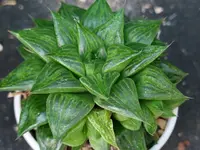
Ruens Haworthia
Haworthia retusa
 POPULAR
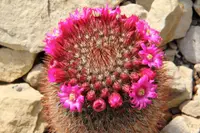
Spiny pincushion cactus
Mammillaria spinosissima
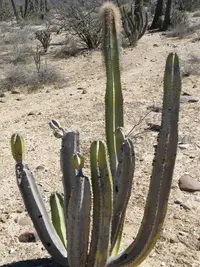
senita cactus
Lophocereus schottii
 POPULAR
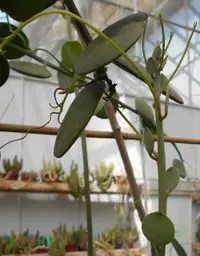
Silver Dollar Vine
Xerosicyos danguyi
Old Lady Cactus
Mammillaria hahniana