


Rotate For Symmetry
Turn the pot 90° every 2–4 weeks so the cactus receives even light on all sides and develops a balanced, upright barrel rather than leaning toward the sun.

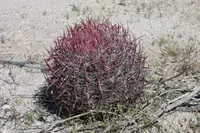
The fire barrel cactus, Ferocactus gracilis, is a compact, slow-growing desert cactus with a cylindrical body and striking red to reddish-yellow spines. It usually stays solitary when young and can form clusters with age.
This species is native to arid regions of northwestern Mexico, where it grows in rocky, well-drained soils under intense sun. Its ability to store water and tolerate drought makes it a resilient plant for beginners.
Understanding how to care for Fire Barrel Cactus mainly involves providing bright light, infrequent watering, and gritty, fast-draining soil to prevent rot and keep growth healthy.

Care Difficulty
Easy Care

Light Preference
Full Sun

Water Requirements
Low Water

Temperature Preference
Tropical / Frost Sensitive

Hardiness Zone
9–11

Soil Texture
Sandy, Loamy, Rocky

Soil pH
Slightly acidic (6.5–7.0), Neutral (7.0)

Soil Drainage
Well-drained

Fertilization
Minimal (feed rarely)
Scan your plant to receive care tips personalized for your specific plant
Available on iOS and Android
This cactus thrives in strong, direct light that mimics its desert habitat.
Watering should mimic infrequent desert rains, with thorough soakings followed by complete drying.
This species prefers warm, arid conditions with a clear distinction between summer growth and cooler rest periods.
Humidity is rarely a concern for this desert cactus when grown indoors or outdoors.
This cactus needs a sharply draining, mineral-based substrate that stays airy and dries quickly after watering.
This species is well suited to container growing due to its slow, compact, yet heavy form.
Ferocactus gracilis grows well with very moderate feeding, especially in containers.
Ferocactus gracilis rarely needs structural pruning, but occasional cleanup supports long-term health.
This cactus prefers to stay slightly root-bound and resents frequent disturbance.
Propagation of Ferocactus gracilis is most reliable from seed and is usually slow.
This desert cactus needs cool, very dry winter conditions and is only mildly frost tolerant.

Plant Health Check
Not sure what's wrong with your plant? Check your plant's health inside the app.
Ferocactus gracilis has a notably more elongated and narrow stem than many other Ferocactus species, giving it a tall, cylindrical profile rather than a squat barrel shape. This form helps reduce direct sun exposure on any one surface area in its native hot, arid habitats of northwestern Mexico.
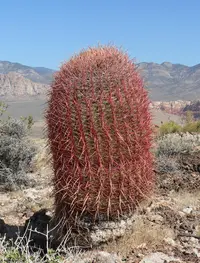
This species develops vivid red to reddish-yellow central spines that can contrast strongly with the green stem, especially in strong light. The colorful spines may help shade the plant surface and provide some protection from herbivores.
In habitat, it produces funnel-shaped yellow to reddish flowers near the stem apex, typically during the warmer months when moisture and temperature conditions align. The flowers form a ring near the top of the plant, which later becomes a band of small, dry fruits containing numerous seeds.

Ferocactus gracilis often grows on rocky slopes and volcanic soils in Baja California and adjacent regions, where its deep and wide-spreading root system exploits sparse rainfall that quickly drains through the substrate, giving it a competitive advantage over less specialized desert plants.
Growth is slow. In suitable outdoor conditions, it may add around 1–3 cm in height per year, forming a noticeable barrel over many years. Container plants often grow even more slowly due to root restriction and limited nutrients.
Keep your plants happy and healthy with plant identification, disease detection, and easy care guidance.

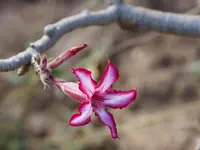
impala lily
Adenium multiflorum
 POPULAR
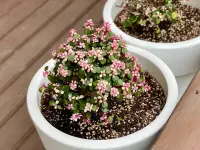
Elephant Bush
Portulacaria afra
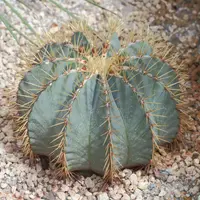
glaucous barrel cactus
Ferocactus glaucescens
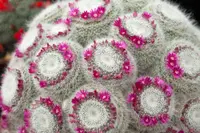
Old Lady Cactus
Mammillaria hahniana
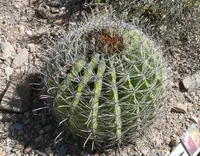
candy barrelcactus
Ferocactus wislizeni
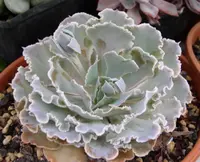
Mexican hens and chicks
Echeveria shaviana
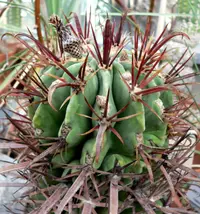
Devil's Tongue Barrel Cactus
Ferocactus latispinus
California barrel cactus
Ferocactus cylindraceus