Rotate Container Safely
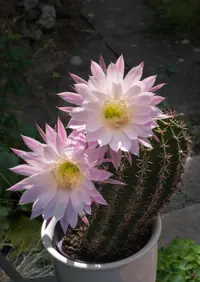
Rotate potted plants a quarter-turn every 1–2 months using thick gloves or folded newspaper around the spines so light reaches all sides and the stem stays upright rather than leaning toward the sun.

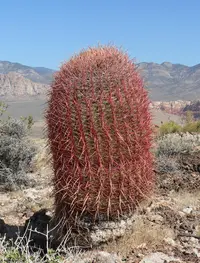
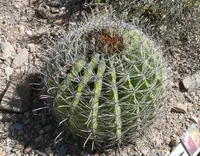
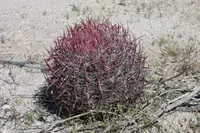
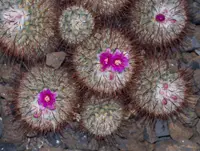
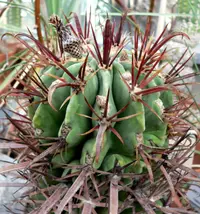
The California barrel cactus, Ferocactus cylindraceus, is a slow-growing desert cactus with a thick cylindrical stem lined with pronounced ribs and heavy, hooked spines. Mature plants often form a single tall column, sometimes leaning slightly, and may produce bright yellow to orange flowers near the crown.
This species is native to arid regions of the southwestern United States and northern Mexico, where it thrives in rocky, sun‑exposed slopes and desert flats. It is generally considered a durable plant, but its sensitivity to excess moisture and poor drainage can challenge beginners.
Those who care for California barrel cactus should provide very bright light, sparse watering, and a sharply draining mineral soil mix to keep it healthy over the long term.

Care Difficulty
Moderate Care

Light Preference
Full Sun

Water Requirements
Low Water

Temperature Preference
Warm Climate

Hardiness Zone
9–11

Soil Texture
Sandy, Rocky, Loamy

Soil pH
Slightly acidic (6.5–7.0), Neutral (7.0)

Soil Drainage
Well-drained

Fertilization
Minimal (feed rarely)
Scan your plant to receive care tips personalized for your specific plant
Available on iOS and Android
This desert cactus grows best in strong, direct sun for compact, healthy growth.
This species is highly drought-tolerant and prefers deep, infrequent watering.
This cactus is adapted to hot deserts but still has clear temperature limits for safe growth.
This species prefers very dry air and usually does best at 20–40% humidity.
This desert cactus needs very fast-draining, mineral-based soil to prevent root rot.
This cactus is well suited to container growing when the pot supports its deep, heavy root system.
This desert cactus needs only light feeding to stay healthy in containers.
Ferocactus cylindraceus needs almost no pruning, as it naturally maintains a compact, symmetrical form.
This slow-growing barrel cactus rarely needs a larger pot but benefits from careful handling when moved.
Most Ferocactus cylindraceus plants for home culture are propagated from seed rather than offsets.
This desert species tolerates brief light frosts when dry but needs thoughtful winter handling in colder or wetter regions.

Plant Health Check
Not sure what's wrong with your plant? Check your plant's health inside the app.
Spines on this cactus are often denser and heavier on the south-facing side of the stem, which helps shade tissues from intense midday sun and reduces water loss in its Mojave and Sonoran desert habitats.
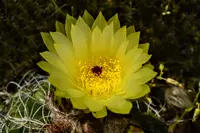
It produces large yellow to yellow-orange funnel-shaped flowers mainly in spring, providing an important nectar and pollen source for native bees and other early-season desert pollinators.
On steep rocky slopes, mature plants can detach and roll downslope during flash floods or erosion events, sometimes coming to rest and re-rooting lower on the hillside.

In extreme drought, this cactus can contract so much as it uses stored water that deep grooves form between its ribs, a reversible change that protects tissues from splitting when rare desert rains rapidly refill its water-storage tissues.
Growth is slow. In cultivation it may add only 1–3 cm in height per year, sometimes less. Young plants put more energy into root development than visible growth, so patience is essential when growing California barrel cactus.
Keep your plants happy and healthy with plant identification, disease detection, and easy care guidance.