Encourage Flowering Cycle
To trigger abundant blooms, give the plant a cool, bright, and very dry rest period in late fall to winter, then increase watering and slightly warmer temperatures in spring to signal the start of its flowering cycle.

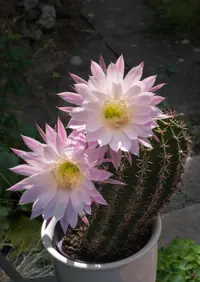
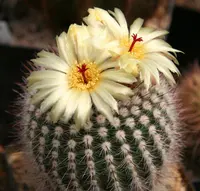
Easter lily cactus, Echinopsis oxygona, is a small, clumping cactus valued for its large, showy, fragrant flowers. It forms rounded, ribbed stems with short spines that stay compact, making it suitable for containers and small spaces.
This species is native to South America, especially regions of Brazil, Uruguay, and Argentina, where it grows in rocky, well-drained habitats. It is generally considered easy to grow, as it tolerates indoor conditions well and recovers from occasional care mistakes.
To care for Easter lily cactus, provide bright light, infrequent but deep watering, and gritty, fast-draining soil to reduce the risk of rot and support healthy flowering.

Care Difficulty
Easy Care

Light Preference
Full Sun

Water Requirements
Low Water

Temperature Preference
Warm Climate

Hardiness Zone
9–11

Soil Texture
Sandy, Loamy, Rocky

Soil pH
Slightly acidic (6.5–7.0), Neutral (7.0)

Soil Drainage
Well-drained

Fertilization
Light (every 4–6 weeks)
Scan your plant to receive care tips personalized for your specific plant
Available on iOS and Android
This cactus thrives in bright light with some direct sun but benefits from protection in intense afternoon conditions.
This species prefers thorough but infrequent watering with time to dry between soakings.
This cactus prefers warm, dry conditions with a distinct cool rest period but must be protected from frost.
Humidity is rarely a problem for this cactus and typical indoor air is usually acceptable.
This cactus needs a very fast-draining, airy mineral mix to prevent root rot and support healthy growth.
This species is very suitable for container growing, both indoors and outdoors in mild climates.
This cactus benefits from light feeding during its active growing season but tolerates lean conditions well.
Pruning Echinopsis oxygona is minimal and mainly hygiene-focused rather than shaping-focused.
Repotting is infrequent, as this cactus prefers slightly cramped containers and dry, fast-draining soil.
New plants are commonly produced from offsets, making Echinopsis oxygona straightforward to multiply at home.
This cactus needs a cool, dry rest period and is not suited to prolonged freezing conditions.

Plant Health Check
Not sure what's wrong with your plant? Check your plant's health inside the app.
This species opens its large white to pale pink flowers at night, releasing a strong sweet fragrance that attracts nocturnal pollinators such as moths.
Individual blooms can reach about 15–20 cm across yet typically last only one night and part of the following day before wilting.
Mature plants produce many basal offsets around the main stem, so a single specimen gradually develops into a dense, rounded cluster of stems over time.

The species was first described in the 19th century from plants collected in southern Brazil, and over time it has been moved between genera such as Cereus and Echinopsis as cactus taxonomy has been revised based on floral and stem characteristics.
Lack of blooms usually comes from insufficient light, no cool winter rest, or a pot that is too large. Provide bright conditions, allow a cooler, drier winter, and avoid frequent repotting to encourage flower buds.
Keep your plants happy and healthy with plant identification, disease detection, and easy care guidance.