Uebelmannia pectinifera Care

Uebelmannia pectinifera

About Uebelmannia pectinifera

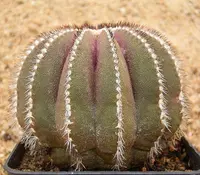
Uebelmannia pectinifera is a small, slow-growing desert cactus known for its spherical to short columnar body covered in neat vertical ribs and fine, comb-like spines. Mature plants often show a dark, almost purplish-green skin that contrasts strongly with the pale spines.

This species is native to rocky, quartz-rich hillsides in Brazil, where it grows in very bright, dry conditions with excellent drainage. It is considered challenging, mainly because it dislikes cold, excess moisture, and poorly drained or standard potting soil.

Gardeners who want to care for Uebelmannia pectinifera should provide strong light, warm temperatures, and a very gritty, fast-draining cactus mix to support long-term health.

Main Plant Requirements

Care Difficulty

Hard Care

Light Preference

Full Sun

Water Requirements

Low Water

Temperature Preference

Tropical / Frost Sensitive

Hardiness Zone

11–12

Soil Texture

Sandy, Rocky, Loamy

Soil pH

Strongly acidic (4.5–5.5), Acidic (5.5–6.5)

Soil Drainage

Well-drained

Fertilization

Minimal (feed rarely)

Get Personalized Care Plan

Scan your plant to receive care tips personalized for your specific plant

Available on iOS and Android

How to Care for the Uebelmannia pectinifera

This cactus needs strong, stable light to maintain compact, healthy growth.

  • Provide 6–8 hours of direct sun daily; in hot, arid climates, give Uebelmannia pectinifera light afternoon shade to prevent scorching of the ribs.
  • Outdoors, prioritize full morning sun with filtered or dappled light after 2–3 p.m., especially in summer heat waves.
  • In low-light seasons or cloudy regions, move plants to the brightest south- or west-facing exposure and avoid prolonged shade, which causes elongation and dull color.

This species prefers thorough but infrequent watering with fast drainage.

  • Water only when the top 3–5 cm of soil are completely dry; in active warm-season growth this often means every 10–21 days depending on heat and airflow.
  • Use a very gritty, mineral-rich mix and water until it drains freely, then discard runoff so roots do not sit in moisture for more than 1–2 hours.
  • In cool or overcast periods, extend the dry time; soft, yellowing tissue suggests overwatering, while deep wrinkling and loss of firmness indicate it is time to water.

Stable warmth is important for this desert cactus to grow well.

  • Aim for 75–85°F (24–29°C) in the main growing season, with good airflow to prevent heat buildup around the stem.
  • Protect from cold; growth slows below 65°F (18°C), and the plant should not be exposed to temperatures under 50°F (10°C), especially in damp conditions.
  • Uebelmannia pectinifera is very sensitive to frost, so avoid any exposure near 32°F (0°C) and shield from extreme heat above 95°F (35°C) by increasing shade and ventilation.

This cactus prefers relatively dry air and does not need elevated humidity.

  • Aim for 20–40% humidity, similar to a dry indoor room or arid outdoor climate.
  • It tolerates drier air; problems usually come from excess moisture around roots, not from low atmospheric humidity.
  • Humidity stress appears as soft, pale, or blackening tissue after prolonged damp, so increase air movement and keep foliage and crown dry.

Provide a very fast-draining, mineral-heavy substrate to keep roots dry and aerated.

  • Use a gritty mix such as 60–80% mineral components (pumice, coarse sand, fine gravel) with 20–40% cactus potting mix for structure.
  • Soil should feel loose and crumbly, never dense; this allows air around the roots and rapid water escape.
  • Aim for slightly acidic to neutral pH around 6.0–7.0 when possible, which supports micronutrient availability for Uebelmannia pectinifera.
  • Avoid peat-heavy, compact, or water-retentive substrates; if a commercial cactus mix feels dense, cut it with extra pumice or coarse sand.

This species is well suited to container growing when drainage and root zone dryness are carefully controlled.

  • Choose a pot only 2–4 cm wider than the plant’s body to limit excess wet substrate that can sour around the roots.
  • Unglazed terracotta is useful because it wicks moisture from the mix, helping the root zone dry quickly after infrequent waterings.
  • Place the pot in a stable, low-traffic spot so the heavy, mineral substrate and spined stem are not knocked or tipped over.

This cactus benefits from light feeding in the warm growing months but is sensitive to excess nutrients.

  • Use a low-nitrogen balanced cactus fertilizer (for example 5-10-10), liquid or slow-release, suitable for desert species.
  • Apply at 1/4–1/2 label strength every 4–6 weeks during spring–summer when Uebelmannia pectinifera is actively growing.
  • Skip composts or rich organic feeds, which hold moisture and can cause root problems.
  • Stop feeding in fall–winter, when growth slows, to avoid soft, weak tissue and root burn.

Pruning needs are minimal and mainly focused on removing unhealthy tissue.

  • Carry out any work in late spring–summer, when healing is faster and conditions are warm and dry.
  • Remove only clearly dead, diseased, or badly damaged sections using sterilized, sharp cactus-safe tools.
  • Avoid cutting healthy ribs or the growing point, as this distorts the plant and slows growth.
  • Let any unavoidable wounds dry and callus in bright, dry air to limit infection risk.

This species prefers a stable pot and is repotted only when root-bound or the mix has degraded.

  • Check for roots circling the pot, slowing growth, or rapid drying of soil as signs it needs fresh space.
  • Plan to repot every 3–5 years in late spring, just before strong warm-season growth starts.
  • Use a slightly larger pot with a very fast-draining mineral cactus mix to reduce root rot risk.
  • Minimize root stress by keeping the root ball mostly intact, handling with care, and withholding water for 3–5 days after repotting.

Propagation of Uebelmannia pectinifera is specialized and usually done from seed rather than offsets.

  • Sow fresh seed in late spring–early summer in a sterile, very gritty mix with fine particle size.
  • Maintain bright indirect light, 75–85°F warmth, and high but not dripping humidity for steady germination.
  • Cover seeds lightly, keep the surface just moist, and provide gentle airflow to limit fungal issues.
  • Once seedlings show firm growth, gradually reduce humidity and increase light to strengthen tissues.

Cold conditions are risky for this cactus, so winter culture focuses on warmth and dryness.

  • Keep indoor or greenhouse temperatures above 50°F, with an ideal range of 55–65°F in winter.
  • Provide as much light as possible, such as a bright south-facing window or supplemental grow lights.
  • Water very sparingly, only when the mix is fully dry, since cool, wet soil increases rot risk.
  • Ensure the pot stands in a dry, ventilated spot away from cold drafts and window condensation.

Care Tips

Use clay pots

Plant in an unglazed clay pot with a single drainage hole to increase evaporation from the sides and keep the root zone drier between waterings, which reduces the risk of rot in this species.

Bottom-watering control

When watering, place the pot in a shallow tray of water for 10–15 minutes, then remove and let excess moisture drain fully; this encourages deeper root growth while avoiding repeated wetting of the crown.

Inert top dressing

Add a 0.5–1 cm layer of clean pumice, lava rock, or coarse grit on the soil surface to keep the neck of the plant dry, reduce algae and fungus growth, and stabilize the cactus in its pot.

Gradual light acclimation

After winter or after moving the plant, increase light over 2–3 weeks by first placing it in bright shade, then slowly shifting it toward higher light to prevent epidermal sunburn on the ribs and spines.

Winter rest management

During the coolest, lowest-light months, keep the plant in a bright, airy place and withhold water almost completely, which supports a proper dry rest period that is important for long-term Uebelmannia pectinifera care.

Common Pests and Diseases

Spider mites

This pest thrives on Uebelmannia skin in hot, very dry air, causing fine stippling, dull patches, and eventually a faded, dusty look to the ribs. Symptoms include very fine webbing in areoles and slowed growth.

Solution

Increase humidity slightly around the plant without wetting the body, then hose or shower the cactus with a firm but gentle stream of water to dislodge mites. If needed, apply a neem oil or insecticidal soap spray labeled for cacti, repeating every 7–10 days, and isolate the plant until no new damage appears.

Mealybugs

These insects hide between the ribs and in areoles, appearing as small white cottony tufts and causing yellowing spots and deformed new growth. This pest can also attack the roots, leading to slow decline despite apparently normal soil moisture.

Solution

Remove visible mealybugs with cotton swabs dipped in 70% isopropyl alcohol, then inspect ribs and areoles closely for missed insects. For heavy or recurring infestations, unpot the plant, wash roots thoroughly, trim badly affected roots, repot into fresh mineral soil, and use a systemic insecticide labeled for succulents according to Uebelmannia pectinifera care instructions.

Corky scab lesions

This disease presents as rough, brown, corky patches that often start near the soil line or on lower ribs and slowly expand. Symptoms include hardened, bark-like tissue that does not recover even when conditions improve.

Solution

Improve airflow, provide high light without prolonged direct wetting of the stem, and avoid sudden shifts between very wet and very dry conditions. Remove any loose, dead tissue with a sterile tool if it traps moisture, then adjust watering to a thorough soak followed by a full dry-out, and keep the plant in a well-ventilated, mineral-based substrate.

Fungal stem spots

This disease starts as small, dark, slightly sunken spots on the epidermis, often after cool, damp spells or overhead watering that leaves the stem wet for hours. Symptoms include expansion of spots into irregular patches that may soften in the center if the fungus progresses.

Solution

Move the cactus to a warmer, brighter, very airy position and keep the stem dry, watering only at the soil level in the morning. At an early stage, dab spots with a cotton swab dipped in a contact fungicide or 70% isopropyl alcohol, and if lesions spread, cut out affected tissue with a sterile blade and allow the wound to dry in dry air before resuming normal watering.

Interesting Facts

Quartz-rich habitat

In the wild, this species grows almost exclusively on white quartzite gravel outcrops in Brazil’s Minas Gerais region, where the highly mineral, fast-draining substrate and intense light strongly shape its growth form.

Grooved rib armor

Its dark, almost blackish epidermis is divided into numerous narrow ribs with comb-like spines that create a regular, banded pattern thought to help shade the surface and reduce overheating under extreme sun.

Critically restricted range

The species has a very limited natural distribution and is considered threatened by habitat loss and illegal collection, so cultivated plants are best sourced from seed-grown, ethically produced material rather than wild-collected specimens.

Botan icon

Did you know?

This cactus is so specialized to its native quartz gravel slopes that it often occurs in visually striking, almost pure stands, forming dark spherical clusters that sharply contrast with the surrounding white rock, making populations easy to spot yet also vulnerable to over-collection.

FAQs about Uebelmannia pectinifera

This cactus is very slow-growing, often adding only a few millimeters of height each year. In cultivation, it may take 8–10 years to become a modestly sized specimen, even under ideal conditions.

Grow Healthy Plants with Botan Care

Keep your plants happy and healthy with plant identification, disease detection, and easy care guidance.

Botan plant care app — identify plants on mobile

Explore More Plants