Mammillaria melanocentra Care

Mammillaria melanocentra

About Mammillaria melanocentra

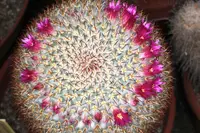
Mammillaria melanocentra is a small, slow-growing cactus forming a compact, rounded stem covered with tubercles instead of obvious ribs. Dark central spines give it a striking, bristled look, sometimes with a slightly woolly crown where small flowers appear in a ring.

This species is native to arid regions of Mexico, where it grows on rocky slopes with strong light and very well-drained soils. Its drought tolerance and modest size make it suitable for containers and windowsills, though overwatering is a common issue. With a bright, dry spot and gritty soil, it is relatively simple to care for Mammillaria melanocentra.

Main Plant Requirements

Care Difficulty

Moderate Care

Light Preference

Full Sun

Water Requirements

Low Water

Temperature Preference

Warm Climate

Hardiness Zone

9–11

Soil Texture

Sandy, Loamy, Rocky

Soil pH

Slightly acidic (6.5–7.0), Neutral (7.0)

Soil Drainage

Well-drained

Fertilization

Minimal (feed rarely)

Get Personalized Care Plan

Scan your plant to receive care tips personalized for your specific plant

Available on iOS and Android

How to Care for the Mammillaria melanocentra

This cactus thrives in bright, direct sun but needs gradual acclimation outdoors to prevent scorch.

  • Provide 6–8 hours of direct sun daily, ideally with strong morning sun and lighter afternoon exposure, especially in hot climates.
  • Tolerates light partial shade for a few hours, but prolonged shade causes elongated, pale growth and fewer spines and flowers in Mammillaria melanocentra.
  • In summer, monitor for yellowing or brown patches from intense midday sun; in winter, move to the brightest possible position to compensate for shorter days.

Watering should mimic desert rainfall pulses, with thorough soaking followed by a complete dry-out period.

  • Allow the top 3–5 cm of soil to dry completely before watering, then soak deeply so water drains quickly through the profile.
  • During active growth in spring and summer, expect to water every 10–21 days depending on heat and airflow; in winter, water lightly once every 4–6 weeks or not at all if kept cool.
  • Use a very fast-draining mineral-rich mix and watch for soft, darkened stem tissue or a sour smell as signs of overwatering, and wrinkling ribs as a sign of underwatering in Mammillaria melanocentra.

This species prefers warm, dry air with a distinct cool, dry winter rest period.

  • Aim for 70–85°F (21–29°C) in the main growing season, with good airflow to handle brief hotter spells without heat stress.
  • Protect from frost; short dips to 32–35°F (0–2°C) are the lower limit if soil is completely dry, but 40–55°F (4–13°C) dry is safer for winter dormancy.
  • Avoid extended exposure above 95°F (35°C), especially with high humidity, as this increases rot risk; give light shade and strong ventilation in such conditions.

This cactus prefers dry air and thrives in low-humidity indoor environments.

  • Target 20–40% humidity, similar to most heated or air-conditioned homes.
  • It tolerates very dry air; issues rarely come from low humidity but from excess moisture around the plant body.
  • Humidity stress shows as prolonged surface dampness, softening, or rot; improve air circulation and avoid clustering plants too tightly.

Use a very fast-draining, mineral-rich cactus substrate for Mammillaria melanocentra.

  • Choose a gritty, sandy mix with large particle size to keep the root zone dry and well aerated.
  • Combine roughly 30–40% cactus potting mix with 60–70% mineral components such as pumice, coarse perlite, and coarse sand.
  • Aim for slightly acidic to neutral pH around 6.0–7.0, avoiding heavy, clay-based or peat-dense mixes that stay wet for long periods.
  • Increase drainage and aeration by adding extra pumice or lava rock if water takes more than a few seconds to disappear from the surface.

This species is very suitable for container growing.

  • Select a pot only 2–3 cm wider than the plant body to keep the root zone from holding excess moisture.
  • Use a heavy, low terracotta pot to counterbalance the spiny crown and reduce the risk of tipping.
  • Fill the bottom with a thin layer of coarse rock over the drainage holes to prevent mix compaction at the exit points.

This small cactus has low nutrient demands but benefits from light feeding in active growth for balanced Mammillaria melanocentra care.

  • Use a diluted balanced liquid cactus fertilizer (around 10-10-10) at 1/4–1/2 strength for safest results.
  • Feed every 4–6 weeks during spring–summer when light is strong and growth is visible.
  • Do not fertilize in winter dormancy; cool, dry rest reduces nutrient demand and prevents root burn.
  • Avoid rich compost or heavy slow-release pellets that hold moisture and can increase rot risk.

Pruning needs are minimal, focusing on cleanliness and health rather than shaping this compact cactus.

  • Best timing is late spring, after risk of frost and before peak flowering.
  • Use fine, disinfected scissors or tweezers to remove dead, dried flowers and shriveled offsets.
  • Cut away clearly rotten or damaged tissue back to firm, healthy flesh to limit disease spread.
  • Extensive cutting is not advised, as it disfigures the plant and does not improve long-term growth.

This species grows slowly and prefers infrequent repotting to avoid unnecessary root disturbance.

  • Repot Mammillaria melanocentra every 3–5 years or when roots circle the pot base or emerge from drainage holes.
  • Plan repotting for late spring, using a slightly larger container with fresh, gritty cactus mix for quick drainage.
  • Stop watering 7–10 days before repotting; gently free the root ball, removing loose, old soil without tearing roots.
  • After potting, keep dry and shaded for 7–10 days, then resume light watering to reduce transplant shock.

Propagation is commonly done from offsets, with seed raising reserved for more patient growers.

  • Separate offsets in late spring–summer when plants are actively growing and temperatures are warm.
  • Twist or cut pups cleanly from the mother Mammillaria melanocentra, leaving a small calloused base attached.
  • Allow cut surfaces to dry and callus for 3–7 days, then place on barely moist, gritty substrate.
  • For seeds, sow on the surface of sterile cactus mix at 70–80°F with bright, indirect light and high air humidity.

Winter care focuses on keeping this cactus cool, very dry, and above freezing to prevent tissue damage.

  • Maintain temperatures around 45–55°F in winter; avoid exposure below 32°F, especially in damp conditions.
  • Reduce watering to almost none, only a light splash every 4–6 weeks if stems begin to shrink severely.
  • For container plants, move indoors to a bright, unheated room or greenhouse with good air circulation.
  • Outdoors in mild climates, use a rain shelter or cold frame to keep the plant dry during prolonged winter wet.

Care Tips

Pot depth choice

Use a wide, shallow clay pot rather than a deep one to keep the fibrous root system closer to the warm, dry surface and reduce the risk of cold, wet soil around the roots.

Topdressing with grit

Apply a 0.5–1 cm layer of coarse mineral grit or small pebbles on the soil surface to keep the stem base dry, limit algae and fungus growth, and stabilize the plant.

Winter rest management

From late fall to late winter, keep the plant in a bright, cool spot (45–55°F) and almost completely dry to promote healthier flowering and tighter, more compact growth in the next season.

Controlled offset removal

When offsets are at least 1–1.5 cm wide and show visible roots, twist them off with sterilized fingers or tongs, let the wound dry for 5–7 days, then root them in barely moist, pure mineral substrate to expand your collection and rejuvenate the mother plant.

Spine-safe handling

Use folded newspaper, foam, or silicone-tipped tongs to grip the body when repotting or inspecting roots, which prevents damage to both the spines and your hands while caring for Mammillaria melanocentra.

Common Pests and Diseases

Spider mites

This pest often appears on stressed, sun-exposed plants and can cause a dull, speckled appearance on the cactus surface with fine webbing between tubercles.

Solution

Increase airflow and, if grown under cover, periodically hose the plant with a firm but gentle stream of water to remove mites and webbing, then apply a neem oil or insecticidal soap spray labeled for cacti, repeating weekly until no new damage appears.

Mealybugs

These insects hide in the tight axils between tubercles and at the base of spines, appearing as white, cottony clumps that sap plant vigor over time.

Solution

Isolate the plant, dab visible mealybugs with a cotton swab dipped in isopropyl alcohol, then follow up with a thorough application of insecticidal soap or a systemic insecticide suitable for succulents, checking and retreating crevices every 7–10 days until pests are gone.

Scale insects

This pest forms small, hard, brown or gray bumps on the ribs and between tubercles that do not rub off easily and may cause yellowing or weak growth.

Solution

Gently scrape or lift individual scales off with a wooden stick or tweezers, wipe affected areas with diluted alcohol, and improve light and air movement; in heavier infestations, use a systemic insecticide formulated for cacti and repeat according to label directions as part of broader Mammillaria melanocentra care instructions.

Corky scab lesions

This disease produces dry, tan to brown, corky patches on the outer tissue, often following minor mechanical injury or sun stress, and can expand slowly over time.

Solution

Remove any loose, dead surface tissue with sterile tools if present, keep the plant in bright but not scorching sun, ensure fast-draining mineral soil, and avoid overhead watering so that the stem dries quickly; fungicidal treatment is usually not needed, but new spots should be monitored and any soft, spreading areas removed promptly.

Fusarium stem rot

This disease starts as a soft, water-soaked or reddish-brown area at the base or side of the stem that can progress internally and collapse the cactus if unchecked.

Solution

At the first signs, cut out all affected tissue with a sterile knife back into firm, healthy flesh, dust the wound with a dry sulfur or copper-based fungicide, and re-root the healthy top in fresh, sterile, very free-draining substrate while discarding any badly infected base to prevent spread to other cacti.

Interesting Facts

Dark spine adaptation

This species develops notably dark to almost black central spines, which are thought to help moderate surface temperature and provide some protection from intense solar radiation in its native Mexican habitats.

Cluster-forming growth

Over time, a single stem often produces many offsets, forming tight clumps that help stabilize the plant on rocky slopes and share limited moisture within a small root zone.

Precise habitat preference

It occurs naturally in arid, rocky limestone areas of northeastern Mexico at higher elevations, where it grows in crevices with excellent drainage and large temperature swings between day and night.

Botan icon

Did you know?

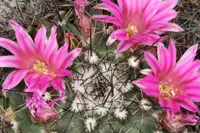
Flowering in this species often produces a neat ring of small, pale to pinkish flowers around the upper part of the stem, creating a crown-like halo that makes it very recognizable among Mammillaria species.

FAQs about Mammillaria melanocentra

This species usually blooms in late spring to early summer, producing a ring of small funnel-shaped flowers near the stem tip. Flowers are often white to pale pink and may be followed by bright red, elongated fruits.

Grow Healthy Plants with Botan Care

Keep your plants happy and healthy with plant identification, disease detection, and easy care guidance.

Botan plant care app — identify plants on mobile

Explore More Plants