


Heavy pot choice
Use a wide, heavy terracotta or concrete pot to counterbalance the tall, spiny stems and reduce the risk of the plant tipping as it gains height and weight.

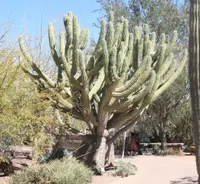
Toothpick cactus (Stetsonia coryne) is a large, columnar cactus known for its stout, pale spines that resemble wooden toothpicks. It forms tall, branched stems with a strong, architectural look.
This species is native to arid regions of Argentina, Bolivia, and Paraguay, where it grows in hot, dry habitats with strong sun and very well-drained soils. It is slow to moderate in growth and long-lived when its basic needs are met.
The plant is considered relatively easy for growers who can provide bright light, low humidity, and careful watering. Understanding how to care for Toothpick Cactus mainly involves avoiding excess moisture and providing a gritty, fast-draining substrate.

Care Difficulty
Moderate Care

Light Preference
Full Sun

Water Requirements
Low Water

Temperature Preference
Warm Climate

Hardiness Zone
9–11

Soil Texture
Sandy, Loamy, Rocky

Soil pH
Slightly acidic (6.5–7.0), Neutral (7.0)

Soil Drainage
Well-drained

Fertilization
Minimal (feed rarely)
Scan your plant to receive care tips personalized for your specific plant
Available on iOS and Android
This cactus prefers strong, direct light that mimics its desert habitat.
This species is highly drought-tolerant and must dry well between waterings.
This cactus thrives in hot, arid conditions with mild winters.
This cactus prefers dry air and does not need extra humidity beyond typical indoor levels.
Stetsonia coryne needs very fast-draining, mineral-rich soil to prevent root and stem rot.
This species is well-suited to container growing when the pot supports its tall, heavy structure.
This desert cactus needs light feeding to support slow, healthy growth in containers.
Pruning Stetsonia coryne is minimal and mainly focused on safety and plant health.
This large, slow-growing cactus dislikes frequent disturbance, so repot or transplant only when clearly needed.
New plants are usually raised from seeds, with rooted cuttings used less often due to heavy, spiny stems.
Cold tolerance is limited, so plants in cool climates need structured winter protection.

Plant Health Check
Not sure what's wrong with your plant? Check your plant's health inside the app.
This species produces large white, nocturnal flowers that open at night and are primarily visited by moths and bats in its native South American dry forests.
Its long, stiff, pale spines emerge in clusters along the ribs and resemble bundles of toothpicks, which inspired the common name toothpick cactus and help shade the stem surface from intense sun.
Unlike many columnar cacti, it can develop a branching, tree-like structure with a woody base, forming a small arborescent cactus in suitable arid and semi-arid habitats.

In parts of its native range in the Gran Chaco region of Argentina, Paraguay, and Bolivia, its tall, thorny stands can act as natural living fences that influence the movement of both wildlife and livestock across the landscape.
Growth is slow to moderate. Young plants may add 5–10 cm per year in containers, slightly more in warm, bright outdoor conditions. Expect several years before noticeable column height develops, especially if light or warmth is suboptimal.
Keep your plants happy and healthy with plant identification, disease detection, and easy care guidance.

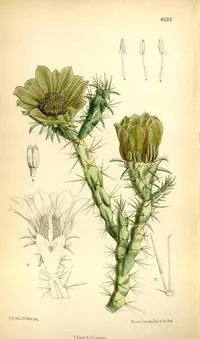
thistle cholla
Cylindropuntia davisii

Cane Cactus
Austrocylindropuntia cylindrica
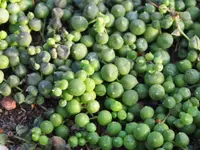
string-of-pearls
Curio rowleyanus
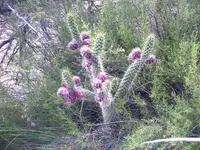
Austrocylindropuntia shaferi
Austrocylindropuntia shaferi
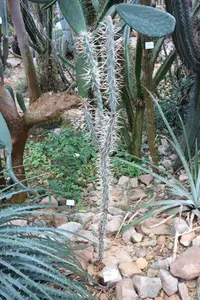
Long-spine Cholla
Cylindropuntia molesta
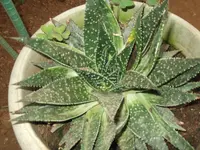
× Gasteraloe
× Gasteraloe
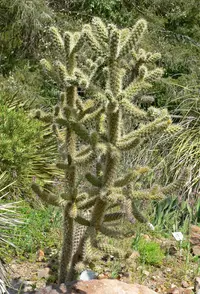
Munz's cholla
Cylindropuntia munzii
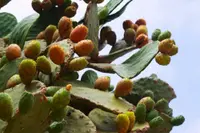
Stenocereus pruinosus
Stenocereus pruinosus