


Encourage Compact Clumping
Rotate the pot 90° every 2–3 weeks during active growth so light reaches all sides evenly, which encourages a dense, symmetrical cluster instead of leaning stems.

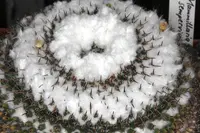
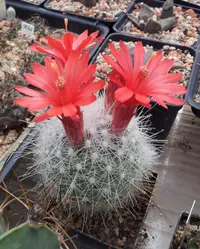
Mammillaria sempervivi is a small globular cactus from arid rocky areas of Mexico. It forms tight clusters of rounded stems covered in neat rows of tubercles and fine spines. Flowers appear in a ring near the stem top, usually in soft pink or white, giving a decorative crown effect on mature plants.
This species stays compact, so it suits windowsills and small indoor collections. It grows slowly but is generally straightforward if kept dry and bright, with excellent drainage. Understanding how to care for Mammillaria sempervivi mainly involves avoiding overwatering and providing as much light as possible without harsh scorching sun.

Care Difficulty
Easy Care

Light Preference
Full Sun

Water Requirements
Low Water

Temperature Preference
Warm Climate

Hardiness Zone
9–11

Soil Texture
Sandy, Loamy, Rocky

Soil pH
Slightly acidic (6.5–7.0), Neutral (7.0)

Soil Drainage
Well-drained

Fertilization
Minimal (feed rarely)
Scan your plant to receive care tips personalized for your specific plant
Available on iOS and Android
This small mountain cactus prefers bright, cool sun with some protection from harsh extremes.
This species needs infrequent, measured watering that mimics dry, rocky habitats.
This cactus prefers moderate warmth with a cool, dry rest in winter.
This cactus thrives in dry air and humidity rarely limits performance indoors.
Soil for this species must drain extremely fast to prevent root rot.
This species is very suitable for container growing due to its compact, shallow root system.
This small cactus has low nutrient needs but benefits from light feeding during active growth for best flowering and healthy tissue development.
Pruning needs are minimal and focus on hygiene rather than shaping this naturally compact cactus.
Repotting is infrequent, as this slow-growing cactus prefers to be slightly root-bound in a snug container.
This species is commonly multiplied from offsets, with seeds used mainly for larger batches or breeding work.
Winter care focuses on keeping this cactus cold but dry, as prolonged damp and chill together can be harmful.

Plant Health Check
Not sure what's wrong with your plant? Check your plant's health inside the app.
This species is native to rocky slopes in central Mexico at higher elevations, where it tolerates strong sun, wide temperature swings, and brief cold spells better than many other Mammillaria species.
Mature plants form dense mats of small, rounded stems closely packed together, an efficient growth pattern that reduces water loss and stabilizes the plant on shallow, stony soils.
Its short, fine radial spines create a pale, almost woolly appearance that helps shade the stem surface and slightly buffer it from intense solar radiation in its native habitat.
This species usually flowers in late spring to early summer, forming a ring of small pink to reddish funnel-shaped blooms near the stem top. Flowers are followed by elongated red fruits containing numerous fine seeds.
Keep your plants happy and healthy with plant identification, disease detection, and easy care guidance.

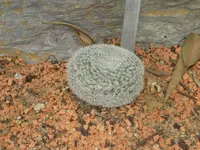
Mammillaria perbella
Mammillaria perbella
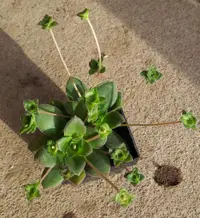
Rock Stonecrop
Crassula orbicularis
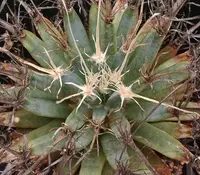
Agave cactus
Leuchtenbergia principis
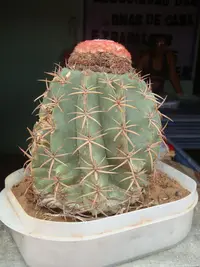
Melocactus zehntneri
Melocactus zehntneri
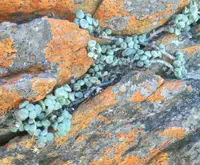
String-of-Tears
Curio citriformis
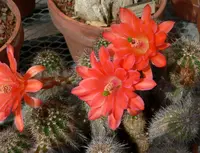
Mojave mound cactus
Echinocereus polyacanthus
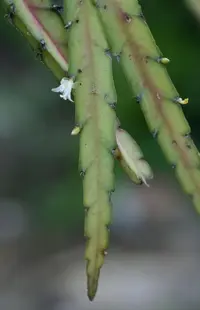
Hurricane Cactus
Lepismium cruciforme
Mammillaria senilis
Mammillaria senilis