Mammillaria perbella Care

Mammillaria perbella

About Mammillaria perbella

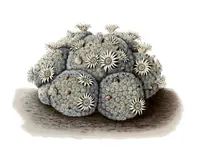
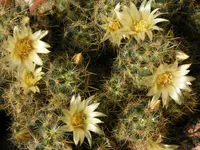
Mammillaria perbella is a small, clumping cactus known for its rounded stems covered in neat rows of soft, white radial spines and pinkish flowers. It forms low cushions over time, staying compact and well suited to containers and windowsills.

This species is native to Mexico, where it grows in rocky, well-drained habitats with strong light and limited rainfall. Its slow growth, drought tolerance, and modest size make it relatively easy to manage for patient growers.

For most home conditions, it prefers bright light, sparse watering, and gritty, free-draining soil. Simple, consistent conditions are usually enough to care for Mammillaria perbella successfully.

Main Plant Requirements

Care Difficulty

Easy Care

Light Preference

Full Sun

Water Requirements

Low Water

Temperature Preference

Tropical / Frost Sensitive

Hardiness Zone

10–11

Soil Texture

Sandy, Loamy, Rocky

Soil pH

Slightly acidic (6.5–7.0), Neutral (7.0)

Soil Drainage

Well-drained

Fertilization

Minimal (feed rarely)

Get Personalized Care Plan

Scan your plant to receive care tips personalized for your specific plant

Available on iOS and Android

How to Care for the Mammillaria perbella

This small cactus prefers bright, direct light but benefits from some protection in intense afternoon sun.

  • Provide 4–6 hours of direct morning sun plus bright, indirect light for the rest of the day to support compact growth and flowering of Mammillaria perbella.
  • Allow light, shifting shade during harsh afternoon sun, especially in hot, low-latitude climates, to reduce scorch and yellowing of the epidermis.
  • In winter, maximize light with a south- or west-facing exposure; in summer, use 30–40% shade cloth outdoors if stems start to redden or bleach from excess sun.

This cactus needs infrequent, thorough watering and fast-drying soil to prevent root problems.

  • From spring to early fall, water only when the top 3–5 cm of soil is completely dry, then soak fully and let excess drain away to support healthy Mammillaria perbella roots.
  • Reduce watering sharply in winter, giving just a light drink every 4–6 weeks if stems noticeably wrinkle, to avoid rot during cool, low-light conditions.
  • Watch for soft, yellowing, or translucent tissue as signs of overwatering, and for deep wrinkling and dull, shriveled stems as cues to water slightly more often.

This species prefers warm, dry air and tolerates a modest range of temperatures if kept frost-free.

  • Aim for active growth temperatures of 70–85°F (21–29°C) by day and 60–70°F (16–21°C) by night, which support strong stems and flowering.
  • Protect the plant from frost; short dips to 40–45°F (4–7°C) are usually survivable if soil is dry, but growth stops and prolonged exposure below 40°F (4°C) risks damage.
  • In hot spells above 95°F (35°C), increase airflow and provide light afternoon shade to prevent tissue stress and sunscald while maintaining a dry substrate.

This cactus handles indoor humidity well and rarely needs special adjustment.

  • Aim for 30–50% humidity, similar to typical heated or air-conditioned homes.
  • It tolerates dry air; problems appear only if combined with overwatering, showing soft, pale, or collapsing tissue.
  • If air is extremely dry and hot, increase humidity slightly by grouping cacti together rather than misting the plant.

Use a very fast-draining, mineral-rich mix to protect Mammillaria perbella from root rot.

  • Choose a gritty, sandy substrate with coarse particles so water drains through in seconds, not minutes.
  • Blend roughly 30–40% cactus potting mix with 60–70% mineral material such as pumice, coarse perlite, and horticultural grit.
  • Keep pH slightly acidic to neutral (pH 6.0–7.2), avoiding lime-heavy garden soil that can compact and reduce nutrient uptake.
  • Do not use pure compost, peat-heavy mixes, or clay soil, which hold water and limit aeration around the roots.

This species is well suited to container growing, including small pots and dish gardens.

  • Select a pot only slightly wider than the plant cluster so the mix dries evenly and does not stay wet in unused areas.
  • Use a heavier material such as terracotta or ceramic if the plant forms offsets, to prevent tipping as the clump enlarges.
  • Raise the pot on feet or a stand so drainage holes stay clear and excess water can exit quickly after each watering.

This compact cactus needs only light feeding to maintain healthy growth in containers.

  • Apply a diluted balanced liquid cactus fertilizer (around 5-5-5 or 10-10-10 at 1/4 strength) every 4–6 weeks during spring–summer.
  • Use a low-organic, mineral-based mix rather than rich compost to prevent soft, weak tissue.
  • Skip feeding in fall–winter when Mammillaria perbella rests and growth slows.
  • Always water lightly before adding fertilizer to reduce root burn risk.

This species needs minimal pruning, mainly for hygiene and safety.

  • In late spring or summer, remove dead, shriveled, or rotting stems using clean, sharp scissors or pruning snips.
  • Cut away damaged or diseased tissue back to firm, healthy flesh to limit infection spread.
  • Thin out severely crowded offsets only if they trap moisture and increase rot risk.
  • Pruning has little effect on flowering but can keep clusters neater and easier to handle.

Container-grown plants benefit from occasional repotting into fresh, very free-draining mix.

  • Repot every 3–4 years or when roots circle the pot, drainage slows, or growth stalls.
  • Best timing is late spring, after the main risk of cold has passed and active growth begins.
  • Gently loosen the root ball, remove old compacted soil, and trim dead roots with sterile scissors.
  • Set Mammillaria perbella slightly high in a gritty cactus mix, keep dry 5–7 days, then resume light watering.

This cactus is commonly propagated from offsets, with seed used mainly for larger batches.

  • Detach firm, golf-ball-sized offsets in late spring–summer using a clean, sharp knife.
  • Allow cut surfaces to callus in dry shade for 5–10 days before planting to reduce rot.
  • Plant offsets in a gritty, barely moist cactus mix and keep in bright, indirect light until rooted.
  • For seed, sow on the surface of sterile, fine grit mix, keep 70–80°F and lightly covered for steady moisture.

Winter care focuses on keeping the plant cool, bright, and very dry to avoid rot.

  • Move containers indoors before frost; this cactus is not reliably hardy below 25°F.
  • Provide a bright, cool spot around 45–55°F to support a proper dry rest period.
  • Stop watering and feeding through winter; only mist soil surface lightly if stems begin to shrivel.
  • Use a very porous mix and good air flow so cold, damp conditions do not linger around the roots.

Care Tips

Rotate for symmetry

Turn the pot 90° every 2–3 weeks during active growth so the plant receives even light on all sides and forms a balanced, compact cluster rather than leaning toward the brightest direction.

Use top dressing

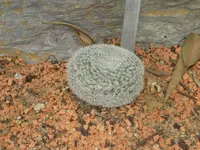
Apply a 0.5–1 cm layer of clean mineral grit or small gravel on the soil surface to keep the base dry, reduce rot risk at the neck, and prevent soil from splashing onto the stems during watering.

Winter rest management

From late fall to late winter, keep the plant very dry and in a bright, cool position (around 45–55°F if possible) to encourage strong bud formation and reliable spring flowering.

Protect from excess rain

If grown outdoors in a warm climate, place the pot under a covered area or move it during prolonged rain so the substrate does not stay saturated, which greatly increases the risk of root and stem rot when growing Mammillaria perbella.

Check spines for pests

Inspect the dense spines and areoles with a magnifying glass every few weeks, looking for mealybugs or scale insects, and treat early with a cotton swab dipped in isopropyl alcohol before infestations reach the plant’s growing points.

Common Pests and Diseases

Mealybugs

This pest often hides in the woolly areoles and at the base of Mammillaria stems, sucking sap and weakening the plant. Symptoms include white cottony clusters, slight yellowing, and stunted new growth.

Solution

Isolate the plant, then dab visible mealybugs with cotton swabs dipped in 70% isopropyl alcohol, taking care to reach into woolly sections between tubercles. For heavier infestations, repeat spot treatments weekly and use a systemic insecticide labeled for cacti, combined with improved air circulation and slightly drier conditions until the population is controlled.

Spider mites

These insects thrive on stressed plants in hot, dry indoor air, feeding on the epidermis and causing a dull, roughened surface. Symptoms include fine webbing in the areoles, bronzing of the skin, and tiny speckled lesions on the green tissue.

Solution

Rinse the plant thoroughly under a gentle stream of lukewarm water, focusing on joints between tubercles and spine clusters, then let it dry quickly in bright, airy conditions. If mites persist, apply a miticide or insecticidal soap labeled for succulents every 5–7 days, and slightly increase ambient humidity and air movement to discourage reinfestation.

Scale insects

This pest attaches firmly to stems, often blending with spines and tubercles, and removes sap over time. Symptoms include small, hard, brown or gray bumps and gradual yellowing or shrinking of affected sections.

Solution

Manually remove individual scale insects with a soft toothbrush or wooden pick, then wipe the affected areas with a cloth lightly moistened with 70% isopropyl alcohol. For larger populations, use a systemic insecticide suitable for cacti and maintain the plant in bright light with careful, infrequent watering to support recovery.

Fusarium stem rot

This disease enters through small wounds or old flower scars and causes internal browning and softening of the stem tissue. Symptoms include localized sunken spots that turn brown to black, sometimes with a dry, cracked surface on older lesions.

Solution

At the first sign of localized rot, cut out affected tissue with a sterile knife back to clean, firm, green tissue, then let the wound callus in a dry, bright, shaded spot for several days before resuming light watering. Discard severely affected plants, avoid overhead watering, and always use clean tools and free-draining, fresh substrate to limit future infections.

Corking and sunscald

This disorder results from sudden intense sun exposure or age-related tissue change, which is common in compact Mammillaria species. Symptoms include tan to brown, corky patches on the sunny side of the stem, sometimes following a previous pale, bleached area after a light shock.

Solution

Move the plant to bright, indirect light and then gradually reintroduce more sun over 1–2 weeks, especially when moving from indoor to outdoor conditions or from shade to full sun. Damaged tissue does not reverse, but stable, dry corking is mostly cosmetic; prevent further injury with gradual light changes and slightly cooler, well-ventilated positions during intense summer sun.

Interesting Facts

Cluster-forming growth

This species naturally forms tight, many-headed clusters as it ages, creating rounded cushions rather than staying as a single stem. The clustering habit helps protect the individual heads from temperature swings and intense sun in its native habitat in central Mexico.

Prominent wool and bristles

Between the tubercles, this cactus develops noticeable white wool and sometimes bristly hairs that contrast with its spines. The wool helps shade the plant’s surface and can trap small amounts of moisture around the areoles.

Pink crown of flowers

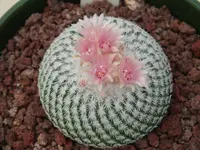
In good conditions, it produces a ring (or several rings) of pink to magenta flowers around the upper part of the stem, giving a crown-like appearance. These relatively large flowers for the plant’s size are a key character used by botanists to distinguish this species from similar Mammillaria types.

FAQs about Mammillaria perbella

Flowering is strongest when this cactus gets very bright light, a cool, dry winter rest, and is slightly pot-bound. Excess warmth in winter, frequent watering, or insufficient light often prevents bud formation and reduces spring blooming.

Grow Healthy Plants with Botan Care

Keep your plants happy and healthy with plant identification, disease detection, and easy care guidance.

Botan plant care app — identify plants on mobile

Explore More Plants