Deep pot selection
Use a heavy, deep pot with several drainage holes to anchor the clumping stems and allow the strong taproot to develop without circling at the bottom.

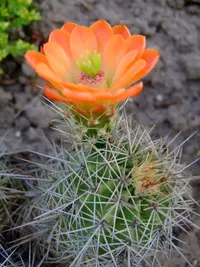
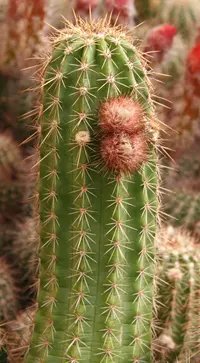
Scarlet hedgehog cactus, Echinocereus coccineus, is a small clumping cactus known for its bright red tubular flowers and dense spines. Stems form low mounds that slowly spread over time, creating a compact, architectural look.
This species is native to arid and rocky areas of the southwestern United States and northern Mexico, where it grows in full sun and very well-drained, gritty soil. It is drought tolerant and generally low maintenance, but slow growth and a need for strong light can challenge beginners learning how to care for scarlet hedgehog cactus.

Care Difficulty
Easy Care

Light Preference
Full Sun

Water Requirements
Low Water

Temperature Preference
Cold Hardy

Hardiness Zone
5–9

Soil Texture
Sandy, Loamy, Rocky

Soil pH
Slightly acidic (6.5–7.0), Neutral (7.0)

Soil Drainage
Well-drained

Fertilization
Minimal (feed rarely)
Scan your plant to receive care tips personalized for your specific plant
Available on iOS and Android
This cactus prefers strong, direct light that mimics its native desert habitat.
Watering should mimic desert rain patterns with thorough, infrequent soakings and fast drying between.
This species favors warm days, cool nights, and can handle notable temperature swings when kept dry.
This cactus prefers very dry air and usually does not need extra humidity management.
Soil must be very fast-draining and mineral-rich to prevent root rot in Echinocereus coccineus.
This species adapts well to container growing when drainage and root conditions are tightly controlled.
This cactus needs only light feeding, as it is adapted to poor, rocky soils.
Echinocereus coccineus needs minimal pruning, mainly for health and safety rather than shaping.
This cactus grows slowly and prefers infrequent disturbance, whether in pots or in the ground.
Echinocereus coccineus is commonly propagated by offsets and seeds under warm, dry conditions.
This species is relatively cold hardy but benefits from dry, sheltered winter conditions in cultivation.

Plant Health Check
Not sure what's wrong with your plant? Check your plant's health inside the app.
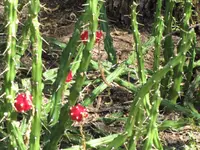
The bright scarlet, tubular flowers are adapted for hummingbird pollination, with nectar deep in the tube and little scent, which suits birds better than insects.
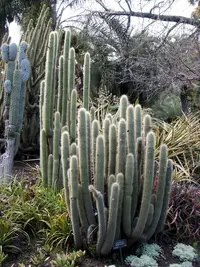
This cactus often expands by producing many offsets from the base, forming dense clumps or mounds that can contain dozens of stems originating from a single genetic individual.
Despite being a desert species, it tolerates subfreezing temperatures in much of its native range, surviving brief cold periods by storing water in its stems and slowing metabolism.

In some high-elevation populations in the southwestern United States, this species often shares rocky outcrops with pinyon pine and juniper, creating striking spring displays where bright red cactus flowers appear among conifer woodland habitats rather than open desert.
Lack of flowers usually comes from insufficient light, too much water, or no cool, dry winter rest. Older clumps bloom more reliably. For better results, search for Echinocereus coccineus care focused on flowering conditions.
Keep your plants happy and healthy with plant identification, disease detection, and easy care guidance.