

Expose caudex gradually
If the plant was previously buried deeply, uncover only 1–2 cm of the caudex per season to avoid stress and allow the exposed tissue to harden without sunscald.


Cape Kambro, Fockea capensis, is a caudiciform succulent known for its swollen, sculptural base that stores water and supports vining growth above. The thickened caudex often becomes a focal point in containers or bonsai-style displays.
This species is native to arid regions of South Africa, where it creeps or climbs over rocks and shrubs. Its drought tolerance and slow growth make it suitable for patient growers with limited watering habits.
Fockea capensis prefers bright light, gritty well-drained soil, and careful watering, drying slightly between waterings. With a stable environment and restraint on watering, it is relatively straightforward to care for Cape Kambro.

Care Difficulty
Moderate Care

Light Preference
Partial Sun

Water Requirements
Low Water

Temperature Preference
Tropical / Frost Sensitive

Hardiness Zone
10–11

Soil Texture
Sandy, Loamy, Rocky

Soil pH
Slightly acidic (6.5–7.0), Neutral (7.0)

Soil Drainage
Well-drained

Fertilization
Minimal (feed rarely)
Scan your plant to receive care tips personalized for your specific plant
Available on iOS and Android
This caudiciform succulent prefers bright, indirect light that mimics open scrub or lightly shaded rocky slopes.
This species stores water in its swollen caudex, so watering must be restrained and guided by soil dryness.
This plant prefers warm, dry conditions with a clear contrast between a warm growing season and a cooler, dry rest period.
This species tolerates a wide humidity range and rarely needs special moisture in the air.
Fockea capensis prefers a mineral, very free-draining mix that protects its caudex from staying wet.
This species is well suited to container growing because its caudex stays compact and controlled.
This drought-adapted caudiciform needs only light feeding to support steady growth in containers.
Fockea capensis benefits from light, targeted pruning to control its twining vines and maintain a compact form in pots.
This species grows slowly and prefers infrequent repotting that preserves its swollen caudex and fine roots.
This plant is most reliably propagated from fresh seed, with cuttings used less often and with lower success.
Fockea capensis is not frost hardy and needs protective winter care in most temperate climates.

Plant Health Check
Not sure what's wrong with your plant? Check your plant's health inside the app.
This species is naturally restricted to South Africa’s Little Karoo region, where it grows in very dry, rocky habitats with highly draining, often stony soils.
The plant develops a thickened, woody, often fissured caudex (swollen stem base) that stores water and gives mature specimens a rugged, cork-like appearance prized by caudiciform collectors.
In habitat it follows a strongly seasonal cycle, producing twining green shoots and leaves in the warmer, wetter months and often resting or partly shedding foliage during dry or cool periods to conserve water.

In its native range this species often grows almost buried among rocks, with only a small part of the caudex visible above ground, which helps protect its water-storing tissues from grazing animals and intense sun while allowing the vining stems to emerge when conditions are favorable.
Slow growth is normal for this caudiciform succulent. Growth slows further in cool temperatures, low light, or during dormancy. Avoid frequent repotting and heavy feeding; stable warmth, bright light, and a slight summer fertilizer boost support steady development.
Keep your plants happy and healthy with plant identification, disease detection, and easy care guidance.

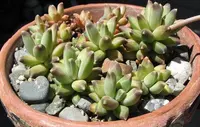
Pachyphytum compactum
Pachyphytum compactum

tulip pricklypear
Opuntia phaeacantha
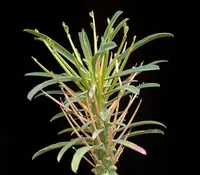
Hedgehog Milkbush
Euphorbia loricata
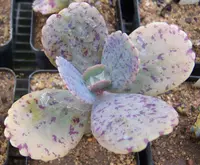
Penwiper
Kalanchoe marmorata
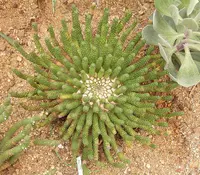
Vingerpol Milkbush
Euphorbia esculenta
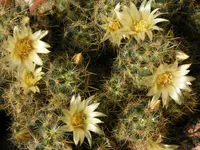
Texas nipple cactus
Mammillaria prolifera

Echinocereus ortegae
Echinocereus ortegae

Loquacious Tonguefig
Glottiphyllum linguiforme