Handle Sap Safely
Wear gloves and avoid touching your face or eyes when pruning or repotting, as the white latex sap is irritating and can cause skin and eye reactions.

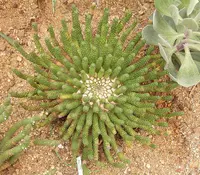
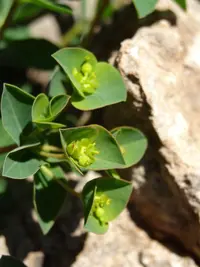
Vingerpol milkbush (Euphorbia esculenta) is a small, slow-growing succulent from arid regions of South Africa. It forms a thick, tuberous base with short, upright, finger-like stems. The plant stays compact and architectural, which makes it suitable for sunny windowsills and small indoor collections. Its leafless, green stems store water, so it tolerates short periods of neglect better than many leafy houseplants. However, it is sensitive to overwatering and poor drainage, which can quickly lead to root problems. Those learning how to care for Vingerpol Milkbush should focus on bright light, coarse, fast-draining soil, and a careful watering routine that lets the mix dry between waterings.

Care Difficulty
Moderate Care

Light Preference
Full Sun

Water Requirements
Low Water

Temperature Preference
Tropical / Frost Sensitive

Hardiness Zone
10–11

Soil Texture
Sandy, Rocky, Loamy

Soil pH
Slightly acidic (6.5–7.0), Neutral (7.0)

Soil Drainage
Well-drained

Fertilization
Minimal (feed rarely)
Scan your plant to receive care tips personalized for your specific plant
Available on iOS and Android
This succulent prefers bright, open light with some protection from harsh extremes.
This species stores water in its thick stems and needs infrequent but thorough watering.
This drought-adapted succulent favors warm, dry air and does poorly in cold, damp conditions.
Humidity is rarely a concern for this drought-adapted succulent.
This species needs a very fast-draining, mineral-based mix to prevent root rot.
This species is well suited to container growing when drainage and pot shape are chosen carefully.
This drought-adapted succulent needs only light feeding to support slow, healthy growth when actively growing.
Pruning Euphorbia esculenta is mainly corrective, to maintain shape and remove damaged tissue.
Container-grown plants benefit from infrequent but careful repotting to refresh the very free-draining substrate.
Propagation is usually done from stem cuttings, which root reliably under warm, dryish conditions.
This species prefers mild, dry winters and has limited frost tolerance, especially in containers.

Plant Health Check
Not sure what's wrong with your plant? Check your plant's health inside the app.
This species develops a swollen underground stem base that looks similar to a small turnip, storing water and nutrients so the plant can survive long dry periods in its South African habitat.
It typically grows and produces its small, linear leaves during the cooler, wetter season, then may shed many leaves and slow growth almost to dormancy during hot, dry periods.
Like other spurges, it exudes a white latex sap when damaged; this sap is irritating and potentially harmful to skin and eyes, which is why handling cuts or broken tissue requires care.
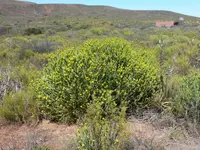
This species generally performs better outdoors in warm, dry climates with strong light and excellent drainage. Indoors it stays smaller and needs bright light, very infrequent watering, and a gritty substrate to avoid root problems when caring for Vingerpol Milkbush.
Keep your plants happy and healthy with plant identification, disease detection, and easy care guidance.