Winter rain protection
In climates with cold, wet winters, place the plant under an eave or use a clear, vented cold frame to keep excess rain off the crown and prevent rot while still allowing high light and airflow.

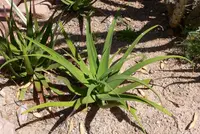
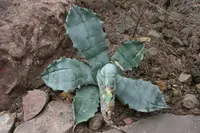
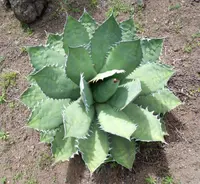
Spider agave (Agave bracteosa) is a small, clumping succulent from arid, rocky slopes in northeastern Mexico. It forms arching, narrow, spineless leaves that create a soft, fountain-like rosette.
The leaves are pale to medium green and lack sharp teeth, which makes it easier to handle than many other agaves. Plants grow slowly and stay relatively compact, so they suit containers, small gardens, and mild-climate landscapes.
It prefers bright light, very well-drained soil, and infrequent watering, which reflects its desert origins. These traits generally make it forgiving and straightforward for those who want to learn how to care for spider agave.

Care Difficulty
Easy Care

Light Preference
Full Sun

Water Requirements
Low Water

Temperature Preference
Cold Hardy

Hardiness Zone
7–10

Soil Texture
Sandy, Loamy, Rocky

Soil pH
Slightly acidic (6.5–7.0), Neutral (7.0)

Soil Drainage
Well-drained

Fertilization
Minimal (feed rarely)
Scan your plant to receive care tips personalized for your specific plant
Available on iOS and Android
This species prefers bright, direct sun in most climates but benefits from some protection in extreme heat.
Agave bracteosa prefers sparse, deep watering and fast-drying soil.
This agave is adapted to warm, arid conditions but tolerates some cold if kept dry.
Humidity is rarely a limiting factor for Agave bracteosa, which thrives in dry air.
Agave bracteosa needs very fast-draining, mineral-rich soil to prevent root and crown rot.
This species is well suited to container growing when placed in a stable, fast-draining setup.
This drought-adapted succulent needs only light feeding to stay healthy in containers or nutrient-poor soils.
Agave bracteosa needs minimal pruning, mainly for cleanliness and safety around the rosette.
Container-grown plants and young clumps benefit from careful transplanting when growth slows or roots crowd the pot.
This species is most commonly propagated from offsets, with seed used mainly for larger-scale or patient growers.
This agave is relatively cold hardy but still benefits from thoughtful winter management, especially in containers.

Plant Health Check
Not sure what's wrong with your plant? Check your plant's health inside the app.
Unlike most agaves with rigid, spiny leaves, this species has narrow, ribbon-like leaves that are flexible and lack sharp marginal teeth, reducing mechanical damage in windy canyon habitats.
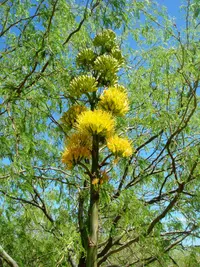
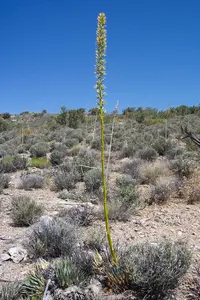
Mature rosettes send up a tall inflorescence that can exceed 1.5–2 m, bearing clusters of pale greenish-white flowers that open mainly at night and are adapted for moth and possibly bat pollination.
In the wild, it occurs naturally in a limited range in northeastern Mexico, often on steep limestone slopes and canyon walls, where its fibrous roots anchor into crevices with minimal soil.

This species is considered one of the few non-threatening agaves for close human contact because its leaves end in only a soft bristle rather than a stiff spine, making it much safer to handle and plant near walkways compared with most other agaves.
This species is monocarpic, so it flowers only once when mature, often after many years. Lack of bloom usually just means it is still too young; good light and stable conditions simply support long-term development.
Keep your plants happy and healthy with plant identification, disease detection, and easy care guidance.