goldenflower century plant Care (Agave chrysantha)

goldenflower century plant

About goldenflower century plant

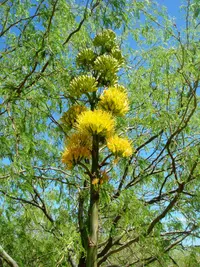
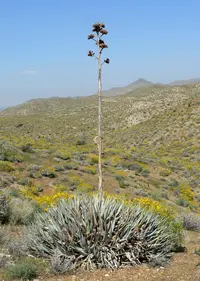
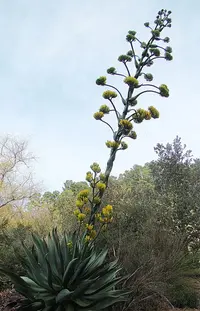
The goldenflower century plant, Agave chrysantha, is a large desert succulent known for its striking rosette of stiff, blue-green leaves with sharp tips and teeth. It stores water in its thick leaves and grows slowly for many years before sending up a tall flowering stalk with bright yellow blooms.

This species is native to arid regions of the southwestern United States, especially Arizona, where it thrives on rocky slopes and open hillsides. It prefers strong light, very well-drained soil, and sparse moisture, which makes it relatively low maintenance in suitable conditions and explains how to care for goldenflower century plant in dry landscapes.


Main Plant Requirements

Care Difficulty

Easy Care

Light Preference

Full Sun

Water Requirements

Low Water

Temperature Preference

Warm Climate

Hardiness Zone

8–11

Soil Texture

Sandy, Loamy, Rocky

Soil pH

Slightly acidic (6.5–7.0), Slightly alkaline (7.0–7.5)

Soil Drainage

Well-drained

Fertilization

Minimal (feed rarely)

Get Personalized Care Plan

Scan your plant to receive care tips personalized for your specific plant

Available on iOS and Android

How to Care for the goldenflower century plant

This desert succulent thrives in strong, direct sun with only limited shade tolerance.

  • Provide 6–10 hours of direct sun daily; full sun is ideal, especially in arid or semi-arid climates where goldenflower century plant is typically grown outdoors.
  • Allow light afternoon shade in very hot regions to reduce leaf scorch, especially on young plants or those recently transplanted from shaded nursery conditions.
  • In winter, ensure at least 4–6 hours of direct light and avoid dense shade, which causes elongated, weak growth and dull, pale leaf color.

This species is highly drought-tolerant and prefers infrequent, deep watering.

  • Outdoors in arid climates, water only when the soil is completely dry and leaves begin to slightly wrinkle or lose firmness, often every few weeks in summer.
  • Ensure very fast-draining, gritty soil; water only after the top 5–8 cm is dry, and never allow the plant to sit in pooled water.
  • Reduce watering sharply in cool seasons, stopping entirely during prolonged wet or cold periods to prevent root rot, yellowing leaves, and a sulfur-like odor from soggy roots.

This agave prefers hot, dry conditions and tolerates a fairly wide temperature range when established outdoors.

  • Ideal growing temperatures are 70–95°F (21–35°C), with good air movement and low to moderate humidity to reduce fungal issues.
  • Mature plants can survive brief drops to about 15–20°F (-9 to -6°C) if soil is dry, but young plants are less cold-hardy and may scar or die below 25°F (-4°C).
  • In extended heat above 100°F (38°C), maintain dry, well-drained soil; use light afternoon shade to limit leaf scorching while still providing strong morning sun.

This species is adapted to dry air and usually does not need humidity adjustment indoors.

  • Target 20–40% relative humidity; levels above 60% increase risk of rot around the crown and roots.
  • Dry indoor air is well tolerated as long as watering stays infrequent and the potting mix drains very quickly.
  • Watch for persistent leaf softness, darkened leaf bases, or moldy soil as signs of humidity combined with excess moisture.

This desert agave requires very fast-draining, mineral-based soil to prevent root and crown rot.

  • Use a gritty, sandy mix such as 60–70% inorganic material (pumice, coarse sand, gravel) blended with 30–40% cactus potting mix.
  • Ensure sharp drainage; water must pass through the substrate within seconds rather than pooling or saturating the mix.
  • Aim for slightly acidic to neutral pH, roughly 6.0–7.2, avoiding strongly acidic or saline substrates.
  • Avoid peat-heavy, compacted, or water-retentive mixes and instead maximize aeration with coarse, angular particles for Agave chrysantha.

This species adapts well to container growing when given a very stable, fast-draining setup.

  • Choose a wide, heavy container to counter the rosette’s top weight and resist tipping in strong wind.
  • Select unglazed clay if possible, as it allows faster evaporation and helps keep the root zone drier between waterings.
  • Raise the pot slightly on feet or blocks so drainage holes stay clear and runoff moves away quickly.

This desert succulent needs only light feeding to maintain healthy growth in cultivation.

  • Use a low-dose balanced NPK fertilizer or very dilute liquid feed formulated for cacti and succulents.
  • Apply once in late spring and again in mid-summer during active growth; do not exceed label rates.
  • Dilute liquid fertilizers to 25–50% strength to avoid salt buildup and root burn.
  • Withhold fertilizer in fall and winter, as the goldenflower century plant is semi-dormant and not actively growing.

Pruning needs for Agave chrysantha are minimal and focus on cleanliness and safety rather than shaping.

  • Best time is late spring or summer on dry days, which reduces infection risk at cut surfaces.
  • Remove dead, diseased, or damaged leaves at the base, cutting close to the stem without injuring healthy tissue.
  • Trim only severely tattered or hazardous lower leaves to maintain a compact rosette and safe access around the plant.
  • Use long-handled, sharp pruners and thick gloves, and discard spiny leaves carefully to prevent injury.

This species is usually grown in the ground, so attention centers on careful transplanting rather than frequent repotting.

  • Plan moves in late spring or early summer when soil is warm and drainage can be controlled.
  • Transplant if growth stalls without other cause or if the rosette clearly outgrows its space or container.
  • Lift the plant with as much root ball as possible, keeping roots shaded and moist until replanted to limit stress.
  • Set into very well-drained, gritty soil at the same depth, then water once deeply and allow the root zone to dry between light follow-up waterings.

New plants are produced mainly from offsets and, less commonly, from seed in controlled conditions.

  • Detach basal offsets in late spring or early summer once they have several leaves and a small root system.
  • Allow cut or broken surfaces on offsets to dry and callus for 3–7 days before planting to reduce rot risk.
  • Plant offsets in a gritty, sharply drained mix, keep in bright light, and water sparingly until firm rooting occurs.
  • Sow seeds in a warm (70–80°F), bright, lightly shaded spot using a sterile, sandy mix, and keep just barely moist for germination.

This agave is relatively cold hardy when established but still benefits from basic winter preparation in cooler regions.

  • Mature plants tolerate short dips near 10–15°F if soil is very well drained and remains mostly dry.
  • Apply a 5–8 cm gravel or coarse sand mulch around, not against, the crown to keep the root zone drier.
  • In wet, cold climates, use a breathable overhead cover to keep excess winter moisture off the rosette and crown.
  • Move container plants to a bright, cool, frost-free spot and water only enough to prevent complete root desiccation.

Care Tips

Establish safety radius

When planting, leave at least 60–90 cm of clear space around the rosette so the stiff, spined leaves cannot snag clothing or skin, and maintain this buffer as the plant matures by keeping paths and work areas outside the eventual spread.

Use mineral mulch

Top-dress the root zone with 3–5 cm of coarse gravel or crushed rock instead of organic mulch to keep the crown dry, reduce rot risk, and reflect heat that supports growing goldenflower century plant in arid climates.

Protect from crown rot

On poorly draining sites, plant on a low mound or raised berm and keep the crown slightly elevated above surrounding soil so water drains away from the center of the rosette after storms or irrigation.

Manage offsets strategically

Remove and replant pups (offsets) when they are about 10–15 cm across, using a clean, sharp tool and allowing cut surfaces to callus for several days before potting or planting to reduce infection and establish new plants reliably.

Winter rain shielding

In regions with cool, wet winters, set up a simple clear plastic or polycarbonate rain shield that keeps water off the rosette while allowing full sun, then remove it once prolonged wet periods have passed.

Common Pests and Diseases

Agave snout weevil

This pest is a beetle whose larvae tunnel into the base of the rosette, causing collapse and foul-smelling rot from the crown. Symptoms include wilting outer leaves, a loose or tilting rosette, and internal tissue that turns brown and mushy.

Solution

Remove and destroy any infested plants promptly to prevent spread, as damaged crowns rarely recover. For prevention, avoid wounding the plant, keep it on the dry side, and in high-risk outdoor areas consider a targeted soil drench with an imidacloprid-based product in spring following local guidelines for Agave chrysantha care.

Agave mite

These insects are microscopic eriophyid mites that hide in the leaf bases and cause distorted, thickened, or scabbed leaf tissue, often with corky or blister-like spots. Symptoms include patchy discoloration and roughened areas along the leaf margins or bases, sometimes starting near old wounds.

Solution

Remove and discard heavily affected leaves and isolate the plant from other agaves. Use a miticide specifically labeled for eriophyid mites if available, and keep tools disinfected with 70% alcohol or a bleach solution when trimming or handling plants to reduce spread between rosettes.

Soft scale

This pest appears as small, dome-shaped bumps on leaves and leaf bases that excrete sticky honeydew, which can support sooty mold growth. This pest weakens the plant over time, causing dull foliage and reduced vigor, especially on stressed or shaded specimens.

Solution

Physically remove scales by gently rubbing with a cloth or soft brush dipped in diluted alcohol or insecticidal soap, repeating every 7–10 days until clear. Improve light and airflow, avoid overfertilizing, and for heavy infestations use a horticultural oil spray applied thoroughly to both sides of the leaves according to label directions.

Anthracnose

This disease is a fungal infection that creates small, sunken, tan to dark-brown spots on leaves, often with a darker edge and slight depressions. Symptoms include coalescing lesions that can dry, crack, and weaken the leaf, especially under warm, humid conditions or overhead irrigation.

Solution

Prune and discard affected leaves, cutting into healthy tissue and disinfecting tools between cuts. Reduce leaf wetness by watering at the soil level, increase spacing and airflow, and if conditions remain favorable for disease, apply a copper- or chlorothalonil-based fungicide labeled for ornamental succulents following local regulations.

Interesting Facts

Arizona sky-island specialist

This species is naturally restricted to central Arizona, where it grows on rocky slopes and mesas in so‑called sky-island mountain ranges, often at 1,000–2,000 m elevation in open pine–oak or chaparral habitat.

Late-summer nectar resource

Its tall yellow flower stalks open mainly in late summer during the North American monsoon season, providing nectar and pollen for native bees, moths, and hummingbirds when few other large agaves are blooming in the same area.

Rock-crevice colonizer

In the wild, plants often anchor in narrow rock cracks and coarse scree, using thick, fibrous roots to stabilize the rosette on steep, eroding slopes and withstand high light and rapid water runoff.

Botan icon

Did you know?

The massive flowering stalk of this species, which can reach small-tree height, is an important seasonal food source for nectar-feeding bats such as the lesser long-nosed bat (Leptonycteris yerbabuenae), which travel long distances along desert mountain corridors to feed on its nocturnally accessible blossoms.

FAQs about goldenflower century plant

This species typically flowers only once at maturity, often after several decades. Lack of flowering usually means the rosette is still immature, not unhealthy. Provide stable outdoor conditions and avoid heavy fertilizing, which encourages foliage rather than bloom.

Grow Healthy Plants with Botan Care

Keep your plants happy and healthy with plant identification, disease detection, and easy care guidance.

Botan plant care app — identify plants on mobile

Explore More Plants