


Use gritty topdressing
Apply a 0.5–1 in layer of coarse gravel or pumice around the stem base to keep the neck dry, reduce rot risk, and stabilize the long, thin stems as they elongate.

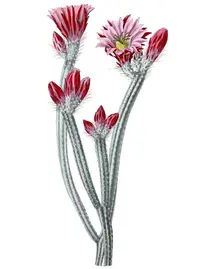
The dahlia hedgehog cactus, Echinocereus poselgeri, is a slender, columnar cactus known for its thin, pencil-like stems and striking magenta to pink flowers. It usually grows in clumps, forming low, spreading mounds that can look almost tangled with age.
This species is native to arid regions of northeastern Mexico and southern Texas, where it thrives in rocky, well-drained soils and strong sun. Its drought tolerance and slow growth make it relatively low-maintenance, but it is sensitive to excess moisture and poor drainage.
Gardeners who want to care for dahlia hedgehog cactus should provide bright light, minimal watering, and a gritty, fast-draining cactus mix to keep roots healthy.

Care Difficulty
Moderate Care

Light Preference
Full Sun

Water Requirements
Low Water

Temperature Preference
Warm Climate

Hardiness Zone
9–11

Soil Texture
Sandy, Rocky, Loamy

Soil pH
Slightly acidic (6.5–7.0), Neutral (7.0)

Soil Drainage
Well-drained

Fertilization
Minimal (feed rarely)
Scan your plant to receive care tips personalized for your specific plant
Available on iOS and Android
This cactus prefers strong light that mimics its bright, arid native habitat.
Echinocereus poselgeri needs infrequent, thorough watering with fast drainage.
This species prefers warm, dry conditions with a distinct cool, dry rest period.
This cactus prefers dry air and usually does well in typical indoor humidity.
Echinocereus poselgeri needs a fast-draining, mineral-based substrate to prevent root and stem rot.
This species is well suited to container growing when drainage and root zone depth are carefully managed.
This cactus needs only light feeding, as dahlia hedgehog cactus is adapted to nutrient-poor, sandy soils.
Echinocereus poselgeri requires almost no pruning beyond basic sanitation.
Container-grown plants benefit from occasional repotting to refresh the gritty mix and prevent root congestion.
This species is usually propagated from seed, though stem cuttings are possible when offsets or segments are available.
Winter care focuses on keeping the plant cold-dry to avoid rot while respecting its moderate frost tolerance.

Plant Health Check
Not sure what's wrong with your plant? Check your plant's health inside the app.
This cactus forms long, pencil-thin stems that can exceed 1 m in length, far narrower than most hedgehog cactus relatives, giving it a rope-like or hair-like appearance in habitat and in cultivation.
In its native semi-arid habitats of northeastern Mexico and south Texas, its stems can shrivel significantly during drought and then rapidly rehydrate and plump after rainfall, a typical adaptation to erratic water availability but particularly noticeable in this species.
It naturally occurs in a relatively restricted region of the Tamaulipan thornscrub and adjacent rocky slopes, often growing among shrubs or grasses where its stems can lean or tangle rather than form upright clumps.
This species usually flowers in spring to early summer, producing narrow, tubular, often pink to magenta blooms along the slender stems. Flowers are relatively short-lived but can appear in succession during the main blooming period.
Keep your plants happy and healthy with plant identification, disease detection, and easy care guidance.

Cereus spegazzinii
Cereus spegazzinii
 POPULAR
Ruby Glow
Peperomia graveolens
narrow-angled cereus
Cereus stenogonus
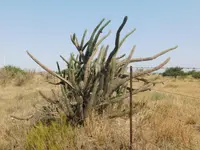
Cereus aethiops
Cereus aethiops
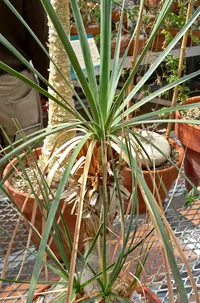
Mexican Pony Tail Palm
Beaucarnea gracilis
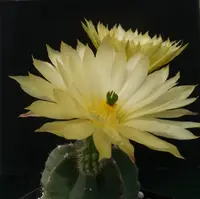
Echinocereus subinermis
Echinocereus subinermis
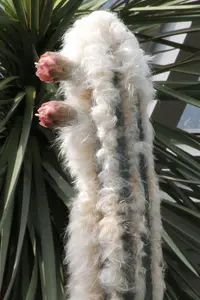
woolly torch
Pilosocereus leucocephalus
Prayer Pepper
Peperomia dolabriformis