Bluestraws Care (Curio talinoides)

Also known as: Narrowleaf Chalksticks
Bluestraws

About Bluestraws

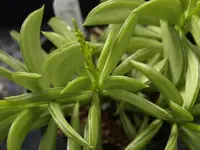
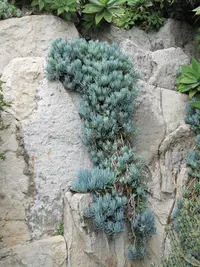
Curio talinoides, commonly called bluestraws or blue chalksticks, is a shrubby succulent from dry regions of South Africa. It forms low, spreading clumps with upright, narrow, blue‑green stems that resemble clustered pencils. The foliage color and tidy structure make it popular in modern, minimalist plantings.

This species grows quickly in warm, bright conditions and stays compact in containers, which suits small gardens and patios. It tolerates drought well but dislikes prolonged cold and excess moisture. Understanding how to care for Bluestraws mainly involves providing strong light, very well-drained soil, and avoiding overwatering.

Main Plant Requirements

Care Difficulty

Easy Care

Light Preference

Full Sun

Water Requirements

Low Water

Temperature Preference

Warm Climate

Hardiness Zone

9–11

Soil Texture

Sandy, Loamy, Rocky

Soil pH

Slightly acidic (6.5–7.0), Neutral (7.0)

Soil Drainage

Well-drained

Fertilization

Minimal (feed rarely)

Get Personalized Care Plan

Scan your plant to receive care tips personalized for your specific plant

Available on iOS and Android

How to Care for the Bluestraws

Curio talinoides thrives in bright, open light that mimics its native, sunny habitat.

  • Provide 6–8 hours of direct sun daily, ideally with morning sun and light afternoon shade in very hot, dry climates.
  • Plant in a position with full sun to light partial shade; Bluestraws becomes leggy and pale if grown in too much shade.
  • Monitor for sun scorch in heatwaves, where leaves appear bleached or crispy, and give temporary shade or filtered light in midsummer.

Curio talinoides needs sparing, well-timed watering that allows the roots to dry between soakings.

  • Water only when the top 3–5 cm of soil are completely dry, then soak the root zone thoroughly and let excess drain away.
  • Use very free-draining, gritty soil to prevent root rot; leaves that turn mushy or translucent often signal overwatering.
  • Reduce watering sharply in cool seasons, watching for wrinkling or slight leaf softening as a sign the plant needs moisture.

This succulent prefers warm, dry conditions and struggles in prolonged cold or damp.

  • Aim for 65–80°F (18–27°C) during active growth, with good air movement to prevent fungal issues in humid weather.
  • Protect from frost; growth usually stops near 40°F (4°C), and tissue damage occurs if exposed to 32°F (0°C) or below.
  • In hot spells above 90°F (32°C), provide some afternoon shade and ensure soil is dry between waterings to avoid heat-related root stress.

Curio talinoides handles typical indoor humidity well, so moisture in the air is rarely a limiting factor.

  • Aim for 30–50% humidity, similar to most heated or air-conditioned homes.
  • The plant tolerates dry air, but prolonged exposure near heating vents can cause leaf tip browning and shriveling.
  • If air is very dry, move the plant away from drafts or place it near other plants rather than misting.

Curio talinoides needs a sharply draining, mineral-rich substrate to prevent root rot.

  • Use a gritty mix such as 50% cactus mix with 25% coarse sand and 25% perlite or pumice for fast drainage.
  • Aim for slightly acidic to neutral pH around 6.0–7.0, which keeps nutrients available without stressing roots.
  • Ensure the mix stays loose and airy; large, coarse particles prevent compaction around the fine roots.
  • Avoid peat-heavy, water-retentive, or clay-based soils that stay wet for more than 1–2 days after watering.

This species is well suited to container growing, including on patios and balconies.

  • Choose a wide, shallow pot that matches the spreading habit and keeps stems from spilling over too abruptly and snapping.
  • Use a heavy or low-center-of-gravity container outdoors so the sprawling foliage does not tip the pot in wind.
  • Select unglazed terracotta if you want faster drying between waterings, or glazed ceramic if your climate is very hot and arid.

Curio talinoides benefits from light, controlled feeding during active growth but tolerates lean soil well.

  • Use a balanced liquid fertilizer (around 10-10-10) diluted to 25–50% strength for Bluestraws in containers.
  • Feed every 4–6 weeks from spring to late summer; avoid fertilizing stressed or freshly repotted plants.
  • Apply a thin layer of compost or a low-rate slow-release succulent formula for outdoor plants in spring.
  • Stop feeding in fall and winter when growth slows, to prevent weak, elongated shoots.

Curio talinoides responds well to light pruning that maintains a compact, tidy shape.

  • Prune in late winter or early spring before strong new growth starts.
  • Remove dead, damaged, or shriveled stems first, then thin crowded or crossing shoots.
  • Use clean, sharp scissors or pruning snips to make angled cuts just above a node.
  • Tip-prune long, leggy stems to encourage branching and denser foliage, avoiding heavy cuts in one session.

Container-grown plants benefit from occasional repotting to maintain root health and drainage.

  • Repot every 2–3 years in spring when roots circle the pot, emerge from drainage holes, or growth slows noticeably.
  • Choose a shallow, slightly wider container with excellent drainage and a gritty cactus–succulent mix.
  • Loosen circling roots gently, trim broken ones, and keep the original root ball mostly intact to limit shock.
  • Water lightly after repotting, then keep in bright, indirect light for 5–7 days before returning to full sun conditions.

This species is commonly propagated from stem cuttings, which root reliably under the right conditions.

  • Take 5–10 cm non-flowering stem cuttings in late spring or summer, choosing firm, healthy segments.
  • Let cut ends dry and callus for 1–2 days to reduce rot risk before planting.
  • Insert cuttings into a dry, gritty succulent mix; then water sparingly and provide bright, indirect light.
  • Maintain warm temperatures around 70–80°F and low to moderate humidity until new growth confirms rooting.

Curio talinoides dislikes prolonged frost and benefits from simple winter precautions, especially in cold climates.

  • In regions below 25–30°F, grow in containers so plants can be moved indoors or to a frost-free porch.
  • Provide a cool, bright indoor spot with minimal winter watering to prevent root rot.
  • For in-ground plants in mild climates, add a light, dry mulch around the root zone, keeping stems uncovered.

Care Tips

Encourage Compact Shape

Pinch back the soft tips of new shoots once or twice a year to keep the plant dense, prevent leggy growth, and create a fuller cascading form.

Prevent Stem Breakage

Support long, arching stems on the rim of the pot or a low trellis so they drape rather than kink, since older, woody stems can snap if bent sharply when repositioning the plant.

Use Inert Topdressing

Add a 0.5–1 in layer of coarse gravel or pumice on the soil surface to keep lower leaves dry, reduce algae and fungus gnat activity, and visually separate the blue foliage from the substrate.

Strategic Seasonal Rotation

Rotate the container by 90° every 2–3 weeks during the bright season so all sides receive similar light, which helps maintain even color and avoids lopsided hanging growth when growing Bluestraws.

Rejuvenate Old Plants

Every 2–3 years, take 7–10 cm tip cuttings from the healthiest, bluest stems and re-root them in fresh mix, gradually replacing the original, woody plant with more vigorous young growth in the same pot.

Common Pests and Diseases

Mealybugs

This pest commonly settles in leaf axils and along the blue, pencil-like stems, sucking sap and causing stunted, distorted growth. Symptoms include white, cottony clusters and sticky honeydew on stems and nearby surfaces.

Solution

Isolate the plant, then dab visible insects with cotton swabs dipped in 70% isopropyl alcohol and wipe down affected stems. Repeat weekly and, for larger populations, use a ready-to-use insecticidal soap or neem oil spray, ensuring good coverage along stems and at stem joints.

Aphids

These insects often gather on tender new shoots and stem tips, feeding on sap and causing curling or yellowing of new growth. Sticky honeydew and sometimes sooty mold may appear on the foliage and nearby surfaces.

Solution

Rinse stems and new growth under a firm but gentle stream of water to remove colonies, then apply insecticidal soap to remaining aphids, coating the undersides of new shoots and crevices. Check weekly during the active growing season and repeat treatment as needed until no new aphids appear.

Spider mites

This pest becomes a problem in hot, dry indoor conditions, causing fine stippling, dulling of the blue-grey coating, and in heavier infestations, fine webbing between stems. Symptoms include slowed growth and a generally dusty, tired appearance to the plant.

Solution

Increase humidity around the plant slightly and rinse stems thoroughly with lukewarm water, focusing on inner, crowded areas. After rinsing, apply a miticide-labeled horticultural oil or insecticidal soap, repeating every 7–10 days for several cycles while improving airflow and avoiding very dry, hot spots indoors.

Powdery mildew

This disease can develop on crowded plants in still air, producing white, powdery patches on stems and any exposed leaf surfaces. Symptoms include slowed growth and a dull, patchy appearance that can obscure the natural blue tone of the plant.

Solution

Improve air circulation, avoid overhead watering, and thin out overly dense, tangled stems to reduce humidity around the plant surface. Remove heavily affected sections and, if symptoms persist, apply a sulfur-based or potassium bicarbonate fungicide labeled for ornamentals, following label directions and keeping the plant in bright, airy conditions.

Stem base rot

This disease arises mainly from chronic overwatering or poorly drained soil, causing the lower parts of the succulent stems to soften, darken, and collapse. Symptoms include sudden wilting of entire sections and a foul smell near the potting mix or crown of the plant.

Solution

Remove the plant from its pot, cut away all soft, discolored tissue, and discard severely affected sections. Replant only firm, healthy cuttings into a gritty, fast-draining succulent mix in a pot with large drainage holes, then water sparingly and allow the mix to dry well between waterings to reduce future risk in Curio talinoides plant care.

Interesting Facts

Leaf pencil morphology

This species develops long, cylindrical, blue-green leaves arranged along arching stems, an adaptation that reduces surface area and water loss in its native South African habitats while still allowing efficient photosynthesis.

Natural sand-stabilizer

In parts of its South African range, the plant’s mat-forming, trailing stems help bind loose, sandy soils on slopes, contributing to erosion control in dry coastal areas.

CAM photosynthesis use

Like many succulents, this plant uses Crassulacean Acid Metabolism, a photosynthetic pathway where stomata open mainly at night to take in CO₂, improving water-use efficiency in arid conditions.

Botan icon

Did you know?

In mild, frost-free climates, this species can form dense, semi-woody groundcover mounds several meters wide, allowing genetically identical clones to dominate local patches and outcompete less drought-adapted neighbors.

FAQs about Bluestraws

This species becomes leggy when it does not receive enough strong light or when older stems are never pruned. Trim back elongated shoots by 1/3, re-root healthy cuttings, and rotate the pot to maintain even growth.

Grow Healthy Plants with Botan Care

Keep your plants happy and healthy with plant identification, disease detection, and easy care guidance.

Botan plant care app — identify plants on mobile

Explore More Plants