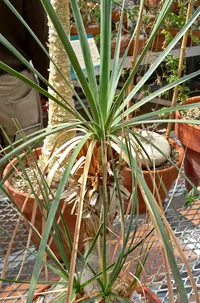
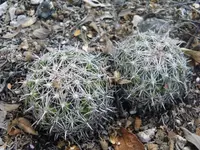
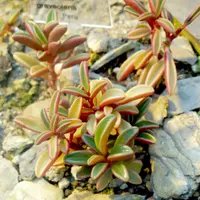
Mineral mulch layer
Apply a 0.5–1 cm top layer of coarse gravel or pumice around the stem to keep the neck dry, reduce algae and fungus growth, and stabilize the plant in its pot.

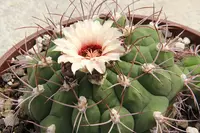
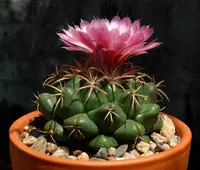
Gymnocalycium pflanzii is a small, slow-growing cactus with a rounded, ribbed body and prominent spines. It often stays compact, making it suitable for containers and windowsills.
This species is native to arid regions of Bolivia and Argentina, where it grows in well-drained, rocky soils with strong light and low rainfall. Its showy funnel-shaped flowers, usually white to pink, appear near the top of the plant and contrast with the dark green body.
Due to its drought tolerance and modest size, it is generally considered easy to manage once its needs are understood. Those learning how to care for Gymnocalycium pflanzii should focus on strong light, infrequent watering, and a gritty, free-draining soil mix.

Care Difficulty
Easy Care

Light Preference
Partial Sun

Water Requirements
Low Water

Temperature Preference
Tropical / Frost Sensitive

Hardiness Zone
10–11

Soil Texture
Sandy, Loamy, Rocky

Soil pH
Slightly acidic (6.5–7.0), Neutral (7.0)

Soil Drainage
Well-drained

Fertilization
Minimal (feed rarely)
Scan your plant to receive care tips personalized for your specific plant
Available on iOS and Android
This cactus prefers bright, indirect light with some direct sun for compact, healthy growth.
Watering should mimic brief desert rains followed by dry periods.
Stable warm conditions support strongest growth and flowering.
This cactus handles dry indoor air well and rarely needs special humidity management.
This species needs a very fast-draining, mineral-rich mix that prevents water from lingering around the roots.
This compact cactus is very suitable for container growing.
Light feeding supports compact, healthy growth in Gymnocalycium pflanzii without forcing soft, weak tissue.
Pruning needs for Gymnocalycium pflanzii are minimal and mostly corrective.
Container-grown plants benefit from occasional, careful repotting to maintain a stable root environment.
Propagation of this species is usually done from seed and is moderately slow but reliable with stable conditions.
This cactus requires a cool, dry rest period and is not suited to prolonged freezing conditions.

Plant Health Check
Not sure what's wrong with your plant? Check your plant's health inside the app.
This species has strongly notched ribs where the areoles sit in deep dimples, giving the plant a distinctly sculpted, segmented look compared with many smoother-ribbed Gymnocalycium species.
Its spines often curve or hook slightly downward, which is thought to help shade the epidermis and break up airflow at the stem surface, reducing water loss in its native semi-arid habitats.
Mature plants can produce relatively large, funnel-shaped white to pale pink flowers that open during the day in spring or early summer, contrasting sharply with the dark green to grey-green body.

Wild populations of Gymnocalycium pflanzii are often found growing in rocky, mineral-rich soils in parts of Bolivia and Argentina, where the plant frequently nests in rock crevices that buffer temperature swings and protect its shallow root system from erosion.
This species grows slowly, usually adding only a few millimeters of diameter each year. Seedlings may take several years to become noticeably plump, and mature plants often need 5–10 years to reach a typical display size.
Keep your plants happy and healthy with plant identification, disease detection, and easy care guidance.