


Winter rest period
From late fall to early spring keep the plant cool (45–55°F), very dry, and in maximum light to promote stronger flowering the following season when caring for Echinocereus subinermis.

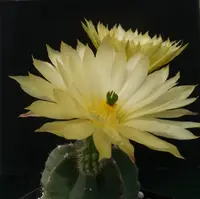
Echinocereus subinermis is a small, globular cactus from arid regions of northern Mexico. It forms rounded, usually solitary stems with few short spines and prominent ribs. In season it produces large, bright yellow funnel-shaped flowers that can almost cover the top of the plant, giving it strong ornamental value for sunny windowsills and dry gardens. This species stays compact, so it suits container growing and rock gardens. Its slow growth, drought tolerance, and modest care needs mean most growers find it straightforward, as long as it receives strong light, very well-drained gritty soil, and minimal watering. Understanding how to care for Echinocereus subinermis mainly involves avoiding excess moisture and providing enough sun.

Care Difficulty
Easy Care

Light Preference
Full Sun

Water Requirements
Low Water

Temperature Preference
Tropical / Frost Sensitive

Hardiness Zone
10–11

Soil Texture
Sandy, Rocky, Loamy

Soil pH
Slightly acidic (6.5–7.0), Neutral (7.0)

Soil Drainage
Well-drained

Fertilization
Minimal (feed rarely)
Scan your plant to receive care tips personalized for your specific plant
Available on iOS and Android
This cactus needs strong light and benefits from several hours of direct sun each day.
This species prefers thorough but infrequent watering that allows the soil to dry out well between soakings.
This cactus thrives in warm, dry conditions and dislikes prolonged cold or frost.
This cactus thrives in dry air and rarely needs humidity adjustments indoors.
This cactus needs a very fast-draining, mineral-rich substrate to prevent root rot.
This species is very suitable for container growing when drainage and stability are managed carefully.
This desert cactus needs only light, targeted feeding to stay healthy in containers.
This cactus requires minimal pruning, focused on hygiene rather than shaping.
Container-grown plants benefit from infrequent, careful repotting into fast-draining soil.
This species is commonly propagated from offsets and sometimes from seed.
This cactus prefers a cool, very dry rest in winter and is only lightly frost tolerant.

Plant Health Check
Not sure what's wrong with your plant? Check your plant's health inside the app.
This species opens its large yellow flowers mainly in the evening and at night during late spring and early summer, an adaptation that helps it avoid heat stress in its hot native habitat in northern Mexico.
Compared with many Echinocereus species, it has very short, sparse spines and unusually smooth, bright green stems, which is why it is often described as nearly spineless in botanical references.
The funnel-shaped flowers are not only up to about 7–8 cm across but also distinctly fragrant, a trait that is less common among related hedgehog cacti and likely linked to moth and nocturnal insect pollinators.

In habitat this cactus often grows among limestone rocks in semi-arid regions of northern Mexico, where its thickened stem tissues and shallow but wide-spreading roots allow it to store limited rainfall and rapidly take up moisture from brief showers.
Growth is generally slow to moderate. A healthy plant may add 1–3 cm in height per year and eventually form a small clump about 10–15 cm tall and slightly wider, depending on conditions.
Keep your plants happy and healthy with plant identification, disease detection, and easy care guidance.

 POPULAR
Happy Bean plant
Peperomia ferreyrae
dahlia hedgehog cactus
Echinocereus poselgeri
nopal tapón
Opuntia robusta
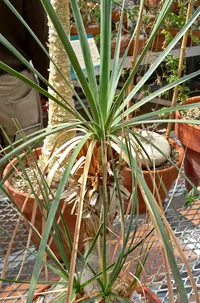
Mexican Pony Tail Palm
Beaucarnea gracilis
Cereus spegazzinii
Cereus spegazzinii
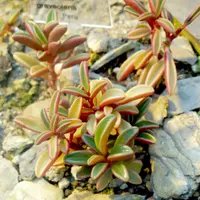 POPULAR
Ruby Glow
Peperomia graveolens
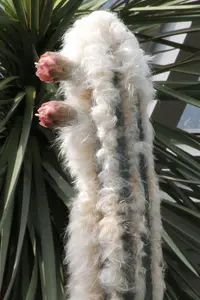
woolly torch
Pilosocereus leucocephalus
Triangle cactus
Acanthocereus tetragonus