


Staking Tall Columns
Install a sturdy stake or vertical wire support early, then tie stems loosely with soft ties as they elongate to prevent wind snap and leaning in mature specimens.


Harrisia tetracantha, often called moonlight cactus, is a columnar cactus from dry regions of the Caribbean and northern South America. It grows with upright, multi-ribbed stems that can branch and form thickets over time.
The plant has strong spines and produces large, white, night-blooming flowers followed by colorful fruits. Its natural adaptation to arid habitats makes it drought-tolerant and generally low-maintenance.
This species prefers bright light, good air movement, and very well-drained, gritty soil. Understanding these desert-like preferences is the key to how to care for Harrisia tetracantha successfully.

Care Difficulty
Easy Care

Light Preference
Full Sun

Water Requirements
Low Water

Temperature Preference
Warm Climate

Hardiness Zone
9–11

Soil Texture
Sandy, Loamy, Rocky

Soil pH
Slightly acidic (6.5–7.0), Neutral (7.0)

Soil Drainage
Well-drained

Fertilization
Minimal (feed rarely)
Scan your plant to receive care tips personalized for your specific plant
Available on iOS and Android
This desert cactus needs strong light and can handle intense sun once properly acclimated.
This cactus stores water in its stems and prefers thorough but infrequent watering.
This species prefers warm, dry conditions with a clear difference between summer heat and cooler winter rest.
This cactus handles typical indoor humidity well, so moisture in the air is rarely a limiting factor.
Soil for this species must be very fast-draining and lean to prevent root and stem rot.
This species is well suited to container growing, especially in cooler or wetter regions.
This cactus benefits from light feeding during active growth but does not need heavy fertilization.
This species needs minimal pruning, mainly to maintain structure and remove damaged growth.
Container-grown plants and young specimens benefit from infrequent but timely repotting or transplanting.
This cactus is commonly multiplied from stem cuttings or seeds under warm, bright conditions.
Winter care focuses on preventing cold and excess moisture damage, especially in cool or wet climates.

Plant Health Check
Not sure what's wrong with your plant? Check your plant's health inside the app.
This cactus is native to extreme south Florida and nearby Caribbean areas, where it naturally grows on coastal rocklands and hammock edges exposed to salt-laden winds.
It produces large, white, fragrant flowers that open at night and close by morning, timed to attract nocturnal pollinators such as moths.
Over time it forms dense, branching clumps up to several meters tall in habitat, creating spiny thickets that offer shelter and perching sites for small animals and birds.

In south Florida this species is considered globally rare and is listed as endangered at the state level, with wild populations confined to a small number of coastal sites threatened by habitat loss and sea-level rise.
Growth is moderate for a columnar cactus. In warm, bright outdoor conditions it may add 10–30 cm per year, slowing in cooler climates or containers. Young plants grow faster, then gradually reduce speed as stems thicken and mature.
Keep your plants happy and healthy with plant identification, disease detection, and easy care guidance.

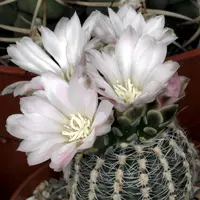
Gymnocalycium bruchii
Gymnocalycium bruchii
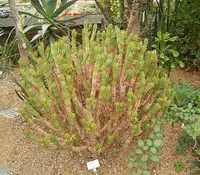
Rock Barrelwort
Euphorbia heptagona
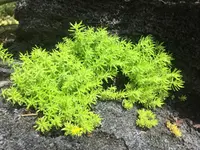
Stonecrop
Petrosedum Lemon Coral
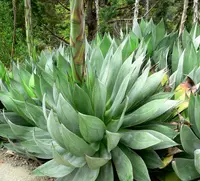
Hardy Century Plant
Agave obscura
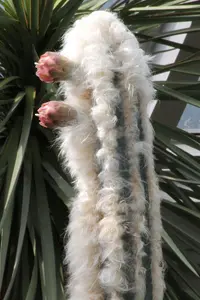
woolly torch
Pilosocereus leucocephalus
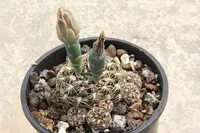
Gymnocalycium calochlorum
Gymnocalycium calochlorum
Cereus spegazzinii
Cereus spegazzinii
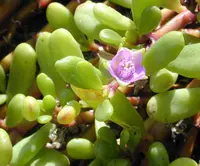
shoreline seapurslane
Sesuvium portulacastrum