Cereus spegazzinii Care

Cereus spegazzinii

About Cereus spegazzinii

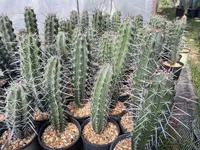
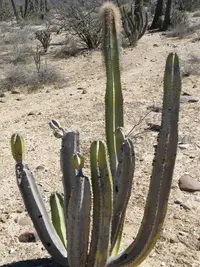
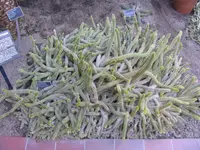
Cereus spegazzinii is a columnar cactus from arid regions of South America, where it grows on rocky slopes and open, sunny sites. It forms upright, ribbed stems with clusters of short spines and can branch as it matures.

The plant is adapted to high light, low rainfall, and well-draining, mineral soils. Its slow to moderate growth and drought tolerance make it relatively straightforward for patient growers.

Understanding how to care for Cereus spegazzinii mostly comes down to providing strong light, avoiding overwatering, and protecting it from prolonged cold and excess humidity.

Main Plant Requirements

Care Difficulty

Easy Care

Light Preference

Full Sun

Water Requirements

Low Water

Temperature Preference

Tropical / Frost Sensitive

Hardiness Zone

10–12

Soil Texture

Sandy, Loamy, Rocky

Soil pH

Slightly acidic (6.5–7.0), Neutral (7.0)

Soil Drainage

Well-drained

Fertilization

Minimal (feed rarely)

Get Personalized Care Plan

Scan your plant to receive care tips personalized for your specific plant

Available on iOS and Android

How to Care for the Cereus spegazzinii

This cactus prefers strong sun but benefits from some protection during the hottest hours.

  • Provide 6–8 hours of direct sun daily, ideally with morning sun and light afternoon shade, especially in hot, dry climates.
  • Cereus spegazzinii tolerates bright, open exposure but may show yellowing or scarred patches if exposed to harsh midday summer sun without acclimation.
  • In regions with dull winters, place it in the brightest available spot and avoid long periods in deep shade, which cause weak, elongated growth.

This desert cactus needs infrequent but thorough watering in fast-draining soil.

  • Water only when the top 3–5 cm of soil are completely dry; in hot growing seasons this may mean every 7–21 days depending on climate and soil.
  • Use a gritty, sharply draining mix and water deeply until it drains out, then let the soil dry fully to reduce root rot risk and support healthy Cereus spegazzinii growth.
  • Reduce watering sharply in cooler months, watching for wrinkling ribs as a sign of mild thirst and soft, dark, or mushy tissue as an early sign of overwatering.

This species prefers warm, arid conditions and dislikes prolonged cold or frost.

  • Aim for active growth temperatures of 70–90Β°F (21–32Β°C), which support strong stem development and root activity.
  • Protect it from frost; short dips to 32Β°F (0Β°C) may be tolerated if very dry, but growth is safer if kept above 40–45Β°F (4–7Β°C).
  • During heat waves above 100Β°F (38Β°C), increase airflow and provide light afternoon shade to limit sunburn and excessive moisture loss, especially in containers.

This cactus tolerates a wide humidity range but stays healthiest in dry indoor air.

  • Aim for 30–50% humidity, similar to most heated homes, without extra humidification.
  • Dry air is well tolerated; avoid placing Cereus spegazzinii near humidifiers or steamy kitchens and bathrooms.
  • Watch for soft, pale, or moldy stem spots as signs of excess humidity and improve air flow or move to a drier room.

This species needs a very fast-draining, mineral-heavy mix to prevent root and stem rot.

  • Use a gritty, sandy mix such as 50% cactus potting mix combined with 50% mineral materials like pumice, perlite, or coarse sand.
  • Aim for slightly acidic to neutral pH around 6.0–7.0, avoiding strongly acidic or alkaline substrates that limit nutrient uptake.
  • Increase aeration with chunky materials like pumice or small lava rock so water drains in seconds rather than minutes after watering.
  • Avoid dense, peat-heavy, or clay-based soils that stay wet, compact around the roots, and drastically increase the risk of rot.

This cactus is well suited to container growing when the pot is chosen for drainage and stability.

  • Choose a heavy, wide-based pot so the tall, columnar stems do not tip the container in wind or when bumped.
  • Select unglazed terracotta if extra evaporation is needed in cooler or low-light locations to prevent prolonged wetness around roots.
  • Use a pot only 2–4 in wider than the root mass so the mix dries evenly rather than staying wet in unused outer zones.

This drought-adapted cactus needs modest feeding to support healthy growth in containers.

  • Use a balanced liquid cactus fertilizer (around 10-10-10) diluted to 25–50% strength for Cereus spegazzinii during active growth.
  • Apply every 4–6 weeks in spring and summer to moist soil, never to completely dry roots.
  • Stop feeding in fall and winter to respect the plant’s natural rest period.
  • Avoid high-organic compost or slow-release pellets that can stay wet and increase rot risk.

Pruning is mainly corrective and helps this cactus stay safe, compact, and manageable.

  • Best time is late spring to early summer, when growth is active and wounds seal faster on Cereus spegazzinii.
  • Remove dead, damaged, scarred, or rubbing stems using clean, sharp pruners or a sterilized knife.
  • Shorten excessively long or leaning stems to improve stability and reduce breakage risk.
  • Make clean cuts at segment joints and let them dry and callus to reduce infection risk.

Container-grown plants benefit from careful repotting to maintain root health and stability.

  • Repot every 3–4 years, or when roots circle the pot, drainage slows, or growth becomes noticeably weaker in Cereus spegazzinii.
  • Choose late spring as the ideal time, using a slightly larger pot with a gritty, fast-draining cactus mix.
  • Water lightly a few days before, then gently loosen the root ball and remove old, compacted soil.
  • After repotting, keep in bright shade and barely moist soil for 7–10 days to limit root stress.

Propagation is commonly done from stem cuttings, with seeds as a slower alternative.

  • Take healthy stem cuttings in late spring or early summer from firm, disease-free segments of Cereus spegazzinii.
  • Allow cut surfaces to dry and callus for 5–10 days in a warm, airy place before planting.
  • Set cuttings upright in a coarse, barely moist cactus mix, then keep warm with bright, indirect light.
  • For seeds, sow on the surface of well-draining mix, keep slightly moist, and provide steady warmth for gradual germination.

Winter care focuses on avoiding freezing damage and controlling moisture levels.

  • This cactus is frost-sensitive; sustained temperatures below 30–32Β°F can scar or kill tissue.
  • In-ground plants benefit from gravel mulch around the base to keep the root zone draining and slightly insulated.
  • Move containers indoors or to a bright, cool, frost-free spot with excellent airflow.
  • Water very sparingly, allowing the mix to dry completely between light sips to prevent winter root rot.

Care Tips

Rock mulch ring

Place a 3–5 cm ring of coarse gravel or small rocks around the base to keep the stem dry at soil level, reduce splash-back during watering, and stabilize the plant in its pot.

Staked column support

Insert a sturdy bamboo or fiberglass stake close to the main stem and secure it loosely with soft ties to keep heavy columns upright and prevent root disturbance if the pot is bumped.

Cool rest adjustment

In late autumn, reduce watering and keep the plant slightly cooler and very bright for 6–8 weeks to encourage stronger, more compact growth in the following season.

Root inspection schedule

Every 12–18 months, slide the root ball partially out of the pot to check for circling roots, salt crusts, or sour smells, then repot in fresh, sharply draining mix if roots are densely wrapped.

Targeted mealybug control

Inspect rib edges and areoles monthly, and at the first sign of cottony mealybugs dab them directly with cotton swabs dipped in 70% isopropyl alcohol before populations build up, which supports long-term caring for Cereus spegazzinii.

Common Pests and Diseases

Mealybugs

This pest feeds on cactus ribs and areoles, sucking sap and leaving cottony white clusters in crevices and between stems. Symptoms include stunted growth, yellowing skin, and sticky honeydew that can attract sooty mold.

Solution

Isolate the plant, then dab visible insects with cotton swabs dipped in 70% isopropyl alcohol and repeat weekly until no new clusters appear. Improve light and air movement, and for heavier infestations use a labeled systemic insecticide for cacti, following product directions carefully.

Red spider mites

These insects are tiny sap-feeding mites that thrive on Cereus in hot, very dry indoor or greenhouse conditions, causing fine webbing and a dull, dusty appearance to the skin. Symptoms include speckling, bronzing, and gradual loss of the plant’s natural bluish or green hue.

Solution

Rinse stems thoroughly with a firm stream of water to remove webbing and mites, then increase humidity slightly and airflow around the plant. For persistent mites, apply a horticultural miticide or insecticidal soap labeled for mites, repeating at 5–7 day intervals to break the life cycle.

Scale insects

This pest appears as small, hard, tan to brown bumps along ribs and near the base of spines, where insects remain fixed as they feed on sap. Symptoms include localized yellow patches, weakened new growth, and sticky honeydew on the plant or pot surface.

Solution

Manually remove scales with a soft brush or cloth and 70% isopropyl alcohol, focusing on crevices and spine bases. For more widespread problems, use a systemic insecticide suitable for succulents and avoid overfertilizing, which can encourage scale buildup.

Bacterial soft rot

This disease typically enters through mechanical damage or frost injury and causes fast-spreading, water-soaked, foul-smelling tissue collapse on stems. Symptoms include dark, mushy patches that may ooze liquid and can quickly girdle a stem segment.

Solution

Cut out all affected tissue well into firm, healthy flesh with a sterile knife, then dust cuts with sulfur or a dry fungicide and keep the plant dry until callused. Reduce watering, avoid splashing water onto wounded areas, and protect the cactus from cold damage to limit new infections.

Fungal stem spot

This disease causes sunken, corky or dark spots on stems, often starting where water sits for long periods or where there is minor injury. Symptoms include small lesions that can expand into irregular patches, sometimes with a slightly raised or scabbed surface.

Solution

Remove severely affected stem sections with sterilized tools and allow cuts to dry and callus in bright, dry conditions. Adjust watering to keep stems dry between waterings, improve airflow, and if spots continue to appear, use a copper-based fungicide labeled for cacti as part of broader Cereus spegazzinii care instructions.

Interesting Facts

Blue-green stem armor

This species develops thick, blue-green columnar stems with a heavy, corky bark at the base that functions as physical protection against herbivores and intense sun in its native highland habitats of northwestern Argentina and Bolivia.

Spines that change shape

Mature plants often produce fewer but stouter, hooked or bent central spines compared with the more numerous, thinner spines on young stems, a shift that reflects changing defense needs as the plant gains height and woody tissue.

High-altitude specialist

In the wild, this cactus grows on rocky slopes and dry plains at relatively high elevations in the eastern Andean foothills, where it tolerates strong temperature swings, intense solar radiation, and very low atmospheric humidity.

Botan icon

Did you know?

In habitat, older individuals can form tall, tree-like columns with massive, cork-covered bases that create miniature microhabitats, offering shelter and perching sites for birds and small animals on otherwise exposed, arid slopes.

FAQs about Cereus spegazzinii

This species usually flowers only when mature, well-established, and exposed to strong light and pronounced temperature differences between day and night. Overfertilizing with nitrogen, recent repotting, or stress from cold or rot can also delay flowering.

Grow Healthy Plants with Botan Care

Keep your plants happy and healthy with plant identification, disease detection, and easy care guidance.

Botan plant care app β€” identify plants on mobile

Explore More Plants