Cereus aethiops Care

Cereus aethiops

About Cereus aethiops

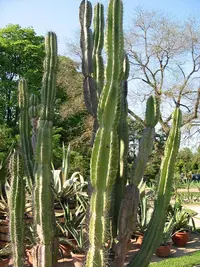
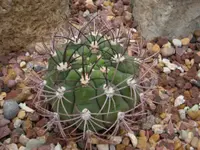
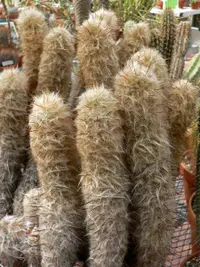
Cereus aethiops is a columnar cactus species valued for its dark green to bluish stems lined with strong, prominent spines. It typically forms upright, ribbed columns that branch slowly with age, giving it a sculptural, architectural look in containers or desert-style plantings.

This species is native to arid regions of South America, where it grows in rocky, well-drained soils and full sun. Its drought tolerance and slow growth make it relatively straightforward for patient growers who provide strong light and avoid overwatering.

Understanding how to care for Cereus aethiops starts with bright exposure, very free-draining mineral soil, and infrequent watering, especially during cooler months.

Main Plant Requirements

Care Difficulty

Easy Care

Light Preference

Full Sun

Water Requirements

Low Water

Temperature Preference

Warm Climate

Hardiness Zone

9–11

Soil Texture

Sandy, Loamy, Rocky

Soil pH

Slightly acidic (6.5–7.0), Neutral (7.0)

Soil Drainage

Well-drained

Fertilization

Minimal (feed rarely)

Get Personalized Care Plan

Scan your plant to receive care tips personalized for your specific plant

Available on iOS and Android

How to Care for the Cereus aethiops

This cactus prefers strong sun but needs gradual acclimation to intense exposure to avoid scalding.

  • Provide 6–8 hours of direct sun daily outdoors; morning sun plus light afternoon shade is ideal in hot, dry climates.
  • In very hot regions, protect from harsh afternoon sun with 30–40% shade cloth or positioning near light-filtering structures.
  • Cereus aethiops tolerates bright, open conditions but becomes thin and elongated in prolonged shade, so avoid sites shaded most of the day.

Watering should mimic arid conditions with deep but infrequent soakings and thorough drying between them.

  • Allow at least the top 5–7 cm of soil to dry fully before watering; in hot, dry weather this may mean watering every 10–21 days outdoors.
  • Use very fast-draining, gritty soil on a slope or in raised beds so water runs through quickly, reducing root-rot risk.
  • In cool seasons, water sparingly and only on warm, dry days; soft, yellowing stems signal overwatering, while wrinkling indicates prolonged dryness.

This species thrives in warm, dry conditions and dislikes prolonged cold or damp.

  • Aim for active growth temperatures around 70–90°F (21–32°C), with slightly cooler nights improving resilience and compact growth.
  • Protect from frost; brief dips to 28–32°F (-2–0°C) may be survived when dry, but tissue damage is likely below this range.
  • In sustained heat above 100°F (38°C), increase airflow and provide light afternoon shade to limit stress, especially for young or recently transplanted plants.

This desert cactus handles low humidity well and rarely needs special humidity care.

  • Target 30–40% humidity, typical of most heated homes, without extra humidifiers.
  • Dry indoor air is usually tolerated; prioritize light and correct watering over humidity changes.
  • If stems wrinkle despite adequate watering, check for extreme dry heat near vents and move the plant slightly away.

Use a very fast-draining, mineral-heavy mix that mimics arid, rocky soil conditions for Cereus aethiops.

  • Combine roughly 30% cactus potting mix with 70% mineral material such as coarse sand, pumice, or small grit for a loose, open texture.
  • Aim for slightly acidic to neutral pH, around 6.0–7.0, which supports root function and nutrient uptake.
  • Increase aeration and drainage by using large, sharp particles (2–5 mm) rather than fine sand that can compact and hold excess moisture.
  • Avoid peat-heavy, water-retentive, or clay-based mixes that stay wet for more than 1–2 days after watering.

This species is well suited to container growing when the pot prevents waterlogging and toppling.

  • Choose a container that is deeper than it is wide so the long taproot can grow downward without curling tightly.
  • Use a heavy terracotta or ceramic pot if the plant is tall, which reduces the risk of tipping in wind or accidental knocks.
  • Select a pot only 2–4 cm wider than the root zone to keep the soil mass small enough to dry quickly between waterings.

This desert cactus needs only light feeding to stay healthy in cultivation.

  • Use a balanced liquid cactus fertilizer at 1/4–1/2 strength during active growth in spring–summer.
  • Feed Cereus aethiops about every 4–6 weeks if growth is moderate and light is strong.
  • Avoid rich compost or heavy organic feeds that keep soil wet and salty.
  • Stop feeding in fall–winter when growth slows or the plant is cool and semi-dormant.

Pruning is minimal and mainly for safety and health maintenance on this spiny columnar cactus.

  • Carry out any pruning in late spring–summer when the plant is actively growing.
  • Use clean, sharp pruners or a sterilized knife, and wear thick gloves for protection.
  • Remove dead, diseased, or storm-damaged stems, and thin crowded offsets only if space is limited.
  • Limit cuts on Cereus aethiops to avoid scarring and preserve its natural upright form.

This cactus prefers infrequent disturbance, so repot or transplant only when clearly needed.

  • Check for roots circling the pot, pushing through drainage holes, or very slow growth as signs to move up.
  • Plan repotting for late spring when temperatures are warm and growth is starting.
  • Typically shift to a slightly larger pot every 3–4 years, using a very free-draining cactus mix.
  • Keep roots as intact as possible, let any damaged tissues dry briefly, then water lightly after 5–7 days to limit stress.

Propagation is usually done by stem cuttings, though seeds are also possible for this species.

  • Take healthy stem segments in late spring–summer using a sterilized, sharp knife.
  • Let cut surfaces dry and callus for 7–14 days in a shaded, airy place before potting.
  • Set cuttings upright in barely moist, gritty cactus mix and keep warm with bright, indirect light.
  • For seeds of Cereus aethiops, sow on the surface of a well-drained mix and maintain gentle warmth and light moisture.

This cactus needs protection from prolonged freezing, especially in wet winter conditions.

  • Keep outdoor plants in climates warmer than about 25–30°F or provide overhead cover from winter rain and snow.
  • Mulch lightly with gravel around the root zone rather than organic mulches that trap moisture.
  • Move container plants indoors to a bright, cool, very dry spot before hard frost arrives.
  • Reduce watering sharply in winter to prevent root rot in cold soil.

Care Tips

Stabilize Tall Stems

As stems elongate, anchor the pot with a heavy cachepot or top-dressing gravel and, if needed, discreetly tie leaning stems to a short, sturdy stake to prevent root disturbance from tipping.

Rotate For Even Spines

Turn the pot 90° every 2–3 weeks during active growth so all sides receive similar light, which encourages symmetrical rib and spine development instead of lopsided, weak tissue.

Dry, Airy Winter Rest

In winter, keep the plant in a bright, cool, very dry spot with good air movement to reduce fungal risk on the epidermis and roots during its natural rest period.

Inspect Areoles Closely

When checking for pests, use a flashlight and inspect the woolly areoles and spine bases where mealybugs and scale often hide, wiping early infestations with a cotton swab dipped in isopropyl alcohol.

Gradual Sun Hardening

When moving the plant outdoors or into stronger light, increase exposure over 10–14 days by starting in bright shade and slowly shifting into more direct sun to avoid irreversible epidermal scorch while growing Cereus aethiops.

Common Pests and Diseases

Mealybugs

This pest feeds on cactus stems, often hiding in ribs and areoles and leaving behind white, cotton-like masses. Symptoms include stunted growth, yellowing tissue, and sticky honeydew that can attract sooty mold.

Solution

Isolate the plant, then remove visible mealybugs with a cotton swab dipped in 70% isopropyl alcohol and repeat weekly until no new insects appear. For heavier infestations on growing Cereus aethiops, use a ready-to-use insecticidal soap or neem oil spray, applying in the evening and improving air movement to discourage reinfestation.

Red spider mites

These insects are actually tiny arachnids that thrive in hot, dry conditions and are common on ribbed cactus stems. Symptoms include fine webbing between ribs, a dull or dusty appearance, and small pale stippling where they feed on the epidermis.

Solution

Increase humidity slightly around the plant without wetting the soil, then rinse stems thoroughly with a firm but gentle stream of water to dislodge mites. Follow with repeated applications of insecticidal soap or a horticultural oil labeled for mites every 5–7 days, ensuring good coverage in the ribs and areoles.

Scale insects

This pest appears as small, dome-shaped brown or gray bumps attached firmly to the cactus surface, often near the base or along ribs. Symptoms include slowed growth, yellow patches, and sticky honeydew on nearby surfaces.

Solution

Gently scrape off or pry away individual scales with a fingernail or soft brush, taking care not to damage the skin of the cactus. After mechanical removal, spray with horticultural oil or neem oil, repeating every 2–3 weeks, and keep the plant in bright, well-ventilated conditions to reduce stress.

Fungal stem spots

This disease typically starts as small, sunken, brownish or blackish lesions on the stems, often developing after minor mechanical damage or prolonged surface moisture. Over time, affected tissue may become corky, expand, or in severe cases soften and collapse.

Solution

Cut out small, localized lesions with a sterile knife, allowing the wound to dry and callus in a bright, dry location out of direct midday sun. Reduce overhead watering, avoid water sitting on stems, and if spread continues, apply a sulfur-based or copper-based fungicide labeled for cacti, while improving airflow around the plant.

Soft bacterial rot

This disease causes rapidly soft, water-soaked, and foul-smelling areas on the stem, often entering through wounds or frost damage. Symptoms include collapse of segments and a mushy interior that discolors from green to brown or black.

Solution

Remove all affected tissue well into firm, healthy flesh using sterile tools, then let the cut surfaces dry and harden in a warm, dry place with good air circulation. If rot is extensive, salvage only firm, uninfected sections as cuttings, dust fresh cuts with dry sulfur or cinnamon, and adjust care to avoid overwatering and cold, damp conditions.

Interesting Facts

Andean cactus specialist

This species is native to central and northwestern Argentina, where it grows in open, rocky Andean foothills and shrublands rather than true desert, tolerating cold, seasonally dry conditions at moderate elevations.

Dark spines and stems

Mature plants often develop nearly black, stout spines against blue‑green, columnar stems, creating a strong color contrast that is characteristic for identifying this species among other night‑blooming cacti.

Nocturnal white flowers

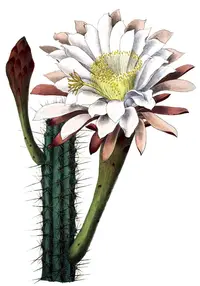
It produces large, white, tube-shaped flowers that open at night and fade by the next day, an adaptation to moth and possibly bat pollinators that operate in low-light conditions.

Botan icon

Did you know?

In its native range in Argentina, this cactus forms part of open, sparsely vegetated communities on rocky slopes, where its deep root system helps stabilize shallow soils and allows the plant to survive periodic drought and near-freezing night temperatures that would damage many other columnar cacti.

FAQs about Cereus aethiops

Growth is moderate for a cactus. In suitable outdoor conditions it may add 5–15 cm per year, slower in containers. Young plants grow faster, then gradually slow as stems thicken and the root system fills available space.

Grow Healthy Plants with Botan Care

Keep your plants happy and healthy with plant identification, disease detection, and easy care guidance.

Botan plant care app — identify plants on mobile

Explore More Plants