


Encourage Dense Mounding
Pinch back 1–2 cm of new, lanky shoots in late spring to early summer to keep the plant compact and encourage dense, cushion-like growth.

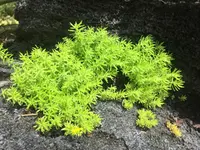
Stonecrop Petrosedum Lemon Coral is a compact, sun-loving succulent grown mainly for its bright chartreuse, finely textured foliage. It forms low, mounding cushions that spread gently, making it useful as a border plant, groundcover, or in mixed containers.
This plant belongs to the stonecrop group, which typically stores water in its leaves and tolerates short dry periods. In nature, related species occur in rocky, well-drained sites in Europe and Asia, which helps explain its preference for sun and fast-draining soil.
Its tough foliage, modest water needs, and generally pest-resistant habit make it straightforward for beginners learning how to care for Stonecrop. Petrosedum Lemon Coral thrives in bright light and does best in lean, gritty soil that does not stay wet.

Care Difficulty
Easy Care

Light Preference
Full Sun

Water Requirements
Low Water

Temperature Preference
Cold Hardy

Hardiness Zone
4–11

Soil Texture
Sandy, Loamy, Rocky

Soil pH
Slightly acidic (6.5–7.0), Neutral (7.0)

Soil Drainage
Well-drained

Fertilization
Minimal (feed rarely)
Scan your plant to receive care tips personalized for your specific plant
Available on iOS and Android
This sun-loving succulent thrives with bright exposure and some direct light each day.
This drought-tolerant succulent prefers infrequent, deep watering and fast-draining soil.
This plant prefers warm conditions but can tolerate a range of outdoor temperatures when kept dry.
This succulent tolerates a wide humidity range and rarely needs special humidity care indoors or outdoors.
This plant prefers very well-drained, mineral-rich soil that dries quickly between waterings.
This species is very suitable for container growing.
This compact succulent grows well with modest feeding, so focus on light, balanced nutrition during the active season.
Targeted pruning keeps Petrosedum Lemon Coral dense, tidy, and encourages fresh growth.
Container-grown plants benefit from occasional repotting to refresh soil and maintain healthy roots.
Petrosedum Lemon Coral is commonly multiplied by stem cuttings and division under warm, bright conditions.
This plant is fairly cold tolerant in the ground but container plants need simple winter management.

Plant Health Check
Not sure what's wrong with your plant? Check your plant's health inside the app.
This plant is a selected horticultural form of Petrosedum rupestre (often treated within Sedum), chosen for its extremely dense, moss-like habit and unusually bright chartreuse foliage compared with typical rock stonecrops.
Its needle-like leaves develop the most intense yellow to lime color in full sun and warm conditions, and can take on subtle orange to bronzed tips under high light or mild stress, a response linked to protective pigments called carotenoids.
The cylindrical leaves are thick water-storage organs that allow the plant to survive extended dry spells in shallow or rocky substrates, making it notably more drought-tolerant than many other ornamental groundcovers of similar size.

In trial gardens and landscape tests across multiple US regions, this cultivar has shown such stable form and color that it is widely used as a living, low-growing edging or border pattern, maintaining a uniform cushion-like appearance even when exposed to wind, sporadic watering, and reflected heat from pavement.
Yellow, soft leaves usually indicate excess moisture and poor drainage. Check that the pot or bed drains well, let the soil dry more between waterings, and remove badly affected foliage to prevent rot from spreading.
Keep your plants happy and healthy with plant identification, disease detection, and easy care guidance.

 POPULAR
Ladyfinger Cactus
Mammillaria elongata

Haworthia
Haworthia 'Big Band'
Haworthia angustifolia
Haworthia angustifolia
Leafy Haworthia
Haworthia herbacea
Mexican grass tree
Dasylirion longissimum
Thumb Cactus
Mammillaria matudae
Bonnievale Haworthia
Haworthia reticulata
Coryphantha neglecta
Coryphantha neglecta