


Safe handling routine
Always use disposable or washable gloves when repotting or taking cuttings, and immediately rinse off any sap that touches skin or tools to avoid irritation and accidental transfer to eyes.

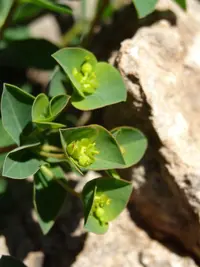
Euphorbia duvalii is a small, shrubby succulent from arid regions of East Africa. It forms low, many-branched clumps of angular, leafless stems with a distinctive architectural look. New growth is usually green, aging to duller tones, and small, simple flowers appear near the stem tips.
This species is adapted to strong light, fast-draining mineral soils, and long dry periods, which makes it relatively undemanding in containers. For those learning how to care for Euphorbia duvalii, its main needs are bright exposure, protection from cold, and careful watering to avoid root rot.
It suits sunny windowsills, dry indoor spaces, and sheltered patios, provided excess moisture and frost are avoided.

Care Difficulty
Easy Care

Light Preference
Full Sun

Water Requirements
Low Water

Temperature Preference
Tropical / Frost Sensitive

Hardiness Zone
10–11

Soil Texture
Sandy, Loamy, Rocky

Soil pH
Slightly acidic (6.5–7.0), Neutral (7.0)

Soil Drainage
Well-drained

Fertilization
Minimal (feed rarely)
Scan your plant to receive care tips personalized for your specific plant
Available on iOS and Android
This succulent prefers bright, indirect light with some gentle direct sun each day.
This drought-tolerant succulent needs infrequent, thorough watering and fast-draining soil.
This species prefers warm, stable conditions and is sensitive to frost and prolonged cold.
This species prefers relatively dry air and usually does well in typical indoor humidity around 30–50%.
Euphorbia duvalii needs a sharply draining, mineral-rich mix to prevent root and stem rot.
This species is well suited to container growing due to its compact, succulent root system.
This drought-tolerant succulent needs modest feeding to support steady growth in containers.
Pruning is mainly used to maintain shape and remove unhealthy stems on this shrubby succulent.
Container-grown plants benefit from infrequent, careful repotting to refresh soil and manage size.
This species is most commonly propagated from stem cuttings taken in warm weather.
This succulent is sensitive to hard frost and needs protection in colder climates.

Plant Health Check
Not sure what's wrong with your plant? Check your plant's health inside the app.
This species is naturally restricted to rocky limestone slopes and cliffs in Somalia, where it grows in very shallow, mineral-rich soils with intense sunlight and low rainfall.
It forms a low, flattened central stem with many short, radiating branches, giving it a small medusa-like appearance that is much more compact than in related medusoid Euphorbia species.
What look like small bumps along the branches are actually paired spines arising from specialized structures called spine shields, a typical Euphorbia feature that is particularly reduced and close-set in this species.

In its native habitat in Somalia, this plant often grows partially shaded by rocks or low shrubs, using them as micro-shelters that buffer extreme desert temperature swings and reduce water loss from its small, radiating stems.
The milky sap is toxic and irritating. Contact can cause skin redness, eye injury, and stomach upset if ingested. Keep this plant away from children and pets, and wear gloves when pruning or repotting.
Keep your plants happy and healthy with plant identification, disease detection, and easy care guidance.

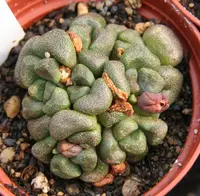
Aloinopsis schooneesii
Aloinopsis schooneesii

Dracaena zeylanica
Dracaena zeylanica
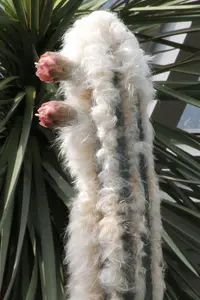
woolly torch
Pilosocereus leucocephalus
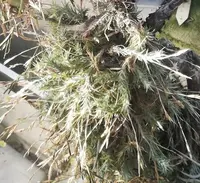
Tillandsia tricholepis
Tillandsia tricholepis
 POPULAR
Bird of paradise plant
Strelitzia reginae
-1-200x150.webp)
Namibian Grape
Cyphostemma juttae
Dracaena stuckyi
Dracaena stuckyi
flowering inch plant
Tradescantia cerinthoides