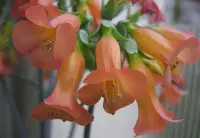
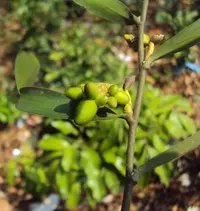
Mother of Thousands Care (Kalanchoe laetivirens)

Also known as: Crenatodaigremontiana
Mother of Thousands

About Mother of Thousands

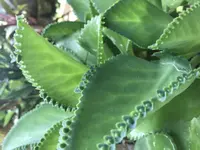
Kalanchoe laetivirens is a succulent from Madagascar, often called mother of thousands, known for its upright stems and thick, green, spotted leaves. Along the leaf edges it produces many small plantlets that drop and root easily, so it can spread quickly in pots or garden beds.

This species suits beginners because it stores water in its leaves and tolerates short dry periods. It prefers bright light, well-drained soil, and minimal overwatering, which makes it relatively simple to care for Kalanchoe laetivirens indoors in dry, sunny homes.

Main Plant Requirements

Care Difficulty

Easy Care

Light Preference

Bright Indirect Light

Water Requirements

Low Water

Temperature Preference

Tropical / Frost Sensitive

Hardiness Zone

10–11

Soil Texture

Sandy, Loamy, Rocky

Soil pH

Slightly acidic (6.5–7.0), Neutral (7.0)

Soil Drainage

Well-drained

Fertilization

Minimal (feed rarely)

Get Personalized Care Plan

Scan your plant to receive care tips personalized for your specific plant

Available on iOS and Android

How to Care for the Mother of Thousands

This succulent thrives in bright conditions that mimic its native sunny habitat.

  • Provide 4–6 hours of direct morning sun with bright, filtered light for the rest of the day; east or southeast exposure suits Kalanchoe laetivirens well.
  • Tolerates light afternoon sun in cooler seasons, but in summer protect from intense midday rays that can cause leaf scorch or brown patches.
  • If stems stretch, leaves pale, or spacing between leaves increases, the plant is receiving too little light and needs a brighter position.

Watering should respect the plant’s drought-adapted roots and fleshy leaves.

  • Allow the top 3–5 cm of soil to dry before watering; the soil surface should feel completely dry, not just the top crust.
  • In spring–summer, you may water more often as growth is active; in fall–winter, reduce frequency sharply, sometimes to only light watering every few weeks.
  • Watch for overwatering signs such as mushy, translucent leaves and sour-smelling soil; wrinkling or drooping leaves indicate the plant stayed dry too long.

Stable, warm conditions support compact growth and healthy foliage.

  • Aim for 65–80°F (18–27°C) for strongest growth, with slightly cooler nights; short dips outside this band are usually tolerated if dry.
  • Protect from cold below 40°F (4°C); tissue damage starts near freezing, and the plant should not be exposed to frost or icy winds.
  • In hot spells above 90°F (32°C), provide light shade and good air movement to limit leaf stress and prevent sunscald on exposed surfaces.

This species handles typical indoor humidity well and rarely needs special adjustments.

  • Ideal humidity is 30–50%, matching most heated and air-conditioned homes.
  • Dry air is usually tolerated, but prolonged very low humidity can cause slightly crispy leaf edges and slower growth.
  • If air is extremely dry, place the pot on a pebble tray with water below the pot base, avoiding misting that can leave spots on leaves.

Soil for this succulent must be very free-draining and airy to prevent root rot.

  • Use a gritty, sandy mix such as 50–60% cactus or succulent mix with 40–50% mineral amendments like perlite, pumice, or coarse sand.
  • Aim for slightly acidic to neutral pH, roughly 6.0–7.0, which supports nutrient uptake without encouraging excess salt buildup.
  • Improve aeration by avoiding fine peat-heavy mixes that compact; instead include coarse particles that keep air pockets around the roots.
  • Avoid dense, water-retentive garden soil or pure compost, which stay wet too long and quickly lead to root and stem rot in Kalanchoe laetivirens.

This species is very suitable for container growing due to its compact, clumping habit.

  • Choose a wide, shallow pot rather than a deep one to match the relatively shallow root system and reduce unused wet substrate at the bottom.
  • Select a heavier material such as ceramic if the plant becomes top-heavy, so the container remains stable and does not tip easily.
  • Ensure fast drainage by using a pot with large unobstructed holes and elevate it slightly so water cannot pool under the base.

This succulent needs light feeding to support compact growth without forcing soft, weak tissue.

  • Use a balanced liquid fertilizer (around 10-10-10 or 20-20-20) diluted to 25–50% strength during active growth in spring–summer.
  • Apply every 4–6 weeks when days are long and the plant is actively producing new leaves and offsets.
  • Avoid rich composts; a lean, well-drained succulent mix with modest nutrients is sufficient for Kalanchoe laetivirens.
  • In autumn–winter, reduce feeding to once, or stop entirely, especially in low light or cool rooms.

Thoughtful pruning keeps Kalanchoe laetivirens compact, tidy, and less prone to breakage.

  • Best time is late winter to early spring, before strong new growth begins.
  • Use clean, sharp scissors or small pruners to remove dead, damaged, or stretched stems.
  • Tip back long, leggy shoots above a leaf node to encourage branching and denser foliage.
  • Remove crowded offsets or plantlets to maintain shape and improve light and air penetration.

This species grows well slightly root-bound, so repotting is infrequent and mainly done to refresh soil or manage offsets.

  • Repot every 2–3 years, or when roots circle the pot, drainage slows, or growth becomes weak despite good light.
  • Best timing is spring, allowing recovery during the main growing season.
  • Choose a pot only 2–3 cm wider with drainage holes and a gritty succulent mix to limit excess moisture.
  • Gently loosen circling roots, trim rotten ones, replant at the same depth, then water lightly and keep in bright, indirect light for 7–10 days.

This plant produces many plantlets, so propagation is common and straightforward for home growers.

  • Leaf-edge plantlets are the primary method; they root well from spring to early autumn in warm conditions.
  • Place plantlets or short stem cuttings on barely moist, gritty succulent mix and keep at 68–77°F with bright, indirect light.
  • Allow cut surfaces to dry and callus for 1–2 days before setting on the substrate to reduce rot risk.
  • Lightly mist or bottom-water only when the top mix is dry; once roots form and growth starts, shift to normal care.

Kalanchoe laetivirens is frost-tender and needs mild, dry winter conditions, especially in containers.

  • Keep indoor or greenhouse temperatures above 50°F; brief dips near this level are safer than prolonged cold.
  • Move outdoor pots indoors before first frost and place in bright, indirect light.
  • Reduce watering in winter, letting most of the soil dry to prevent root rot in cool conditions.
  • Avoid cold drafts and contact with freezing window glass, which can scar or collapse fleshy leaves.

Care Tips

Control plantlets

Regularly remove excess plantlets from leaf edges and soil surface so the plant does not overcrowd its own pot and deplete nutrients over time.

Use wide pots

Choose a shallow, wide container instead of a deep narrow one to give the spreading roots and self-sown plantlets room, then thin seedlings so only the strongest remain.

Strategic propagation

When potting up plantlets, select only firm, well-formed ones and plant them slightly off-center in small pots to encourage balanced future growth and easier rotation.

Prevent legginess

If stems elongate and bend, cut back the tallest shoots by 1/3 and re-root the healthy tips as new plants, gradually replacing older, stretched growth.

Dry-season hygiene

During cooler, lower-light months, keep leaf surfaces clean and remove any fallen, decaying plantlets from the soil to reduce fungal issues while caring for Kalanchoe laetivirens.

Common Pests and Diseases

Aphids

These insects feed on tender stems and leaf undersides, causing curling, distortion, and sticky honeydew on foliage. Ants may appear around plants attracted to the honeydew.

Solution

Rinse colonies off with a firm stream of water, then treat remaining insects with insecticidal soap or a light horticultural oil, repeating weekly until populations drop. Improve air circulation around the plant and remove heavily infested shoots to reduce reinfestation and support stable Kalanchoe laetivirens care.

Mealybugs

These insects appear as white, cottony clusters in leaf axils, along stems, and around roots, leading to stunted growth and sticky residue. This pest weakens the plant by sucking sap and can promote sooty mold on leaves.

Solution

Isolate affected plants, then dab visible mealybugs with cotton swabs dipped in isopropyl alcohol and follow with insecticidal soap on all plant surfaces. Inspect weekly, repeat treatments as needed, and discard heavily infested leaves to break the life cycle.

Scale insects

These insects look like small brown or tan bumps on stems and leaf veins and do not move once attached. This pest causes yellowing, reduced vigor, and sticky honeydew that can lead to black sooty mold.

Solution

Gently scrape or wipe off individual scales with a fingernail or soft cloth, then apply horticultural oil to smother remaining insects and any crawlers. Repeat applications every 7–14 days and keep nearby plants under observation to prevent spread.

Powdery mildew

This disease causes white, powdery patches on leaf surfaces, especially in crowded or poorly ventilated conditions. Symptoms include dull, distorted leaves and slowed growth.

Solution

Increase light and airflow, avoid wetting leaves, and promptly remove the most affected foliage. Treat remaining leaves with a fungicidal spray labeled for ornamentals or a potassium bicarbonate product, repeating as directed until new growth appears clean.

Edema

Symptoms include small corky spots or blisters on leaves when roots absorb more water than leaves can release, especially in cool, very moist conditions. This physiological disorder is common in succulents kept in heavy soil or overwatered containers.

Solution

Allow the soil to dry more thoroughly between waterings, use a well-draining cactus or succulent mix, and ensure pots have drainage holes. Provide bright light and moderate room temperatures (65–80°F) to stabilize water use and prevent new lesions, though existing scars will not disappear.

Interesting Facts

Leaf-borne plantlets

This species produces clonal plantlets along the edges of its fleshy leaves, and each tiny plantlet already has roots formed before it drops and establishes in the soil.

Hybrid origin status

Kalanchoe laetivirens is widely considered a hybrid closely related to Kalanchoe daigremontiana, which helps explain its strong vegetative reproduction and very similar leaf shape to the parent species.

Potential invasiveness

In frost-free regions this plant can spread aggressively in disturbed habitats such as roadsides and rocky slopes, where dense carpets of self-rooted plantlets can outcompete local vegetation.

Botan icon

Did you know?

In some warm regions, escaped populations of Kalanchoe laetivirens have been recorded forming almost monospecific stands, where the ground layer is dominated almost entirely by overlapping generations of leaf-produced plantlets rather than seedlings from seeds.

FAQs about Mother of Thousands

This species spreads quickly through plantlets forming along leaf edges. In warm climates it can become weedy outdoors. Regular removal of plantlets and using containers with tidy edges helps limit unwanted spreading and self-seeding.

Grow Healthy Plants with Botan Care

Keep your plants happy and healthy with plant identification, disease detection, and easy care guidance.

Botan plant care app — identify plants on mobile

Explore More Plants