


Encourage Firm Tubercles
Rotate the pot by 90° every 2–3 weeks during active growth so all sides receive similar light intensity, which helps maintain evenly spaced, firm tubercles rather than leaning or lopsided growth.

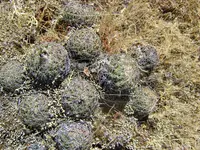
Coryphantha pallida is a small, globular cactus known for its pale green body covered with neatly arranged tubercles and short, pale spines. It usually stays compact, forming a single stem rather than large clusters. This species is native to arid regions of Mexico, where it grows in rocky, well-drained soils under strong sun. Its slow growth, drought tolerance, and compact size make it suitable for containers and indoor collections. For those learning how to care for Coryphantha pallida, it is considered moderately easy if given bright light, infrequent watering, and a gritty, fast-draining soil mix.

Care Difficulty
Moderate Care

Light Preference
Full Sun

Water Requirements
Low Water

Temperature Preference
Warm Climate

Hardiness Zone
9–11

Soil Texture
Sandy, Rocky, Loamy

Soil pH
Slightly acidic (6.5–7.0), Neutral (7.0)

Soil Drainage
Well-drained

Fertilization
Minimal (feed rarely)
Scan your plant to receive care tips personalized for your specific plant
Available on iOS and Android
This small desert cactus needs strong light to stay compact and spine-dense.
This species prefers infrequent, deep watering with fast-drying mineral soil.
This cactus prefers warm, dry conditions and does not tolerate prolonged frost.
This cactus prefers dry air and does not need extra humidity.
Use a very fast-draining, mineral-based mix to keep roots dry between waterings.
This species is well suited to container growing when drainage is carefully managed.
This slow-growing desert cactus needs minimal feeding under good light and well-drained soil.
This cactus requires almost no structural pruning, only light cleanup to maintain health and appearance.
This species grows slowly and usually needs infrequent repotting when kept in containers.
This cactus is most often propagated from seed, as offsets are not always produced in quantity.
This desert cactus needs cool, very dry winter conditions and is not suited to prolonged hard frost.

Plant Health Check
Not sure what's wrong with your plant? Check your plant's health inside the app.
This cactus is naturally restricted to arid and semi-arid regions of southern Mexico, particularly Oaxaca and Puebla, where it grows on rocky, limestone-derived soils in open scrub and dry forest margins.
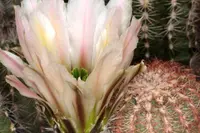
It produces relatively large, pale yellow to creamy flowers with a distinct darker throat that open near the stem apex, creating a star-like crown over the tuberculate body during the warm season.
Like other members of its genus, it has conical tubercles with a central groove that helps channel water and dew toward the root zone, an adaptation to its seasonally dry habitat.
This species grows slowly, usually adding only a few millimeters in diameter each year. It may take several years to noticeably increase in size, especially in containers and cooler climates, even with good overall care.
Keep your plants happy and healthy with plant identification, disease detection, and easy care guidance.

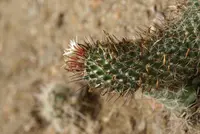
Coryphantha potosiana
Coryphantha potosiana
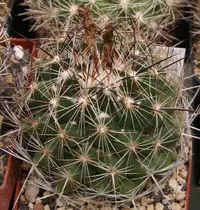
Nickels' cactus
Coryphantha nickelsiae
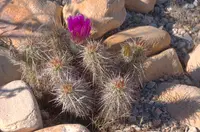
Engelmann's hedgehog cactus
Echinocereus engelmannii
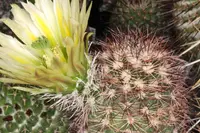
spiny hedgehog cactus
Echinocereus dasyacanthus
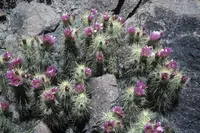
pinkflower hedgehog cactus
Echinocereus fendleri
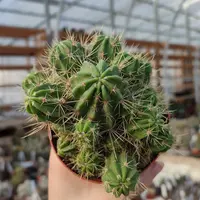
Cactus
Echinocereus maritimus
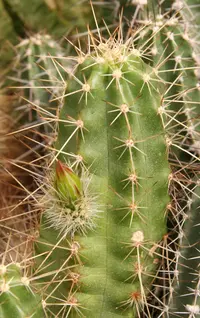
Echinocereus parkeri
Echinocereus parkeri
rainbow cactus
Echinocereus pectinatus