Coryphantha potosiana Care

Coryphantha potosiana

About Coryphantha potosiana

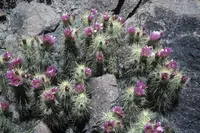
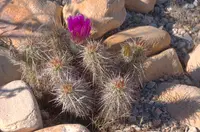
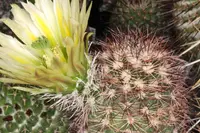
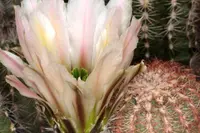
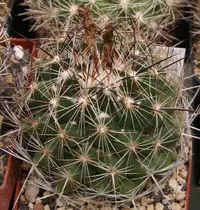
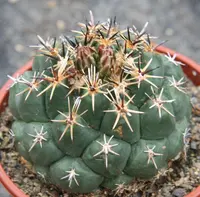
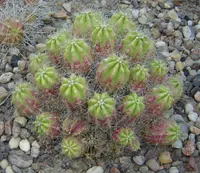
Coryphantha potosiana is a small, globular cactus from arid regions of Mexico, often growing on rocky slopes with intense sun exposure. It forms a single rounded stem covered in distinct tubercles and spines, and may produce showy, funnel-shaped flowers near the top. Growth is generally slow but steady under the right conditions, which makes it suitable for container cultivation and rock gardens in dry climates. It is considered moderately easy to grow for those who learn how to care for Coryphantha potosiana, as long as it receives strong light, excellent drainage, and careful watering. This species dislikes prolonged cold and excess moisture, so it suits dry indoor windowsills or sheltered outdoor spots in warm regions.

Main Plant Requirements

Care Difficulty

Moderate Care

Light Preference

Full Sun

Water Requirements

Low Water

Temperature Preference

Warm Climate

Hardiness Zone

9–11

Soil Texture

Sandy, Rocky, Loamy

Soil pH

Slightly acidic (6.5–7.0), Neutral (7.0)

Soil Drainage

Well-drained

Fertilization

Minimal (feed rarely)

Get Personalized Care Plan

Scan your plant to receive care tips personalized for your specific plant

Available on iOS and Android

How to Care for the Coryphantha potosiana

This cactus needs strong light but must be protected from extreme midday sun in hot climates.

  • Provide 6–8 hours of sun with morning or late-afternoon exposure; use light afternoon shade in regions with very intense summer sun.
  • Outdoors, place Coryphantha potosiana where it receives unobstructed east or southeast light; indoors, use a south-facing window with sheer curtain if spines or skin start to pale.
  • Watch for etiolation (stretching, leaning) as a sign of insufficient light, and for yellowing or corky, sunburned patches as a sign of excessive direct sun.

This species is drought-tolerant and must dry well between waterings to prevent root rot.

  • During active growth in spring–summer, water only when the top 3–5 cm of soil are completely dry and the pot or ground feels noticeably lighter.
  • Ensure very fast-draining, gritty soil; water thoroughly, then let excess drain away, never leaving the root zone in standing water.
  • Reduce watering sharply in fall and keep almost dry in winter; wrinkling and slight softening signal thirst, while blackened base tissue or a sour smell indicate overwatering damage.

This cactus prefers warm, dry conditions with a cool but not freezing winter rest.

  • Aim for 70–90°F (21–32°C) in spring–summer for best growth, with good air movement to prevent heat buildup around the plant.
  • Protect from frost; short dips to 32°F (0°C) may be survived if bone-dry, but growth is safer above 40°F (4°C), especially in prolonged cold or damp weather.
  • In winter, a cool rest around 45–55°F (7–13°C) helps flower initiation, while sustained heat above 100°F (38°C) requires extra shade and airflow to avoid tissue stress.

This cactus prefers dry air and rarely needs special humidity management indoors.

  • Target 30–40% relative humidity, similar to a typical heated home in winter.
  • Dry air is well tolerated; avoid placing the plant near humidifiers or terrariums above 50%.
  • Humidity stress shows as soft, swollen tissue or rot at the base; increase airflow and reduce ambient humidity if this occurs.

This species requires a very fast-draining, mineral-rich mix to prevent root rot.

  • Use a gritty, sandy substrate with coarse particles that create strong aeration around the roots.
  • Combine roughly 60–70% inorganic material (pumice, coarse sand, small gravel, or perlite) with 30–40% cactus potting mix.
  • Aim for slightly acidic to neutral pH around 6.0–7.0, which suits Coryphantha potosiana and supports nutrient uptake.
  • Avoid peat-heavy, compact, or water-retentive substrates that stay wet longer than 2–3 days after watering.

This species is well suited to container growing when drainage and stability are managed carefully.

  • Choose a pot that is slightly wider than the plant body so shallow roots can spread without leaving unused wet zones.
  • Select unglazed clay containers if extra evaporation is needed in cooler or dimmer locations to prevent prolonged moisture.
  • Use a container shape that is broader than tall to keep the plant stable and reduce tipping risk as the stem enlarges.

This desert cactus grows well with very light feeding, so focus on avoiding overfertilization rather than pushing fast growth in Coryphantha potosiana.

  • Use a low-dose, balanced liquid cactus fertilizer (around 10-10-10) at 1/4–1/2 strength during active growth in spring–summer.
  • Apply fertilizer no more than every 4–6 weeks when the plant is actively growing and roots are healthy.
  • Skip feeding in fall–winter when growth slows or stops, especially in cool, bright conditions.
  • Never fertilize dry soil; water lightly first, then apply diluted fertilizer to prevent root burn.

Pruning needs are minimal, mainly limited to hygiene and safety for Coryphantha potosiana.

  • Carry out any pruning at the start of the warm growing season when recovery is quickest.
  • Remove only dead, diseased, or rotting tissue with clean, sharp scissors or a small knife.
  • Trim spent or collapsed flowers and fruit if they mold or attract pests, leaving healthy tissue intact.
  • Avoid shaping cuts; this species maintains its natural form without cosmetic pruning.

This cactus prefers stable conditions and only occasional repotting or transplanting.

  • Plan to repot every 3–5 years, or when roots circle the pot, emerge from drainage holes, or growth slows without other cause.
  • Carry out repotting in late spring–early summer, when warm temperatures support recovery and new root growth.
  • Use a pot only 1–2 in wider with excellent drainage and a gritty cactus mix to limit moisture around roots.
  • Handle the plant by wrapping it in folded paper or soft tongs, keep roots mostly intact, and keep the mix barely moist for 1–2 weeks afterward.

Propagation is usually done from seed, as offsets are uncommon in Coryphantha potosiana.

  • Sow fresh seeds in late spring–early summer in a sterile, gritty cactus mix with very fine top dressing.
  • Maintain bright, indirect light, 70–80°F warmth, and consistently barely moist substrate until germination.
  • Cover the container with a clear lid or plastic to keep humidity high, then ventilate gradually after seedlings appear.
  • Transplant seedlings carefully once they are firm and a few mm in diameter, avoiding damage to fine roots.

This cactus needs a cool, very dry winter rest to stay healthy and flower well later.

  • Keep plants at 40–50°F in winter, never below about 32°F, and always completely dry at colder end of the range.
  • Move containers indoors or to an unheated but frost-free, bright space before hard frost.
  • Stop watering entirely in winter; only resume light watering when temperatures and light rise in spring.
  • Ensure excellent air circulation and no contact with cold, wet surfaces to prevent rot at the base.

Care Tips

Deep pot selection

Use a pot that is deeper than it is wide, with large drainage holes, so the strong taproot can develop fully and the root zone dries evenly between waterings.

Mineral top dressing

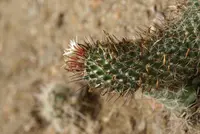
Apply a 1–2 cm layer of coarse grit or small lava rock on the soil surface to keep the stem base dry, reduce algae and fungus gnat issues, and stabilize the plant as it matures.

Controlled summer rest

In midsummer heat above 90°F, slightly reduce watering and avoid fertilizing to mimic its natural semi-dormant phase and prevent soft, etiolated growth.

Winter light management

During winter, move the plant to the brightest, coolest indoor spot available and keep the soil bone-dry to support compact growth and reliable flowering the following season, which is key when caring for Coryphantha potosiana.

Targeted pest checks

Inspect closely between tubercles with a magnifying glass every few weeks and use a soft brush or cotton swab with 70% isopropyl alcohol to remove early mealybug or scale infestations before they reach the stem apex.

Common Pests and Diseases

Red spider mites

This pest appears in hot, dry conditions and causes pale, rough patches on the cactus skin and fine webbing between tubercles. Symptoms include dulling of the epidermis and tiny rust-colored dots when inspected closely.

Solution

Increase air movement and lightly hose or shower the plant to remove mites, taking care to keep the soil mostly dry. If populations persist, apply a targeted miticide or insecticidal soap labeled for cacti, repeating every 7–10 days while monitoring for new damage as part of consistent Coryphantha potosiana care instructions.

Cactus scale

These insects attach tightly to ribs and tubercles, forming small, hard, tan or brown bumps that suck sap and can cause yellowing and local collapse of tissue. This pest often hides in the plant’s grooves and around the base of spines.

Solution

Gently scrape or rub off visible scale with a cotton swab dipped in isopropyl alcohol, then rinse the plant with lukewarm water. For heavier infestations, use a systemic insecticide suitable for succulents and repeat treatment according to label directions, checking hidden areas regularly.

Mealybugs

These insects produce white, cottony masses between tubercles, in the crown, and occasionally on roots, weakening the plant and distorting new growth. Symptoms include sticky honeydew and sooty mold on nearby surfaces in severe cases.

Solution

Isolate the plant and dab visible mealybugs with isopropyl alcohol using a cotton swab, then rinse gently to remove residue. For persistent or root infestations, repot into fresh, mineral-rich mix after washing roots, and use a systemic insecticide labeled for ornamental succulents.

Fusarium stem rot

This disease enters through wounds or old flower scars and causes localized, sunken, brown to black spots that may slowly expand and soften. Symptoms include internal brown streaks when affected tissue is cut open.

Solution

Remove the plant from its pot, cut away all discolored and softened tissue with a sterile blade, and allow the healthy remaining part to callus in a dry, shaded place for several days. Re-root only firm, clean sections in a very fast-draining mineral substrate, keep watering minimal until new roots form, and avoid injuring the epidermis in the future.

Corky sunburn lesions

Symptoms include pale, bleached patches that later become rough, tan, and corky on the sun-exposed side of the cactus. This disorder develops when a plant grown in lower light is suddenly moved into intense direct sun, especially in summer.

Solution

Move the plant to a position with bright light and only 2–4 hours of gentle morning sun, then gradually increase direct light over 2–3 weeks. Damaged tissue will not turn green again, but stable, dry corking can be left in place while future sunburn is prevented with controlled light exposure and good ventilation.

Interesting Facts

Potosí limestone specialist

This cactus is naturally restricted to limestone hills around the city of San Luis Potosí in central Mexico, where it grows in shallow, rocky soils with very high mineral content.

Distinctive felted crown

Mature plants develop a dense tuft of woolly hairs at the growing point, which helps protect the sensitive apex from intense sun and sudden temperature swings in its arid habitat.

Hooked central spines

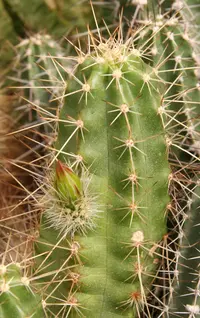
Its central spines are often strongly hooked and darker than the radial ones, an adaptation that may provide extra shading for the stem surface and slight protection from herbivores in open desert sites.

FAQs about Coryphantha potosiana

Growth is slow. Young plants may increase only a few millimeters in diameter per year, with slightly faster growth in warm seasons. Consistent light, very sharp drainage, and modest feeding support growing Coryphantha potosiana without causing weak, elongated tissue.

Grow Healthy Plants with Botan Care

Keep your plants happy and healthy with plant identification, disease detection, and easy care guidance.

Botan plant care app — identify plants on mobile

Explore More Plants