Encourage Upright Growth
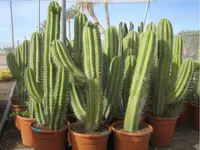
Use a sturdy stake or vertical trellis when stems reach 20–30 cm, loosely tying them with soft ties to prevent bending or breakage as the cactus elongates.

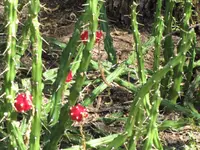
Harrisia adscendens is a night-blooming columnar cactus native to dry regions of South America and parts of the Caribbean. It usually grows as tall, branching, ribbed stems with prominent spines.
The plant produces large, white, fragrant flowers that open at night, followed by fleshy fruits. Its drought tolerance and slow, upright growth habit make it suitable for containers in bright, warm locations.
This species prefers very well-drained, mineral-rich soil and infrequent watering, which makes it relatively low-maintenance once established. For those learning how to care for Harrisia adscendens, its main needs are strong light, good airflow, and protection from prolonged cold or excess moisture.

Care Difficulty
Easy Care

Light Preference
Full Sun

Water Requirements
Low Water

Temperature Preference
Tropical / Frost Sensitive

Hardiness Zone
10–11

Soil Texture
Sandy, Loamy, Rocky

Soil pH
Slightly acidic (6.5–7.0), Neutral (7.0)

Soil Drainage
Well-drained

Fertilization
Minimal (feed rarely)
Scan your plant to receive care tips personalized for your specific plant
Available on iOS and Android
This desert cactus needs strong light but benefits from some protection in very intense sun.
Watering should mimic arid habitats with thorough soakings followed by clear drying periods.
This species prefers warm, dry conditions and is sensitive to prolonged cold and frost.
This cactus handles low indoor humidity well and rarely needs special humidity management.
This species needs a very fast-draining, mineral-rich mix to prevent root rot.
This species is well suited to container growing when stability and drainage are prioritized.
This desert cactus benefits from light feeding in containers but thrives in lean soil outdoors.
Pruning is mainly corrective, keeping this cactus healthy and safely shaped rather than strictly ornamental.
Container-grown plants benefit from infrequent repotting, while in-ground plants need transplanting only when poorly sited.
This cactus is commonly propagated from stem cuttings, with seeds used mainly for larger-scale growing Harrisia adscendens.
This warm-climate cactus is frost-sensitive and needs protection in regions with cold winters.

Plant Health Check
Not sure what's wrong with your plant? Check your plant's health inside the app.
This species forms tall, slender columns and produces showy, white, tubular flowers that open at night, an adaptation linked to pollination by nocturnal insects or moths in its native habitat.
Unlike many desert cacti, it often grows as an epiphyte or climber on trees or rocks in seasonally dry tropical environments, anchoring with aerial roots instead of relying only on soil.
Its stems grow in distinct segments with constrictions between growth phases, which may reflect responses to fluctuating moisture and temperature in its native range.
This species performs best outdoors in warm, bright, arid climates where it receives strong light and good airflow. Harrisia adscendens indoor care is possible under high light and low humidity, but growth is usually slower and flowering less frequent.
Keep your plants happy and healthy with plant identification, disease detection, and easy care guidance.