Safe handling routine
Always wear disposable gloves and avoid touching your face when pruning or repotting, then rinse tools and any sap contact areas with soapy water to reduce irritation from the toxic latex sap.

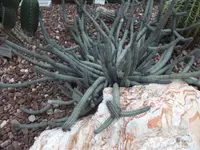
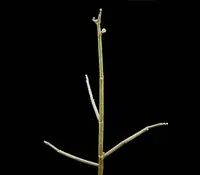
Euphorbia baioensis is a small, shrubby succulent from arid regions of northern Kenya. It forms clusters of slender, upright, many-ribbed stems with small spines along the ridges.
The plant has a compact, architectural look that suits windowsills and dry indoor displays. It grows slowly and stays relatively small, which makes it suitable for container culture.
This species prefers bright, indirect to direct light, fast-draining mineral-rich soil, and careful, infrequent watering. Its drought tolerance and modest growth rate generally make it straightforward for those learning how to care for Euphorbia baioensis.

Care Difficulty
Moderate Care

Light Preference
Full Sun

Water Requirements
Low Water

Temperature Preference
Tropical / Frost Sensitive

Hardiness Zone
11–12

Soil Texture
Sandy, Rocky, Loamy

Soil pH
Slightly acidic (6.5–7.0), Neutral (7.0)

Soil Drainage
Well-drained

Fertilization
Minimal (feed rarely)
Scan your plant to receive care tips personalized for your specific plant
Available on iOS and Android
This succulent prefers bright, dry conditions that mimic its rocky, East African habitat.
Watering should imitate erratic desert rain, with thorough soakings followed by complete drying.
Stable warmth supports compact growth and reduces rot risk in this drought-adapted succulent.
This species tolerates typical indoor humidity and rarely needs special adjustments.
This drought-adapted succulent needs a very fast-draining, mineral-based substrate to prevent root and stem rot.
This species is well suited to container growing due to its compact, upright habit.
This drought-adapted succulent needs only light feeding to stay healthy in containers.
Pruning is minimal and mainly keeps this spiny succulent compact and safe to handle.
This slow-growing succulent prefers infrequent disturbance, so repot only when clearly needed.
Propagation is usually done from stem cuttings rather than seed for this succulent species.
This species is not frost hardy and needs careful winter management in most temperate climates.

Plant Health Check
Not sure what's wrong with your plant? Check your plant's health inside the app.
This species is endemic to arid limestone and sandstone cliffs in northern Somalia, where it grows in narrow rock crevices with very shallow, mineral-rich soils.
It forms dense clusters of slender, upright, grey-green stems lined with paired spines, giving mature clumps a candelabra-like appearance despite the plant’s small size.
Its apparent yellow flowers are actually cyathia, a specialized inflorescence unique to Euphorbia, with petal-like structures that are modified bracts rather than true petals.

Euphorbia baioensis is considered rare in cultivation and is sought after by specialized collectors because it is highly localized in the wild and adapted to a very narrow cliff habitat, which makes responsible, nursery-propagated growing Euphorbia baioensis important for conservation.
This species needs a distinct dry rest period and plenty of light to set buds. If kept too moist or shaded year-round, it often stays vegetative. Slightly cooler, drier winter conditions usually improve flowering.
Keep your plants happy and healthy with plant identification, disease detection, and easy care guidance.