Allow Massive Spread
Plan at least a 2–3 m radius of open space around the rosette so leaves can fully extend without breaking, and place it well away from paths or play areas to avoid injury from the large spines.

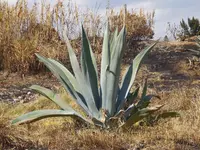
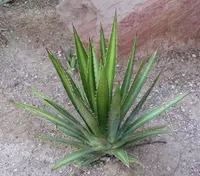
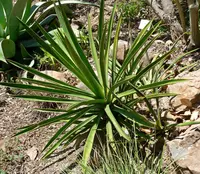
Agave mapisaga is a large succulent from central and southern Mexico, known for its massive rosette of broad, pale green leaves. It is adult-sized only in the ground or very large containers, where it forms an architectural focal point with a strong desert look.
The leaves are usually armed with sharp marginal teeth and a strong terminal spine, so placement and safe handling matter. It thrives in hot, sunny, arid climates and prefers very well-drained, gritty soil with minimal summer irrigation once established.
Its drought tolerance and low nutrient needs make it relatively low-maintenance in suitable climates, though size and spines can complicate how to care for Agave mapisaga in small gardens or patios.

Care Difficulty
Moderate Care

Light Preference
Full Sun

Water Requirements
Low Water

Temperature Preference
Tropical / Frost Sensitive

Hardiness Zone
9–11

Soil Texture
Sandy, Loamy, Rocky

Soil pH
Slightly acidic (6.5–7.0), Slightly alkaline (7.0–7.5)

Soil Drainage
Well-drained

Fertilization
Minimal (feed rarely)
Scan your plant to receive care tips personalized for your specific plant
Available on iOS and Android
Large rosettes of this agave need strong sun to stay compact and healthy.
This species is highly drought-tolerant and prefers infrequent, deep watering.
This agave thrives in warm, dry climates and dislikes prolonged cold or frost.
This species is adapted to arid climates and does not have specific humidity requirements indoors or outdoors.
This species needs very well-drained, mineral, low-organic soil to prevent root and crown rot.
This large agave is only conditionally suitable for containers, mainly when young or in climates with cold winters.
This large agave needs only light, occasional feeding in lean soils to support steady growth.
Pruning for this species is minimal and mainly focused on safety and sanitation rather than shaping.
This agave is usually grown in the ground, and transplanting must be planned carefully due to size and spines.
Propagation is usually done vegetatively, as seed production is slow and plants flower only once, late in life.
Cold tolerance is limited, so many gardeners treat this agave as a warm-climate outdoor plant or a container specimen in cooler regions.

Plant Health Check
Not sure what's wrong with your plant? Check your plant's health inside the app.
Agave mapisaga forms one of the largest rosettes in the genus, with individual leaves often exceeding 2 m in length in ideal conditions, creating a massive, open fountain shape in the landscape.
In central Mexico this species has been used as a major pulque agave, with its large, carbohydrate-rich stem and leaves providing abundant sap for traditional fermented beverages and other local uses.
Unlike many agaves with stiff, rigid foliage, this species has relatively soft, flexible leaves that still carry a strong terminal spine and small marginal teeth, an adaptation that reduces breakage in wind while maintaining herbivore defense.

Some botanists consider Agave mapisaga to be among the very fastest-growing large agaves, able under favorable conditions to reach an enormous, mature rosette in significantly less time than many other century plant relatives, which typically need decades to attain comparable size.
This species grows relatively quickly for an agave, often adding 15–30 cm of leaf spread per year in warm, dry climates. Growth slows in cool or very dry conditions, so overall size still builds up over many years.
Keep your plants happy and healthy with plant identification, disease detection, and easy care guidance.