Plan final spacing
Allow at least 1–1.5 m of open space around the plant from the start, since the rosette and trunk broaden with age and crowding increases rot and handling risk.

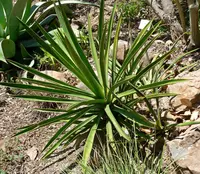
Agave karwinskii is a slow-growing succulent from arid regions of Mexico, forming tall, upright columns of stiff, gray-green leaves. Mature plants can resemble living pillars with a strong architectural presence in the landscape.
This species stores water in its thick leaves and tolerates drought, which can make it easier to manage than many leafy ornamentals. It prefers strong light, very well-drained soil, and minimal watering, especially in cool conditions.
Spines along the leaf margins and tip provide natural protection but require some care in placement and handling. Understanding how to care for Agave karwinskii mainly involves avoiding overwatering and giving it enough sun and space to grow slowly but steadily.

Care Difficulty
Moderate Care

Light Preference
Full Sun

Water Requirements
Low Water

Temperature Preference
Warm Climate

Hardiness Zone
9–11

Soil Texture
Sandy, Loamy, Rocky

Soil pH
Slightly acidic (6.5–7.0), Slightly alkaline (7.0–7.5)

Soil Drainage
Well-drained

Fertilization
Minimal (feed rarely)
Scan your plant to receive care tips personalized for your specific plant
Available on iOS and Android
This highland agave needs strong sun to maintain its upright form and compact rosette.
This species is drought-adapted and prefers deep, infrequent watering with thorough drying between soakings.
This agave prefers warm, dry conditions and is only moderately tolerant of cold.
This species tolerates a wide humidity range and usually needs no special adjustment indoors or outdoors.
This agave needs very fast-draining, mineral soil to prevent root rot and maintain compact growth.
This species can be grown in containers if the pot provides stability and rapid drainage for its deep, heavy rosette.
This drought-adapted species needs only light feeding in containers or poor soils to maintain steady growth.
Pruning needs for Agave karwinskii are minimal and focus on hygiene and safety rather than shaping.
Container-grown or young landscape plants of Agave karwinskii are repotted or transplanted infrequently due to slow, structural growth.
Propagation of Agave karwinskii is usually done on a small scale and is slower than many smaller agaves.
Cold sensitivity means Agave karwinskii benefits from simple but consistent winter safeguards in most regions.

Plant Health Check
Not sure what's wrong with your plant? Check your plant's health inside the app.
This species forms tall, upright trunks up to several meters high, stacked with tight leaf rosettes, giving it a candelabra-like silhouette that is unusual among agaves typically forming only low rosettes.
Agave karwinskii is one of the principal species used to produce traditional Oaxacan mezcal, especially styles known locally as barril, madrecuixe, and tobalá de cerro, depending on regional naming practices.
Individual rosettes of this agave can take many years to flower and are monocarpic, meaning each rosette flowers only once before dying, while the clonal offsets continue the life of the plant.

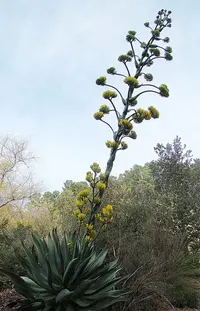
The towering flower stalk of this species can reach several meters in height and becomes an important seasonal nectar source for bats and insects in its native Mexican dry forest habitats, linking its reproductive cycle directly to local pollinator communities.
Brown leaf tips or patches usually come from cold damage, sun scorch after sudden exposure, or old age of lower leaves. Sharp-edged leaf spots can also indicate fungal infection; improve airflow and remove affected tissue with clean tools.
Keep your plants happy and healthy with plant identification, disease detection, and easy care guidance.