Thornber's fishhook cactus Care (Cochemiea thornberi)

Also known as: Thornber's nipple cactus
Thornber's fishhook cactus

About Thornber's fishhook cactus

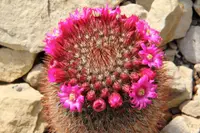
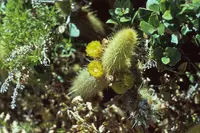
Thornber's fishhook cactus, Cochemiea thornberi, is a small desert cactus native to the Sonoran Desert of Arizona and northern Mexico. It usually grows in clustered mounds of short cylindrical stems.

The plant is named for its distinctive hooked central spines, which curve like tiny fishhooks and help protect it from herbivores and sun exposure. In spring, it can produce tubular reddish to pink flowers near the stem tips.

This species is adapted to very dry, rocky habitats and copes well with intense sun and limited water, which makes it relatively easy to grow in containers. Good drainage, bright light, and careful watering are the main considerations in how to care for Thornber's fishhook cactus.

Main Plant Requirements

Care Difficulty

Moderate Care

Light Preference

Full Sun

Water Requirements

Low Water

Temperature Preference

Tropical / Frost Sensitive

Hardiness Zone

9–11

Soil Texture

Sandy, Loamy, Rocky

Soil pH

Slightly acidic (6.5–7.0), Neutral (7.0)

Soil Drainage

Well-drained

Fertilization

Minimal (feed rarely)

Get Personalized Care Plan

Scan your plant to receive care tips personalized for your specific plant

Available on iOS and Android

How to Care for the Thornber's fishhook cactus

This desert cactus thrives with strong light but benefits from some protection in harsh sun.

  • Provide 6–8 hours of direct sun daily; east or south exposure with strong morning sun and slightly filtered afternoon light suits Thornber's fishhook cactus well.
  • In very hot, low-latitude summers, give light shade during 12–4 p.m. to prevent stem scorching, yellowing, or corky patches.
  • In winter, maximize light by avoiding shade from buildings or trees, since low light leads to elongated, weak growth and fewer flowers.

Watering should mimic brief desert rains followed by dry periods to keep this cactus healthy.

  • Allow the top 3–5 cm of soil to dry completely before watering; in warm growing seasons this may mean watering only after spines and skin look slightly less plump.
  • Use fast-draining, gritty soil and water deeply until excess drains away, preventing water from pooling around the roots.
  • Reduce watering sharply in cool seasons, keeping soil almost dry; soft, yellowing tissue suggests overwatering, while wrinkling and slight shrinkage suggest underwatering.

Temperature should reflect a warm desert climate with cool, but not freezing, winters.

  • Aim for 70–90°F (21–32°C) during active growth; Cochemiea thornberi tolerates short spikes up to about 100°F (38°C) if roots are dry and there is airflow.
  • Protect from frost; growth slows below 55°F (13°C) and tissue damage can occur near 32°F (0°C), especially in prolonged cold or wet conditions.
  • For a cool rest in winter, keep it around 50–60°F (10–16°C), with very limited watering, then warm it gradually in spring to resume active growth.

This cactus prefers very dry air and usually thrives in typical indoor humidity levels.

  • Aim for 20–40% humidity; avoid consistently above 50% to reduce rot risk.
  • Dry indoor air is well tolerated; brief higher humidity is acceptable if the potting mix dries quickly.
  • Watch for mushy stems, blackened areoles, or lingering damp soil as signs humidity is too high and increase air movement instead of misting Thornber's fishhook cactus.

Use a very fast-draining, mineral-rich mix to prevent root and stem rot.

  • Choose a gritty, sandy mix with low organic matter, such as 60–70% mineral materials and 30–40% cactus potting mix.
  • Combine commercial cactus mix with coarse pumice, perlite, and 2–4 mm horticultural grit to improve drainage and aeration around roots.
  • Keep soil slightly acidic to neutral (pH 6.0–7.0), avoiding heavy lime or saline conditions that can stress Cochemiea thornberi.
  • Avoid peat-heavy, dense, or water-retentive substrates that stay moist for more than 2–3 days after watering.

This species is well suited to container growing when the pot is chosen for drainage and stability.

  • Select a shallow but wide pot that matches the spreading root system and limits excess wet substrate.
  • Use unglazed clay to allow faster evaporation, which helps the mix dry fully between waterings.
  • Place the pot in a heavy outer cachepot or on a wide saucer to prevent tipping as stems elongate and become top-heavy.

This desert cactus needs only light feeding to support healthy growth in containers.

  • Use a diluted balanced cactus fertilizer (around 5-5-5) or low-nitrogen succulent feed at 1/4–1/2 strength.
  • Apply once every 4–6 weeks during spring–summer while Thornber's fishhook cactus is actively growing.
  • Skip organic compost in pots, as it often holds too much moisture for Cochemiea thornberi.
  • Stop feeding in fall–winter to allow full dormancy and reduce risk of soft, weak growth.

Pruning needs for Cochemiea thornberi are minimal and mainly hygienic.

  • Best time is late spring, after any flowering flush has finished.
  • Use clean, sharp scissors or pruning snips to remove shriveled, diseased, or broken stems only.
  • Cut close to the base without damaging healthy tissue to maintain a compact clumping shape.
  • Avoid heavy thinning, since excessive stem removal can reduce future flowering and stress the plant.

This species prefers tight containers and infrequent disturbance when grown in pots.

  • Repot every 3–4 years, or when roots circle the drainage holes and growth slows noticeably.
  • Choose late spring for repotting Cochemiea thornberi, when active growth helps roots recover.
  • Use a shallow pot with excellent drainage and a gritty cactus mix to limit water retention.
  • Unpot gently, remove only loose soil, and let roots dry 1–2 days before replanting, then water lightly after 5–7 days.

Cochemiea thornberi is commonly propagated from offsets and seeds under warm, dry conditions.

  • Detach offsets in late spring–summer, cutting cleanly where they join the parent stem.
  • Allow cut surfaces to callus in dry air for 5–10 days before planting in sterile, gritty mix.
  • Keep soil barely moist and temperatures around 70–80°F with bright, indirect light during rooting.
  • For seed propagation, sow on the surface of barely moist cactus mix and provide warmth plus good air circulation.

This cactus is not fully frost hardy and benefits from thoughtful winter management in most climates.

  • Keep above 35–40°F; prolonged freezing can damage or kill stems and roots.
  • In cold regions, move container plants indoors to a bright, cool, very dry spot for winter.
  • Water sparingly, if at all, during winter dormancy to prevent rot in cold, wet soil.
  • Outdoors in mild climates, ensure sharply drained soil and avoid overhead watering during cold spells.

Care Tips

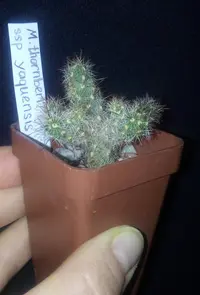
Terracotta pot choice

Use an unglazed terracotta pot with a single, large drainage hole to increase evaporation around the roots and reduce the risk of rot in compact plants and clustered offsets.

Grit top-dressing

Apply a 0.5–1 cm layer of coarse grit or small stones on the soil surface to keep the stem base dry, limit algae and fungus gnat issues, and make spotting early rot easier.

Controlled offset removal

Detach offsets only when they have visible roots or are at least 1.5–2 cm wide, let the cut surfaces callus for 3–7 days, then root them in barely moist, very gritty mix to expand a healthy clump.

Dry winter rest

From late fall through winter keep the plant completely dry and in the brightest cool location available, which supports strong spring flowering and reduces cold-related rot risk when caring for Thornber's fishhook cactus.

Safe handling tools

Use folded newspaper, silicone-coated tongs, or a thick towel to grip the body when repotting or inspecting, so the plant can be handled firmly without damaging spines or tissue or injuring your hands.

Common Pests and Diseases

Spider mites

This pest is attracted to dry, stagnant air around clustered stems and can colonize the dense spine bases and wool, causing stippling and dull, grayish patches on the epidermis. Symptoms include very fine webbing between tubercles and gradual loss of vigor.

Solution

Rinse the stems thoroughly with a firm stream of water, then treat with repeated applications of insecticidal soap or a neem oil solution, focusing on spine bases and crevices. Improve air movement, avoid overheated indoor window ledges, and periodically inspect with a hand lens as part of routine Cochemiea thornberi care instructions.

Scale insects

These insects settle into the ribs and tubercle bases, appearing as small, hard, brown or off-white bumps that exude sticky honeydew. Symptoms include sooty mold growth on honeydew and slow, uneven growth of affected stems.

Solution

Remove individual scales manually with a cotton swab dipped in isopropyl alcohol, then follow up with 2–3 rounds of horticultural oil spray at 7–10 day intervals to target crawlers. Isolate the plant from other cacti, reduce overhead watering, and keep the plant in bright, airy conditions to discourage reinfestation.

Mealybugs

This pest hides in tight areoles and between clustered stems, producing white, cottony masses and sucking plant sap. Symptoms include weakened growth, slight yellowing, and distorted new offsets or pups at the stem base.

Solution

Physically remove visible colonies with a brush or cotton swab dipped in 70% isopropyl alcohol, then apply an insecticidal soap or systemic insecticide labeled for cacti if infestations persist. Inspect offsets and the root zone when repotting, discard heavily infested soil, and maintain good light and dry intervals between waterings to reduce susceptibility.

Corky scab

This disease develops on skin exposed to repeated minor injury, mechanical damage, or prolonged dampness, forming tan to brown, rough, corky patches along the stem. Symptoms include firm, dry lesions that are mostly cosmetic but can crack in severe cases.

Solution

Allow the plant to dry thoroughly between waterings and avoid prolonged water sitting on the stem surface, especially in cool conditions. Remove only loose, dead tissue if present, correct any rubbing or pressure from pots or supports, and provide strong light and good air circulation so new growth remains smooth and healthy.

Bacterial soft rot

This disease affects tissue injured by cold, sunburn, or mechanical damage, leading to sudden soft, watery, foul-smelling areas on stems. Symptoms include rapid collapse of affected segments and discoloration from green to brown or black.

Solution

Cut away all affected tissue back to firm, healthy flesh with a sterile knife, allowing cut surfaces to dry and callus in bright, dry conditions for several days. Discard any severely affected plants and contaminated soil, improve drainage and watering practices, and protect plants from temperature extremes or sunburn that create entry points for bacteria.

Interesting Facts

Arizona desert specialist

This species is naturally restricted to southern Arizona, mainly in the Sonoran Desert around Tucson, where it grows on rocky slopes and gravelly bajadas with very sparse soil.

Hooked spines for shade

The strongly curved, fishhook-like central spines help anchor light debris and create a small shaded boundary layer around the stem, reducing sun stress and water loss in extreme heat.

Rain pulse flowering

Flowering in this species is tightly linked to late winter and early spring moisture pulses, with pale pink to lavender tubular flowers appearing after favorable rains to match the activity period of native pollinators.

Botan icon

Did you know?

This cactus was once considered rare and of conservation concern due to its very limited range and habitat disturbance in southern Arizona, and it is still monitored locally as urban expansion and grazing continue to fragment its natural populations.

FAQs about Thornber's fishhook cactus

Blooming usually occurs in spring to early summer. The plant produces tubular, reddish to pink flowers near the stem tips. Blooms are showy but relatively small, and individual flowers last only a few days.

Grow Healthy Plants with Botan Care

Keep your plants happy and healthy with plant identification, disease detection, and easy care guidance.

Botan plant care app — identify plants on mobile

Explore More Plants