


Deep pot selection
Use a pot that is slightly deeper than standard cactus pots to allow strong taproot development and reduce the risk of the plant becoming top-heavy and tilting as it matures.

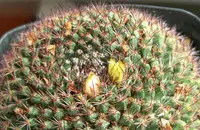
Mammillaria brandegeei is a small, clustering cactus species known for its rounded stems covered in neat rows of tubercles and fine spines. Plants often form compact mounds with age, sometimes dotted with small funnel-shaped flowers near the stem tips.
This species is native to arid regions of Baja California Sur in Mexico, where it grows in rocky, well-drained habitats with strong sunlight. Its slow growth, drought tolerance, and relatively compact size make it suitable for containers and windowsills.
Understanding how to care for Mammillaria brandegeei mainly involves providing bright light, infrequent but deep watering, and gritty, fast-draining soil, which helps reduce the risk of rot.

Care Difficulty
Easy Care

Light Preference
Full Sun

Water Requirements
Low Water

Temperature Preference
Tropical / Frost Sensitive

Hardiness Zone
10–11

Soil Texture
Sandy, Rocky, Loamy

Soil pH
Slightly acidic (6.5–7.0)

Soil Drainage
Well-drained

Fertilization
Minimal (feed rarely)
Scan your plant to receive care tips personalized for your specific plant
Available on iOS and Android
This cactus prefers strong light that mimics its bright, arid native habitat.
Watering should be infrequent and guided by soil dryness rather than a fixed schedule.
Stable warmth with brief cool periods suits this species best.
This cactus thrives in dry indoor air and rarely needs humidity adjustment.
This species needs a very fast-draining, mineral-rich cactus substrate to prevent root rot.
This small cactus is well suited to container culture.
This desert cactus grows well with modest, carefully timed feeding rather than heavy fertilization.
Pruning needs are minimal and focus mainly on health and safety for this small, clustering cactus.
This species prefers to stay slightly root-bound and only needs infrequent repotting in well-drained cactus soil.
This cactus is commonly multiplied through offsets and seeds under warm, dry, and bright conditions.
Cool, dry winter conditions help this cactus rest, but it is not tolerant of prolonged freezing.

Plant Health Check
Not sure what's wrong with your plant? Check your plant's health inside the app.
This cactus is naturally restricted to the Baja California Peninsula in Mexico, where it grows on rocky slopes and desert outcrops exposed to intense sun and limited rainfall.
It often forms dense clumps of many stems over time, a growth habit that helps stabilize the plant on loose, stony soils and may protect inner stems from extreme heat and desiccation.
Its numerous thin, white radial spines can create a pale halo around each stem, which reflects sunlight and slightly reduces surface temperature, an adaptation typical of growing Mammillaria brandegeei in arid habitats.
Lack of flowers usually comes from insufficient light, no cool dry winter rest, or overfeeding with nitrogen. Provide bright exposure, a cooler drier period in winter, and a balanced low-dose cactus fertilizer to encourage spring–summer blooming.
Keep your plants happy and healthy with plant identification, disease detection, and easy care guidance.

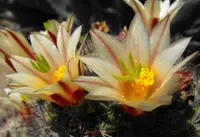
strawberry cactus
Cochemiea dioica
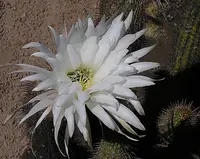
Soehrensia strigosa
Soehrensia strigosa
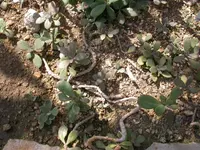
Coral Ragwort
Kleinia fulgens
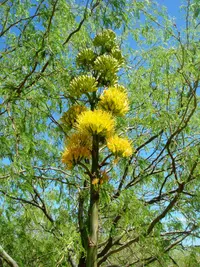
goldenflower century plant
Agave chrysantha
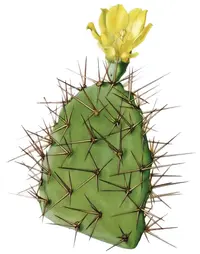
prickly pear
Opuntia sulphurea
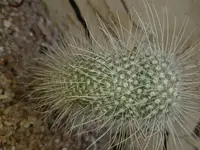
greenflower nipple cactus
Cochemiea barbata
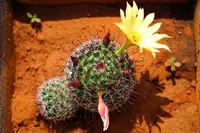
Benecke Fishhook Cactus
Mammillaria beneckei
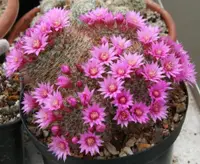
Mammillaria zeilmanniana
Mammillaria zeilmanniana