Rotate For Symmetry
Turn the pot 90° every 2–3 weeks during active growth so the cactus receives even light and develops a balanced, compact globe instead of leaning toward one side.

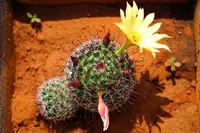
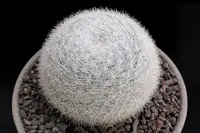
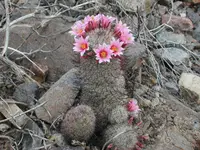
Mammillaria beneckei, commonly called Benecke fishhook cactus, is a small clustering cactus from arid regions of Mexico. It forms rounded stems covered with dense white spines and distinctive hooked central spines. In season, it produces small funnel-shaped flowers around the stem, followed by bright, elongated fruits that add ornamental value. Its compact size makes it suitable for windowsills and small indoor collections. This species prefers bright light, low to moderate moisture, and very free-draining, gritty soil. Once these conditions are met, it is relatively straightforward to care for Benecke Fishhook Cactus, though it resents overwatering and poorly ventilated, humid environments.

Care Difficulty
Moderate Care

Light Preference
Full Sun

Water Requirements
Low Water

Temperature Preference
Tropical / Frost Sensitive

Hardiness Zone
10–11

Soil Texture
Sandy, Loamy, Rocky

Soil pH
Slightly acidic (6.5–7.0), Neutral (7.0)

Soil Drainage
Well-drained

Fertilization
Minimal (feed rarely)
Scan your plant to receive care tips personalized for your specific plant
Available on iOS and Android
This small cactus prefers bright, direct sun with some protection at the hottest time of day.
This species is drought-tolerant and prefers thorough but infrequent watering.
This cactus thrives in warm, dry conditions with a marked cool, dry rest in winter.
This cactus prefers dry indoor air and rarely needs special humidity management.
Use a very fast-draining, gritty mix to prevent root rot in Mammillaria beneckei.
This species is highly suitable for container growing due to its compact, shallow root system.
This small cactus needs only light feeding to stay healthy in pots.
Pruning needs for Mammillaria beneckei are minimal and mainly hygienic.
This species prefers snug pots and slow disturbance, so repot only when clearly needed.
Mammillaria beneckei is commonly propagated from offsets and occasionally from seed.
This cactus prefers a cool, very dry winter rest and is not tolerant of hard frost.

Plant Health Check
Not sure what's wrong with your plant? Check your plant's health inside the app.
This species develops strongly hooked central spines that help anchor the plant against shifting desert substrates and may slightly shade the stem surface, reducing sun stress in its native habitats of central Mexico.
With age, it often produces multiple offsets from the base, forming dense clusters of small globose stems that can eventually cover a wide area compared to the size of a single head.
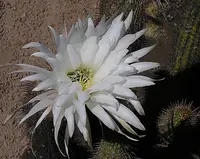
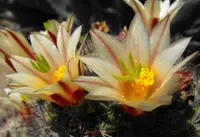
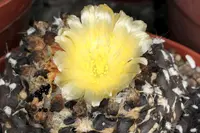
Its funnel-shaped flowers are typically white to pale pink with a darker pink or magenta midstripe on each petal, creating a distinct two-tone appearance along the stem ring during blooming.
Lack of flowers usually comes from insufficient light, no cool dry rest in winter, or excess nitrogen fertilizer. Older, mature specimens bloom more reliably. Avoid frequent repotting, and provide several cooler, drier months to trigger buds.
Keep your plants happy and healthy with plant identification, disease detection, and easy care guidance.