Pad propagation timing
Take healthy, fully firm pads in late spring, let the cut end callus for 7–14 days in a dry, shaded spot, then plant shallowly in gritty mix so the pad stands upright without staking.

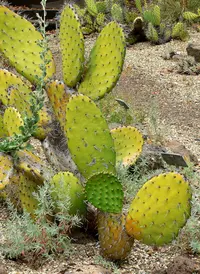
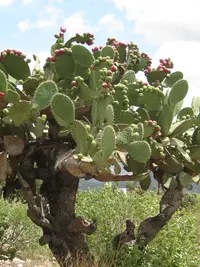
Chaparral pricklypear (Opuntia oricola) is a shrubby cactus native to coastal southern California and northern Baja California. It typically forms dense clumps of flat, oval pads with sparse but sharp spines. In habitat it grows on dry slopes and chaparral, often in full sun and rocky, very well-drained soils. The plant is drought-tolerant and slow to moderate in growth, which makes it relatively easy to manage in low-water landscapes. Bright yellow spring flowers followed by reddish fruits add seasonal interest. Understanding how to care for chaparral pricklypear is mostly about providing strong light, minimal watering, and fast-draining soil.

Care Difficulty
Easy Care

Light Preference
Full Sun

Water Requirements
Low Water

Temperature Preference
Warm Climate

Hardiness Zone
9–11

Soil Texture
Sandy, Loamy, Rocky

Soil pH
Slightly acidic (6.5–7.0), Slightly alkaline (7.0–7.5)

Soil Drainage
Well-drained

Fertilization
Minimal (feed rarely)
Scan your plant to receive care tips personalized for your specific plant
Available on iOS and Android
This desert cactus thrives in strong sun but benefits from gradual exposure in cooler or coastal areas.
This species is highly drought-tolerant and prefers infrequent, deep watering in fast-draining soil.
This cactus is adapted to hot, dry climates with mild winters and tolerates a fairly wide temperature range.
This species tolerates a wide humidity range and usually needs no special adjustment indoors or outdoors.
This cactus needs very fast-draining, mineral-based soil to prevent root rot.
This species can grow in containers if the pot is chosen for drainage and stability.
This desert cactus needs only light feeding, as chaparral pricklypear is adapted to nutrient-poor soils.
Pruning helps manage size and remove damaged pads while keeping Opuntia oricola healthy and safe to handle.
This species is usually grown in the ground, so focus on careful transplanting or infrequent container repotting.
Opuntia oricola is commonly propagated from pad cuttings, which root reliably in warm, dry conditions.
This cactus is fairly cold tolerant when dry but may need some winter attention in colder climates.

Plant Health Check
Not sure what's wrong with your plant? Check your plant's health inside the app.
This prickly pear is native to coastal sage scrub and chaparral in southern California and northern Baja California, where it forms dense thickets that are characteristic of these dry, fire-prone ecosystems.
The plant often survives chaparral wildfires by resprouting from remaining pads or the base, helping it quickly reclaim burned slopes and stabilize soil after fire events.
In some coastal cactus scrub communities, this species can be a structural dominant, creating a low, spiny overstory that provides shelter for small mammals, reptiles, and nesting birds that avoid heavy tree cover.

Hybridization between this species and closely related prickly pears in southern California contributes to complex variation in pad shape and spine density, which can make field identification challenging even for experienced botanists.
This species can form wide, dense clumps over time through expanding pads, but it is not typically considered invasive. Regular pruning of new pads and removing unwanted seedlings keeps its spread controlled in most home landscapes.
Keep your plants happy and healthy with plant identification, disease detection, and easy care guidance.