Pot selection
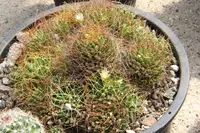
Use a wide, shallow pot with several drainage holes so the fibrous roots can spread laterally and excess water leaves quickly, reducing the risk of rot in this succulent shrub.

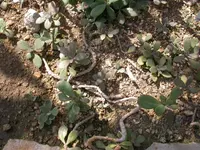
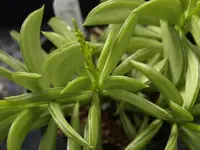
Coral ragwort (Kleinia fulgens) is a shrubby succulent from dry regions of East Africa, valued for its bright coral-orange, daisy-like flower clusters. It has fleshy, cylindrical stems and sparse, narrow leaves, giving it a sculptural, architectural look that suits sunny windowsills and bright indoor spots. Growth is upright but compact, so it fits well in containers and small spaces.
This species prefers strong light, fast-draining soil, and infrequent watering, which makes it relatively low maintenance for those who tend to overwater less. Understanding how to care for Coral Ragwort mainly involves respecting its succulent nature and avoiding prolonged cold and excess moisture.

Care Difficulty
Easy Care

Light Preference
Full Sun

Water Requirements
Low Water

Temperature Preference
Tropical / Frost Sensitive

Hardiness Zone
10–11

Soil Texture
Sandy, Loamy, Rocky

Soil pH
Slightly acidic (6.5–7.0), Neutral (7.0)

Soil Drainage
Well-drained

Fertilization
Minimal (feed rarely)
Scan your plant to receive care tips personalized for your specific plant
Available on iOS and Android
This succulent prefers bright, gentle light that mimics its native habitat.
Watering should favor a dry, airy root zone that suits this succulent species.
This plant thrives in warm, frost-free conditions with moderate seasonal variation.
This succulent handles typical indoor humidity and rarely needs special adjustment.
Kleinia fulgens prefers a fast-draining, mineral-rich mix that prevents waterlogging around the roots.
This species is well suited to container growing, both indoors and outdoors in warm climates.
Kleinia fulgens benefits from light, controlled feeding during active growth but copes fairly well in lean soils.
Kleinia fulgens responds well to light structural pruning that keeps stems compact and flowering wood refreshed.
Kleinia fulgens grows slowly and prefers slightly tight containers, so repotting is infrequent but sometimes helpful.
Kleinia fulgens is commonly propagated from stem cuttings, which root reliably in warm, dry-leaning conditions.
Kleinia fulgens is not frost hardy and needs protection in regions with freezing winters.

Plant Health Check
Not sure what's wrong with your plant? Check your plant's health inside the app.
This species is a leafless, succulent member of the daisy family (Asteraceae) that produces its main flower display in the cooler, drier months rather than in spring or summer.
Its bright orange-red inflorescences consist almost entirely of tubular disc florets with no showy ray florets, giving each flower head a narrow, bottlebrush appearance unusual among daisies.
Mature plants usually lack true leaves and rely on their thick, green, water-storing stems for photosynthesis, an adaptation to arid habitats in eastern Africa.

Kleinia fulgens was historically placed in the large and complex genus Senecio, and its transfer into the genus Kleinia reflects modern taxonomic revisions based on floral structure and other anatomical features, illustrating how succulent daisies have evolved distinct growth forms within the Asteraceae.
Lack of flowers usually comes from insufficient light, too much nitrogen fertilizer, or the plant being immature. Cool-season stress, recent repotting, or heavy pruning can also delay buds. Stable conditions over several months often restore normal blooming.
Keep your plants happy and healthy with plant identification, disease detection, and easy care guidance.