lady of the night cactus Care (Cereus hexagonus)

Also known as: lady-of-the-night cactus

About lady of the night cactus

The lady of the night cactus, Cereus hexagonus, is a tall, columnar cactus known for its angular stems and striking white, night-blooming flowers. In nature it grows in warm, arid to semi-arid regions of South America, often forming large, tree-like clumps over time.

Its thick, ribbed stems store water, so it tolerates short dry periods and suits beginners who prefer a low-maintenance plant. Spines offer some protection but are usually spaced along the ribs, making it manageable to handle with care.

This cactus prefers bright light, good airflow, and very well-draining, gritty soil. Understanding these simple needs helps anyone learn how to care for lady of the night cactus successfully.

Main Plant Requirements

Care Difficulty

Easy Care

Light Preference

Full Sun

Water Requirements

Low Water

Temperature Preference

Tropical / Frost Sensitive

Hardiness Zone

10–12

Soil Texture

Sandy, Loamy, Rocky

Soil pH

Acidic (5.5–6.5), Slightly acidic (6.5–7.0)

Soil Drainage

Well-drained

Fertilization

Minimal (feed rarely)

Get Personalized Care Plan

Scan your plant to receive care tips personalized for your specific plant

Available on iOS and Android

How to Care for the lady of the night cactus

Cereus hexagonus needs strong light to flower and maintain sturdy, upright growth.

  • Provide 6–8 hours of direct sun daily; in hot inland summers, give morning sun with light afternoon shade to prevent stem scorching.
  • Outdoors, place the lady of the night cactus where it receives open sky or only light overhead filtering; indoors, use a south- or west-facing window.
  • If stems elongate, lean, or turn pale, light is too low; if tissue yellows or shows sunburn patches, reduce midday exposure, especially in summer.

This cactus prefers thorough but infrequent watering that allows the root zone to dry between soakings.

  • Water only when the top 3–5 cm of soil are completely dry; in hot active growth, this may be every 7–21 days depending on climate and soil.
  • Use fast-draining, gritty soil and ensure excess water runs freely away to reduce the risk of root rot and stem base softening.
  • In cool seasons, reduce watering sharply and wait longer between soakings; wrinkling ribs suggest mild thirst, while mushy, yellowing stems indicate overwatering.

This species prefers warm, frost-free conditions similar to a subtropical desert climate.

  • Aim for 70–90°F (21–32°C) for strongest growth, with good air movement to prevent heat buildup around the stems.
  • Protect the plant from temperatures below 40°F (4°C); brief dips to 35–40°F (2–4°C) may be tolerated but can cause tissue damage, especially if soil is wet.
  • Avoid frost and freezing at all times, and provide light shade plus extra airflow during heat waves above 100°F (38°C) to prevent sunscald and stress.

This cactus handles typical indoor humidity well and rarely needs special adjustment.

  • Aim for 30–50% humidity; it tolerates drier air better than prolonged dampness around the stem.
  • Dry, firm stems are normal, but soft, pale, or spotty tissue can indicate excess moisture and stagnant air rather than low humidity.
  • If air is extremely dry and heating causes shriveling tips, place the pot away from vents and group with other plants to slightly raise local humidity.

Use a sharply draining, gritty mix to prevent root rot in containers or beds.

  • Combine roughly 50% cactus potting mix with 25% coarse sand and 25% pumice or perlite for a sandy, open texture.
  • Ensure water drains through in seconds and the mix dries within a few days; avoid dense, peat-heavy or clay-based substrates that hold water.
  • A slightly acidic to neutral pH around 6.0–7.0 suits Cereus hexagonus and helps roots access nutrients efficiently.
  • To improve aeration, incorporate chunky mineral components like pumice or small gravel, not fine sand alone, which can compact and reduce airflow.

This species is well suited to container growing when the pot is chosen to support its tall, heavy stems.

  • Select a deep, heavy terracotta or ceramic pot to reduce tipping as stems elongate and increase weight on one side.
  • Choose a pot just 2–5 cm wider than the root ball so the mix dries evenly and does not stay wet at the bottom.
  • Use bricks, stones, or a wide pot footprint to stabilize tall growth, especially in windy outdoor sites or on balconies.

Cereus hexagonus benefits from light, controlled feeding during its warm growing season to support healthy stem growth and flowering.

  • Use a balanced cactus fertilizer or general 10-10-10 NPK diluted to 25–50% strength for caring for lady of the night cactus.
  • Feed every 4–6 weeks from late spring to early fall when growth is active.
  • Avoid compost-rich mixes or high-organic feeds that stay wet and may cause root issues.
  • Stop fertilizing in late fall and withhold feed entirely through winter dormancy.

Pruning Cereus hexagonus is mainly done to manage size, remove damage, and maintain safe, stable stems.

  • Carry out pruning in late spring or early summer, after frost risk has passed.
  • Remove dead, diseased, storm-damaged, or crossing stems at the base with clean, sharp loppers or a pruning saw.
  • Shorten overly tall or leaning stems to improve stability and reduce breakage risk.
  • Make clean cuts, allow surfaces to dry and callus, and avoid heavy pruning in a single season.

Transplanting or repotting this tall cactus is infrequent but important when roots outgrow the container or growth slows noticeably.

  • Check for roots circling the pot, emerging from drainage holes, or a top-heavy plant that dries out very fast.
  • Plan repotting or transplanting every 3–5 years in late spring, using a sturdy pot and gritty cactus mix.
  • Handle stems with thick gloves and padding, keeping the root ball as intact as possible to limit stress.
  • After moving, position in bright, indirect light for 1–2 weeks, water lightly once, then resume normal care as growth recovers.

New Cereus hexagonus plants are most reliably produced from stem cuttings, with seeds used mainly for patient growers or breeding.

  • Take 15–30 cm healthy stem cuttings in late spring or early summer, avoiding very old or weak tissue.
  • Allow cut surfaces to dry and callus for 7–10 days in a shaded, airy place before planting.
  • Insert cuttings into dry, gritty cactus mix, then water lightly only after initial anchoring to reduce rot risk.
  • For seeds, sow on barely moist cactus mix in warm (70–80°F), bright, indirect light and maintain gentle airflow.

Cold-sensitive Cereus hexagonus needs a cool, dry rest in winter and must be shielded from freezing temperatures.

  • Keep temperatures around 50–60°F and ensure the soil stays mostly dry, watering lightly only once the mix is fully dry.
  • In regions below 40°F, move container plants indoors to a bright, unheated room or sunroom.
  • Outdoors in mild climates, use a gravel mulch around the base to drain water away from roots in cool, wet periods.
  • Avoid overhead watering and prolonged cold, wet conditions that increase the risk of stem rot during winter.

Care Tips

Vertical support staking

Install a sturdy stake or trellis early and loosely tie stems with soft plant ties so tall, heavy, multi-ribbed columns do not lean, crack, or uproot as they gain height and weight.

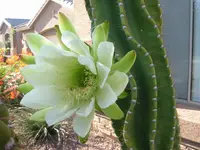
Night-flower pollination

If growing outdoors in suitable climates, hand-pollinate the night-blooming flowers with a small, soft brush right after they open in the evening to improve fruit set and seed production.

Root-zone inspection

Every 1–2 years, unpot the plant during warm weather and inspect the root ball, trimming away dead, mushy, or circling roots before repotting to prevent rot and maintain stable upright growth.

Salt buildup management

Once or twice a year, leach the pot thoroughly with plain water until it runs freely from the drainage holes to flush out accumulated fertilizer salts that can burn roots of this cactus.

Safe handling methods

Use thick gloves and a folded towel or rolled-up newspaper to support the stems when repotting or moving the plant so the spines do not damage skin and the columnar stems are not crushed or bent while caring for lady of the night cactus.

Common Pests and Diseases

Mealybugs

This pest appears as white, cottony clusters in stem ribs, areoles, and crevices, often causing yellowing and slowed growth. These insects feed on plant sap and excrete sticky honeydew that can attract sooty mold.

Solution

Isolate the plant, then dab visible insects with cotton swabs dipped in 70% isopropyl alcohol and wipe along ribs and areoles. For larger infestations, wash the stems under a gentle shower, then apply a systemic insecticide or a horticultural soap spray labeled for cacti, repeating treatments every 7–10 days until no new insects appear.

Scale insects

This pest shows up as small, hard, brown or gray bumps tightly stuck to the ribs and along the base of spines, causing general decline and patchy yellowing. These insects suck sap and may cause stem ridges to look uneven or scarred over time.

Solution

Manually scrape or pry off scale with a fingernail or soft brush, then wipe stems with a cloth lightly moistened with 70% isopropyl alcohol. Follow up with a systemic insecticide or multiple applications of horticultural oil, ensuring the plant dries quickly and has good airflow to prevent chemical burn on the succulent tissues.

Spider mites

This pest is most common on plants kept too dry in warm indoor air, causing fine stippling, dull patches, and sometimes delicate webbing in areoles and between ribs. These insects are tiny and usually noticed only after the cactus surface looks dusty or faded.

Solution

Rinse stems thoroughly with a strong but controlled stream of lukewarm water, including all rib angles and creases, then let the plant dry in bright, indirect light. If activity persists, use a miticide or insecticidal soap labeled for spider mites, repeating treatments and slightly raising ambient humidity while still keeping the soil on the dry side for good lady of the night cactus indoor care.

Bacterial soft rot

This disease causes localized, water-soaked, soft areas on stems that quickly become mushy, brown, and foul-smelling, often starting at a wound or contact point with excess moisture. Symptoms include rapid tissue collapse that can spread along the rib.

Solution

Cut out all affected tissue with a sterile, sharp knife back into firm, healthy flesh, then dust the wound with sulfur powder or a copper-based bactericide and keep the plant dry and in excellent airflow until a firm callus forms. Discard severely affected plants or sections and avoid overhead watering or leaving water trapped in stem creases to reduce recurrence.

Fungal stem spot

This disease presents as small, sunken, corky or dark spots on the ribs that may gradually enlarge or merge, often after minor mechanical damage plus high humidity. Symptoms include localized discoloration that stays firm but can weaken the outer tissue over time.

Solution

Remove or carefully cut away badly affected areas if they are small and accessible, then allow the wound to dry and callus in a bright, airy spot. Reduce nighttime humidity, avoid wetting stems, and use a sulfur or copper-based fungicide spray according to label directions if new spots continue to appear.

Interesting Facts

Night-blooming strategy

This species opens its large white flowers only at night, relying on nocturnal pollinators such as moths and bats that are attracted by its pale color and strong fragrance in the dark.

Hexagonal stem architecture

Its tall, columnar stems typically show 6 main ribs, creating a hexagonal cross-section that stabilizes the plant mechanically while storing substantial water in the thick green tissue.

Native lowland specialist

Cereus hexagonus occurs naturally in lowland tropical regions of northern South America, where it grows in open, seasonally dry habitats and tolerates intense sun and high temperatures that many other plants cannot handle.

Botan icon

Did you know?

In suitable tropical climates this species can reach several meters in height and form tree-like, branching columns that become important structural perches for birds and other wildlife in otherwise open, sparsely wooded landscapes.

FAQs about lady of the night cactus

Lack of flowering is usually caused by insufficient maturity, too little light, or no distinct cool, dry rest in winter. Night-blooming species often need several years plus strong seasonal light contrast before producing reliable blooms.

Grow Healthy Plants with Botan Care

Keep your plants happy and healthy with plant identification, disease detection, and easy care guidance.

Botan plant care app — identify plants on mobile

Explore More Plants