Wind training
Expose young trees to moderate, unobstructed wind and avoid staking unless necessary, so the trunk develops natural taper and strong anchoring roots for storm resistance.

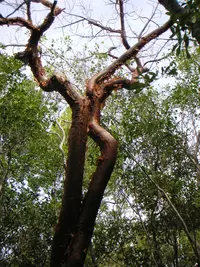
Gumbo limbo, Bursera simaruba, is a fast-growing tropical tree known for its smooth, peeling, copper-red bark and spreading, irregular crown. It is semi-evergreen, often keeping foliage year-round in warm climates but briefly shedding leaves in drier seasons.
This species is native to south Florida, the Caribbean, Mexico, and Central America, where it commonly grows in coastal areas and dry forests. Its toughness, wind resistance, and ability to handle poor, rocky soils make it relatively easy to establish.
Gardeners who care for gumbo limbo value its resilience, drought tolerance once established, and low maintenance needs. It generally prefers full sun, well-drained soil, and moderate moisture while young.

Care Difficulty
Easy Care

Light Preference
Full Sun

Water Requirements
Low Water

Temperature Preference
Tropical / Frost Sensitive

Hardiness Zone
10–11

Soil Texture
Sandy, Loamy, Rocky

Soil pH
Slightly acidic (6.5–7.0), Neutral (7.0)

Soil Drainage
Well-drained

Fertilization
Minimal (feed rarely)
Scan your plant to receive care tips personalized for your specific plant
Available on iOS and Android
This sun-loving tropical tree performs best with strong, consistent light in warm climates.
This drought-tolerant species prefers thorough but infrequent watering once established.
This tropical tree thrives in warm, frost-free climates with mild seasonal variation.
Humidity is a minor concern, as this species is adapted to dry, exposed sites.
Bursera simaruba prefers very fast-draining, mineral soils that do not hold standing water.
This species can be grown in containers, especially in warm climates where outdoor space is limited.
This drought-tolerant tree needs only light feeding, especially when young or container-grown gumbo limbo plants are establishing.
Pruning Bursera simaruba is mainly for structure, clearance, and health rather than strict size control.
This species is usually grown in the ground, so care focuses on transplanting young trees rather than frequent repotting.
Propagation of this species is usually done from semi-hardwood cuttings or fresh seed under warm conditions.
This tropical tree is frost-sensitive and needs protection in climates with cool winters, especially when young or container-grown.

Plant Health Check
Not sure what's wrong with your plant? Check your plant's health inside the app.
The tree is easily recognized by its smooth, coppery-red bark that naturally peels in thin curls, revealing fresh green to cream tissue beneath and helping reduce pests and surface fungi on the outer bark.
Its wood is relatively soft and flexible, and the species often survives hurricanes and strong tropical storms by bending or shedding branches rather than snapping at the trunk.
This species is a classic pioneer tree in seasonally dry tropical forests, quickly colonizing disturbed or open ground and providing shade, organic matter, and habitat that facilitate later forest regeneration.

Broken branches of this tree can readily root and grow into new individuals when stuck into moist soil, a vegetative propagation trait that allows it to establish living fence posts and boundary markers in rural landscapes.
This species is considered fast-growing, often adding 60–120 cm in height per year in warm climates once established. Growth slows in poor soil, dry conditions, or if roots are restricted. Good establishment is key for growing gumbo limbo successfully.
Keep your plants happy and healthy with plant identification, disease detection, and easy care guidance.