Angiopteris fokiensis Care

Angiopteris fokiensis

About Angiopteris fokiensis

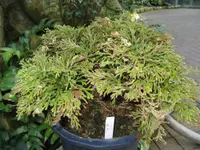
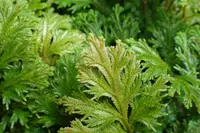
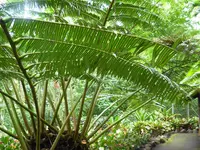
Angiopteris fokiensis is a large terrestrial fern known for its massive, arching fronds that emerge from a thick, fleshy base. It has a bold, tropical look more often seen in botanical gardens than in small homes. Native to humid, shaded forests in parts of East and Southeast Asia, it favors consistently moist, rich, and well-drained soil. The plant grows slowly but can reach impressive size under stable, warm conditions. Due to its size, moisture demands, and sensitivity to drying out, it is considered challenging for beginners. Understanding how to care for Angiopteris fokiensis helps prevent stress and frond loss, especially in indoor or container culture.

Main Plant Requirements

Care Difficulty

Hard Care

Light Preference

Partial Shade

Water Requirements

Keep Soil Moist

Temperature Preference

Tropical / Frost Sensitive

Hardiness Zone

Unknown

Soil Texture

Loamy, Peaty, Organic-rich

Soil pH

Acidic (5.5–6.5), Slightly acidic (6.5–7.0)

Soil Drainage

Moist but well-drained

Fertilization

Light (every 4–6 weeks)

Get Personalized Care Plan

Scan your plant to receive care tips personalized for your specific plant

Available on iOS and Android

How to Care for the Angiopteris fokiensis

This shade-loving fern needs bright, indirect light that mimics a forest floor beneath a canopy.

  • Provide 2–4 hours of soft morning sun with dappled or filtered light the rest of the day; avoid harsh midday and afternoon sun that scorches fronds.
  • Place Angiopteris fokiensis where it receives high ambient light but remains shaded by trees, shade cloth, or a north- or east-facing exposure.
  • Watch fronds: pale, stretched growth signals not enough light, while crisped tips or bleached patches indicate excessive direct sun.

This fern prefers consistently moist soil without staying waterlogged.

  • Water when the top 2–3 cm of soil feels just slightly dry, aiming for evenly damp soil similar to a wrung-out sponge.
  • Use rich, organic soil with good drainage; avoid standing water around the root zone to reduce risk of rot and fungal problems.
  • In warm months, expect to water more often; in cooler seasons, slow growth means slower drying, so extend intervals and watch for limp, folding fronds as a sign of thirst.

This species thrives in warm, stable, frost-free conditions similar to a humid subtropical understory.

  • Aim for 65–80°F (18–27°C) for best growth, keeping day and night temperatures as steady as possible.
  • Protect from cold below 50°F (10°C); foliage and crowns can be damaged by brief chills and are usually killed by frost or freezes.
  • In hotter areas above 86°F (30°C), increase shade and humidity and ensure soil never dries out completely to reduce heat stress and frond scorch.

This fern needs consistently high humidity to maintain large fronds and healthy growth.

  • Aim for 70–90% humidity; it declines quickly in typical 30–50% indoor air.
  • Crisping frond edges, stalled fiddlehead unfurling, and brown rachis tips indicate humidity stress.
  • Use grouped plants, a room humidifier, and wide pebble trays under the pot to raise local humidity levels.

Soil for Angiopteris fokiensis must be deep, moisture-retentive, and highly organic while still allowing air movement around the rhizome.

  • Use a loose, humus-rich mix such as 2 parts peat or coco coir, 1 part compost, and 1 part chunky bark or perlite.
  • Aim for slightly acidic to neutral pH around 6.0–7.0, which supports nutrient uptake and root activity.
  • Ensure slow, even drainage that never leaves the mix waterlogged; water should drain in minutes, not instantly or after hours.
  • Avoid heavy clay, compacted mixes, or pure sand, which either suffocate roots or dry out too abruptly.

This species can be grown in large containers but needs careful attention to stability and moisture management.

  • Choose a wide, heavy container to counterbalance the spreading, top-heavy crown and prevent tipping in wind.
  • Select deep pots that allow space for the massive rhizome and thick, fleshy roots to expand downward and sideways.
  • Use a potting mix that stays evenly moist yet airy, then line the bottom with coarse bark to slow but not block drainage.

Feeding should be moderate, as this fern is sensitive to excess salts and prefers consistently rich, moist soil.

  • Use a balanced, dilute liquid fertilizer (around 10-10-10) at 1/4–1/2 strength for Angiopteris fokiensis during active spring–summer growth.
  • Apply every 4–6 weeks, only to thoroughly watered soil, to avoid root burn and salt buildup.
  • Pause feeding in winter or dormancy, when growth slows and nutrient demand is low.
  • Supplement with a thin top-dressing of fine compost once a year to maintain organic matter and microbial activity.

This species needs only light, hygiene-focused pruning to keep the clump healthy and tidy.

  • Best timing is late winter to early spring, before strong new frond growth begins.
  • Remove dead, yellowing, or damaged fronds at the base to limit disease and pest issues in Angiopteris fokiensis.
  • Thin out badly crowded fronds to improve air movement and light penetration into the crown.
  • Use clean, sharp pruners or a knife, disinfected between cuts, to avoid transmitting fungal or bacterial problems.

Handling this fern’s massive, fleshy rootstock requires planning and minimal disturbance.

  • Transplant only when roots circle the container, growth slows, or the plant becomes unstable or pot-bound.
  • Aim for early spring, just before new growth, and typically move to a larger container or ground position every 3–5 years.
  • Choose a deep, sturdy pot or outdoor site with humus-rich, continuously moist soil and partial shade.
  • Lift and move the root ball gently, disturb roots as little as possible, water thoroughly, and shade for several days to reduce transplant shock.

Propagation of this fern is specialized and usually left to advanced growers or nurseries.

  • Most propagation uses spores collected from mature fronds and sown on sterile, moist medium.
  • Late spring to early summer, with warm, stable temperatures and high humidity, gives the best spore germination.
  • Keep the propagation container covered to maintain constant moisture and diffuse light, avoiding direct sun.
  • Because spore culture is slow and delicate, many growers instead purchase young plants rather than starting new stocks themselves.

Cold sensitivity is high, so winter conditions must stay above freezing for long-term survival.

  • In regions below about 40°F, grow Angiopteris fokiensis in containers and move indoors or to a heated greenhouse before frost.
  • Maintain indoor temperatures near 60–75°F and keep humidity high with trays or humidifiers.
  • Outdoors in mild climates, add a 5–10 cm mulch layer over the root zone, avoiding direct contact with the crown.

Care Tips

Rhizome elevation

Plant the fleshy rhizome slightly raised above the soil line so the crown stays aerated and less prone to rot as the fronds become very heavy with age.

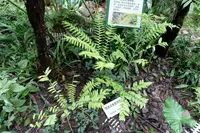
Frond weight support

Install low, wide support stones or a sturdy ring around the base early on to brace the massive fronds and prevent the crown from tilting or snapping under its own weight.

Deep container choice

Use an extra-deep, heavy container (or box) with strong side walls so the expanding rhizome and thick roots have room to develop without cracking the pot or becoming quickly rootbound.

Moisture distribution check

Periodically insert a slim wooden stake or chopstick deep into the mix to confirm that the lower root zone stays evenly moist, since the plant’s bulk can cause uneven wet and dry pockets.

Slow acclimation routine

When relocating the plant between greenhouse, shadehouse, or indoors, shift light and airflow conditions gradually over 10–14 days to reduce stress on the fronds and maintain stable growth when caring for Angiopteris fokiensis.

Common Pests and Diseases

Scale insects

This pest attaches to the fronds and rachis, feeding on sap and causing yellowing, stunted growth, and sticky honeydew deposits that can lead to sooty mold. Symptoms include small dome-shaped or oval bumps along the midribs and lower frond surfaces.

Solution

Isolate affected plants, then gently wipe fronds with a soft cloth dipped in a mix of water and a small amount of mild insecticidal soap, repeating weekly until no new scale appears. For heavier infestations on large outdoor specimens, use a horticultural oil spray directed at the undersides and bases of fronds, and reduce plant stress by maintaining stable moisture and shade.

Fern aphids

These insects cluster on emerging croziers (young coiled fronds) and tender frond tips, sucking sap and causing distortion, curling, and sticky honeydew. This pest can weaken new growth and attract ants.

Solution

Rinse colonies off with a firm stream of water, especially targeting newly unfolding fronds, and repeat every few days as needed. In shaded greenhouse or indoor settings, use insecticidal soap or a ready-to-use neem-based product, applied thoroughly to all frond surfaces while improving air movement to discourage reinfestation.

Rhizoctonia crown rot

This disease starts at the crown and upper rhizome, leading to brown, water-soaked tissue, collapse of young fronds, and a foul smell near the base of the plant. Symptoms include sudden wilting despite moist soil and failure of new fronds to expand properly.

Solution

Remove and discard all affected fronds and any soft, decayed crown tissue, then improve drainage and avoid allowing water to sit around the base. In valuable specimens, a labeled systemic fungicide for Rhizoctonia can be drenched into the growing medium, while watering is adjusted to deep but less frequent irrigation and the crown is kept slightly elevated above the soil surface.

Pythium seedling blight

This disease affects spores and young plantlets, causing damping-off, collapse at the soil line, and rapid loss of small fronds in propagation trays or pots. Symptoms include water-soaked, threadlike stems and a slimy or fungus-smelling medium.

Solution

Discard heavily affected propagation batches and start fresh with clean trays, sterile or pasteurized medium, and good drainage. Avoid overwatering, provide strong but indirect light, and, for sensitive collections, use a preventive fungicide labeled for Pythium on newly sown spores or very young plants according to product directions.

Mealybugs

This pest hides in leaflet bases, frond junctions, and around the crown, appearing as white cottony masses that suck sap and cause yellowing and weak growth. Symptoms include honeydew, sooty mold, and slow decline of heavily infested plants, especially under warm, humid indoor or greenhouse conditions typical for Angiopteris fokiensis care instructions.

Solution

Inspect crown crevices and frond bases closely, removing visible mealybugs with a cotton swab dipped in isopropyl alcohol and discarding any heavily infested small fronds. Follow up with repeated treatments of insecticidal soap or horticultural oil at 7–10 day intervals, ensuring good coverage deep into crevices while improving airflow and avoiding excess nitrogen fertilization that promotes soft, susceptible growth.

Interesting Facts

Relict of ancient lineages

This species belongs to Angiopteridaceae, a very old fern family whose fossil relatives were already present in Mesozoic floras, so it is considered a living representative of ancient fern lineages in East Asia.

Massive underground caudex

Mature plants develop a very large, fleshy caudex (a thickened stem base) partially buried in the soil, which stores water and nutrients and helps the plant withstand short dry spells in its native monsoonal habitats.

Moist limestone specialist

Field observations show that this fern often grows on shaded, humid limestone or calcareous substrates in southern China and nearby regions, indicating a preference for alkaline, mineral‑rich soils rather than strongly acidic forest soils typical of many other ferns.

Botan icon

Did you know?

In suitable sheltered ravines, individual plants can form arching fronds well over human height, creating a coarse, palm‑like visual structure that can dominate the herb layer of the forest understory despite the plant being a true fern and not related to palms.

FAQs about Angiopteris fokiensis

This fern is naturally slow to moderate in growth. New fronds usually appear in flushes during warm months. It may take several years to develop a large crown, especially in containers or cooler climates.

Grow Healthy Plants with Botan Care

Keep your plants happy and healthy with plant identification, disease detection, and easy care guidance.

Botan plant care app — identify plants on mobile

Explore More Plants